
For generations of British television viewers, Magnus Magnusson was the calm, authoritative voice who turned Mastermind into one of the BBC’s most recognizable quiz programmes. With his measured delivery, serious expression, and unmistakable Icelandic-Scottish identity, he became much more than a presenter. He was a journalist, author, historian, translator, broadcaster, and advocate for Scotland’s cultural and natural heritage.
Born in Reykjavík in 1929, Magnusson moved to Scotland as a child and spent most of his life there. His career stretched well beyond television, including acclaimed work on history and archaeology, numerous books, translations of Icelandic sagas, and senior public roles. Yet for millions of people, his greatest claim to fame remained Mastermind, which he hosted for 25 years. His famous line, “I’ve started so I’ll finish,” became part of British popular culture.
Quick Facts About Magnus Magnusson
| Fact | Details |
|---|---|
| Full name | Magnus Magnusson |
| Born | 12 October 1929 |
| Birthplace | Reykjavík, Iceland |
| Died | 7 January 2007 |
| Nationality | Icelandic |
| Main profession | Journalist, author, broadcaster, historian |
| Best known for | Hosting BBC’s Mastermind |
| Mastermind years | 1972–1997 |
| Famous phrase | “I’ve started so I’ll finish” |
| Major interests | History, archaeology, Icelandic literature, Scotland and nature |
| Notable programme | Chronicle |
| Other major work | Vikings! and historical documentaries |
| Books | More than 20 |
| Major honour | Honorary KBE in 1989 |
| Public service | Chairman of Scottish Natural Heritage |
Early Life and Background
Magnus Magnusson was born in Reykjavík on 12 October 1929. Although Iceland remained an important part of his identity, his childhood was also the beginning of a lifelong connection with Scotland.
His family moved to Scotland while he was young, and he grew up in a country that would eventually become his adopted home. Despite spending most of his life in Britain, he retained his Icelandic citizenship and remained deeply interested in the culture and history of his birthplace.
That combination of Icelandic heritage and Scottish experience became one of the defining features of his career. He could speak with authority about Norse history while also developing a deep knowledge of Scotland’s past, landscape, and traditions.
After studying English at Oxford, Magnusson moved into journalism during the 1950s. He worked for publications including the Scottish Daily Express and later The Scotsman, building experience that would prove valuable when he moved into radio and television.
Her Age and Physical Features
Because Magnus Magnusson was male, references to “her age” are not applicable. He was 77 years old when he died on 7 January 2007.
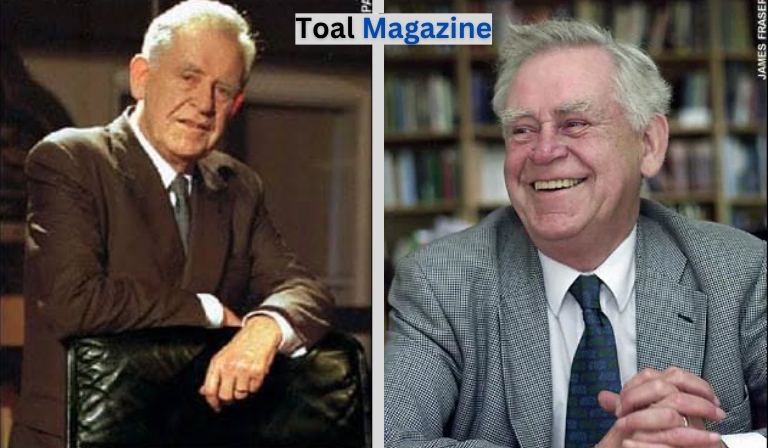
His physical presence was an important part of his television identity. Magnusson was known for a dignified appearance, formal manner, and distinctive voice. He rarely needed dramatic gestures or exaggerated expressions to command attention.
On Mastermind, his composed appearance helped reinforce the programme’s serious atmosphere. Contestants faced a presenter who seemed focused entirely on the questions, creating a sense of tension that became central to the show’s appeal.
Career and Major Achievements
Magnusson’s professional career was unusually broad. Journalism gave him his foundation, but broadcasting eventually made him a household name.
He became particularly associated with programmes dealing with history and archaeology. His television work demonstrated that serious factual subjects could attract large audiences when presented with confidence and clarity.
One of his best-known broadcasting roles outside Mastermind was on Chronicle, the BBC programme devoted to historical and archaeological discoveries. The series helped bring subjects normally associated with museums, universities, and academic publications into homes across Britain.
Magnusson also presented Vikings!, a 12-part series focused on Viking history. The subject was especially suited to someone with his Icelandic background and scholarly interest in Norse culture.
His achievements were not limited to presenting. Magnusson wrote more than 20 books on subjects ranging from archaeology and Icelandic history to Scottish heritage. His bibliography included Introducing Archaeology, Viking Expansion Westwards, Iceland Saga, Vikings!, and Scotland: The Story of a Nation.
His writing career established him as a serious historical communicator rather than simply a television celebrity.
Magnus Magnusson and Mastermind
The biggest chapter in Magnusson’s public life began in 1972 when he became the host of Mastermind.
The programme had a format that was simple but demanding. Contestants were challenged with questions on specialist subjects and general knowledge, while the presenter had to maintain control, pace, and authority.
Magnusson was ideally suited to that role.
His style was restrained and formal. He did not need flashy presentation techniques to make the programme exciting. Instead, the tension came from the clock, the questions, the contestants, and his measured delivery.
For 25 years, he remained closely associated with the programme. His long tenure helped make him one of the most familiar faces in British factual television.
The Story Behind “I’ve Started So I’ll Finish”
Few television catchphrases are as closely connected with their presenter as Magnusson’s “I’ve started so I’ll finish.”
The phrase became associated with moments when the Mastermind buzzer interrupted a question. Rather than immediately stopping, Magnusson would finish reading what he had started.
The line became memorable because it reflected his personality so perfectly. It suggested determination, discipline, and a refusal to leave a task incomplete.
Over time, the expression moved beyond the programme itself. People began using it in everyday conversation, often humorously, whenever they wanted to indicate that they intended to complete something.
That is one reason Magnusson’s Mastermind legacy has lasted so long. He did not simply host the programme; his style became part of its identity.
Literature and Work With Icelandic Sagas
History was not merely a television subject for Magnusson. It was a lifelong passion.
He became an important popularizer of Icelandic and Norse history and translated or co-translated several Icelandic sagas into English. This work helped introduce major works of medieval Icelandic literature to a wider English-speaking audience.
Among the saga works associated with his translation career were Njal’s Saga, The Vinland Sagas, King Harald’s Saga, and Laxdæla Saga.
He also worked with the writings of Icelandic novelist Halldór Laxness, helping make Icelandic literature more accessible to English readers.
His book Iceland Saga reflected his ability to combine historical scholarship with storytelling. Rather than treating Icelandic history as a distant academic subject, he connected its stories to landscapes, people, traditions, and cultural memory.
Relationship With Scotland
Magnusson’s relationship with Scotland was central to his identity.
Although he was born in Iceland, Scotland became the country where he built his career, raised his family, and developed many of his professional interests. His work increasingly focused on Scotland’s history, archaeology, wildlife, and cultural heritage.
His book Scotland: The Story of a Nation was one of his major literary achievements. The extensive history explored Scotland’s development across many centuries while examining famous figures, political changes, conflicts, traditions, and national identity.
His affection for Scotland was also reflected in his public service. He became chairman of the Ancient Monuments Board for Scotland and later chaired Scottish Natural Heritage, serving from 1992 to 1999.
Marriage and Family Life
Magnusson was married and had a family, while generally keeping many aspects of his private life away from the spotlight.
His daughter Sally Magnusson later became a familiar broadcaster and journalist in her own right. Her career created another connection between the Magnusson name and British broadcasting.
Unlike some modern television personalities, Magnusson did not build his public image around constant exposure of his personal life. His reputation was primarily based on his professional accomplishments and intellectual interests.
His family connection to broadcasting has nevertheless contributed to the continuing public interest in his life.
Social Media Presence
Magnus Magnusson died in 2007, long before social media became a major part of celebrity and broadcasting culture. As a result, he did not maintain personal accounts on platforms such as Instagram, Facebook, TikTok, or X in the way public figures do today.
His presence online is instead maintained through archival television footage, interviews, articles, books, historical discussions, and recordings of Mastermind.
This gives his legacy an interesting quality. He remains recognizable to new generations not because of daily social media activity, but because his television work continues to be remembered and revisited.
Who Was Magnus Magnusson?
Magnus Magnusson was a rare kind of public intellectual. He combined the communication skills of a broadcaster with the curiosity of a historian and the discipline of a journalist.
His public image was built around knowledge rather than celebrity. Whether discussing archaeological discoveries, Icelandic literature, Scottish history, or quiz questions, he brought an impressive depth of understanding to his work.
That balance explains why his reputation has survived long after his television career ended.
Personality and Interests
Magnusson was widely associated with seriousness, courtesy, discipline, and intellectual curiosity.
His personality on Mastermind was controlled and formal, but that did not mean he lacked warmth. His ability to maintain the programme’s demanding atmosphere without becoming unnecessarily harsh was one of his greatest strengths as a presenter.
Outside television, he had broad interests. He was passionate about history, archaeology, literature, the outdoors, wildlife, and environmental issues.
He was also involved with conservation organizations and served as president of the Royal Society for the Protection of Birds from 1985 to 1989. His environmental interests complemented his work on Scotland’s natural heritage.
Does Magnus Magnusson Have Children?
Yes. Magnus Magnusson had children, including Sally Magnusson, who followed him into broadcasting and became an accomplished BBC journalist and presenter.
The fact that both father and daughter built distinguished broadcasting careers has made their family story particularly interesting to television audiences.
Nevertheless, Magnusson’s own career remained distinct. His reputation was formed over decades through his work in journalism, historical programming, writing, and Mastermind.
Net Worth and Income
There is no reliably documented public figure for Magnus Magnusson’s exact net worth at the time of his death.
During his long career, his income would have come from several professional areas, including television presenting, journalism, book publishing, writing, broadcasting, and other media work. His position as one of the BBC’s best-known presenters would also have contributed significantly to his professional earnings.
It is better to avoid speculative net-worth estimates that are not supported by reliable records. His lasting importance is ultimately better measured by his body of work than by a financial figure.
Public Image and Legacy
Magnusson’s greatest achievement may have been the way he made knowledge feel important without making it feel inaccessible.
On Mastermind, he helped create one of television’s most distinctive quiz formats. In historical programmes, he demonstrated that archaeology and heritage could be compelling subjects for mainstream audiences.
As an author and translator, he contributed to a wider understanding of Icelandic and Norse culture. As a public figure in Scotland, he supported both cultural heritage and environmental causes.
In 1989, he received an honorary knighthood, formally recognizing his contribution to Scottish heritage and public life. He was also honored in Iceland and held a number of academic and cultural positions during his lifetime.
His papers are preserved in Scotland’s National Library, reflecting the wide range of interests represented across his career.
Conclusion
Magnus Magnusson built a career that was far bigger than one television programme. While Mastermind made him a household name, his achievements in journalism, history, literature, translation, archaeology, broadcasting, and environmental work gave his life lasting significance.
His 25 years on Mastermind remain the most recognizable part of his public legacy. The combination of his calm authority and famous “I’ve started so I’ll finish” phrase made him an unforgettable television figure.
Yet his deeper legacy lies in his commitment to learning. He helped audiences explore Scotland’s past, understand Icelandic culture, discover archaeology, and appreciate the stories preserved in Norse literature. That combination of knowledge and communication is what continues to make his career worth remembering.
FAQs About Magnus Magnusson
1. Who was Magnus Magnusson?
Magnus Magnusson was an Icelandic-born journalist, author, historian, translator, and British television broadcaster best known for hosting Mastermind.
2. When did Magnus Magnusson host Mastermind?
He hosted Mastermind from 1972 to 1997, making him the programme’s longest-serving original-era presenter.
3. What was Magnus Magnusson’s famous catchphrase?
His best-known phrase was “I’ve started so I’ll finish,” which became associated with moments when the Mastermind buzzer interrupted a question.
4. Where was Magnus Magnusson born?
He was born in Reykjavík, Iceland, on 12 October 1929.
5. Was Magnus Magnusson Scottish?
He was Icelandic by nationality and birth, but he spent most of his life in Scotland and became deeply connected with Scottish culture, heritage, and public life.
6. What books did Magnus Magnusson write?
He wrote more than 20 books, including works on archaeology, Icelandic history, Viking history, and Scotland. One of his best-known books is Scotland: The Story of a Nation.
7. Did Magnus Magnusson translate Icelandic sagas?
Yes. He translated or co-translated several Icelandic and Old Norse works into English and also helped introduce the writings of Icelandic author Halldór Laxness to English-speaking audiences.
8. When did Magnus Magnusson die?
Magnus Magnusson died on 7 January 2007, aged 77. His legacy continues through his books, historical programmes, archival broadcasts, and enduring association with Mastermind.