
Desmond Lynam became one of the most recognisable voices in British sports broadcasting, but his connection with Match of the Day stands among the defining chapters of his career. With a calm delivery, understated humour and unmistakable on-screen presence, he helped make football coverage feel both authoritative and entertaining. His BBC career stretched well beyond football, taking him to Wimbledon, the Grand National, the World Cup and the Olympic Games. Yet for many viewers, his introduction to a Saturday night of football remains especially memorable.
Born in Ennis, County Clare, Ireland, in 1942, Lynam moved to Sussex as a child and eventually found his way into broadcasting through local radio. His journey from insurance work to becoming one of Britain’s leading television presenters is a remarkable story of talent, persistence and timing.
Quick Facts About Desmond Lynam
| Detail | Information |
|---|---|
| Full name | Desmond Michael Lynam |
| Date of birth | 17 September 1942 |
| Birthplace | Ennis, County Clare, Ireland |
| Profession | Television and radio presenter |
| Best known for | Match of the Day, Grandstand and major sporting events |
| BBC television career | Began in 1978 |
| Match of the Day | Presenter from 1988 to 1999 |
| ITV career | From 1999 |
| Countdown | Presenter from 2005 |
| Major award | BAFTA Richard Dimbleby Award, 1994 |
| Honour | OBE, 2008 |
| Children | One son, Patrick |
| Autobiography | I Should Have Been at Work |
Early Life and Background
Desmond Michael Lynam was born in Ennis, County Clare, and moved with his family to Sussex when he was young. His Irish background remained part of his story, although his accent changed considerably after growing up in England. He later recalled spending school holidays in Ireland with relatives, where he enjoyed playing sport and exploring the countryside.
His route into broadcasting was far from straightforward. After leaving school, he worked in the insurance industry and continued to develop his interest in journalism and sport on the side. He wrote match reports and other pieces for local publications before getting an opportunity to work in radio.
That decision eventually changed his life. When the BBC expanded its local radio operations, Lynam joined BBC Radio Brighton in 1968 and moved into national BBC radio work soon afterwards. He developed a reputation for a strong voice, intelligent questions and an ability to make sporting coverage sound natural rather than over-produced.
From Radio to BBC Television
The move to BBC television in 1978 was the beginning of a remarkable new phase. Lynam quickly became associated with major sports programming and took on presenting duties that required both knowledge and composure.
One of his key roles was with Grandstand, the BBC’s famous Saturday sports programme. The format demanded flexibility because coverage could move rapidly between football, horse racing, tennis, athletics and other events.
Lynam proved particularly effective in that environment. He could introduce an important sporting event with gravitas and then immediately shift into a lighter conversation or humorous observation.
Over time, he became much more than a presenter. For viewers, he was part of the identity of BBC Sport itself.
Desmond Lynam and Match of the Day
The relationship between Lynam and Match of the Day is central to his legacy. He presented the programme from 1988 until 1999, a period that included some of the most significant changes in English football and British television.
His style suited football perfectly. Instead of constantly trying to make himself the centre of attention, Lynam allowed the matches, analysis and atmosphere to lead. His voice provided continuity between games and created a feeling that viewers were being guided through the evening by someone who understood both the sport and the audience.
He was also famous for his dry wit. A carefully timed remark could lighten a tense moment without taking away from its importance. That balance helped distinguish him from louder or more theatrical broadcasters.
For an entire generation, watching Match of the Day meant hearing Lynam introduce the programme, set up the evening’s fixtures and interact with respected football analysts.
Why His Match of the Day Style Worked
Lynam’s success was based partly on restraint. He understood that football did not need an exaggerated presentation style to create excitement.
His delivery was polished but conversational. He could sound authoritative without appearing distant, and humorous without making the broadcast feel like a comedy programme.
That quality became particularly useful during major tournaments. Lynam could introduce a high-pressure international match with seriousness and then puncture the tension with a simple observation.
His approach helped establish the idea that a sports presenter could have a strong personality while still keeping the event at the heart of the coverage.
Major Sporting Events at the BBC
Although Match of the Day is perhaps his best-known football role, Lynam’s BBC career covered far more than domestic league matches.
He presented coverage of Wimbledon, the Grand National, World Cups and Olympic Games, among other major events. His ability to adapt across different sports made him one of the corporation’s most valuable presenters.
Wimbledon was especially suited to his broadcasting style. Tennis coverage often requires patience, careful explanation and an ability to maintain interest during long periods of play. Lynam brought those qualities to the presentation chair.
The same professionalism was evident during the Olympics, where broadcasters must move between sports and stories while maintaining a coherent programme for a huge audience.
A Memorable Voice of English Football
Lynam also became closely associated with memorable moments in English football during the late 1980s and 1990s.
His coverage of England’s international campaigns helped create a distinctive television atmosphere around major tournaments. During Euro 96, in particular, he was one of the familiar BBC voices accompanying a tournament that captured the imagination of the British public.
His connection with the period is still discussed by football fans because of the distinctive optimism and humour surrounding England’s run. Years later, Lynam reflected on the tournament and its cultural impact, including the famous use of Luciano Pavarotti’s music around the coverage.
Career and Major Achievements
By the 1990s, Lynam had become one of the most decorated and recognised presenters in British broadcasting.
A major milestone came in 1994, when he received the BAFTA Richard Dimbleby Award, one of the industry’s most respected honours. He was also repeatedly recognised for his presenting work during the height of his television career.
His success wasn’t restricted to football. Lynam had the unusual ability to make almost any programme feel polished and engaging. That versatility later allowed him to move into non-sporting television without losing the audience appeal he had developed through decades of sports coverage.
He was appointed an Officer of the Order of the British Empire (OBE) in the 2008 New Year Honours for his contribution to broadcasting.
The Move From BBC to ITV
In 1999, Lynam made a major career decision by leaving the BBC for ITV. The move attracted considerable attention because he had become so strongly associated with BBC Sport.
At ITV, he took charge of major live football coverage, including the UEFA Champions League and other high-profile competitions. The transfer showed how valuable his personal brand had become: viewers followed the presenter as much as they followed the broadcaster.
His ITV period also included coverage of Euro 2000 and the 2002 World Cup. Although his BBC years are often remembered most fondly, his work at ITV demonstrated that his appeal extended beyond one network.
Countdown and a Different Side of His Career
In 2005, Lynam took on another unexpected role when he became the host of Countdown, following the death of longtime presenter Richard Whiteley.
The move surprised some viewers because Countdown was very different from live sports. Instead of stadiums and football pitches, the programme revolved around word games, numbers and contestant interaction.
Yet the role made sense once Lynam’s broader skills are considered. He had spent decades working with live television, conversation, timing and improvisation. Those qualities transferred naturally to a quiz environment.
His stint on Countdown reinforced the point that he was a television presenter first and a sports presenter second.
Relationship With Rosemary Diamond
Lynam has generally kept his private life away from the spotlight, although his relationship with Rosemary Diamond became part of his public biography.
The pair were long-term partners before marrying in 2011. Lynam and Diamond had also travelled extensively together, and he spoke warmly about their shared trips in interviews.
Their relationship was notably different from the highly publicised celebrity marriages often seen in entertainment media. Lynam generally preferred privacy and rarely made his personal life the focus of his professional image.
Marriage and Family Life
Lynam was previously married to Susan Skinner. They married in 1965 and had one son, Patrick, born in 1970. The marriage ended in divorce in 1974.
He later married Rosemary Diamond in 2011 after many years together.
Family life has never been the centre of Lynam’s public persona. His professional work remained the dominant part of his media identity, while personal details were generally shared only occasionally.
His Age and Physical Features
Born on 17 September 1942, Lynam turned 84 in September 2026. His long career means that viewers from several generations have grown up watching him on television.
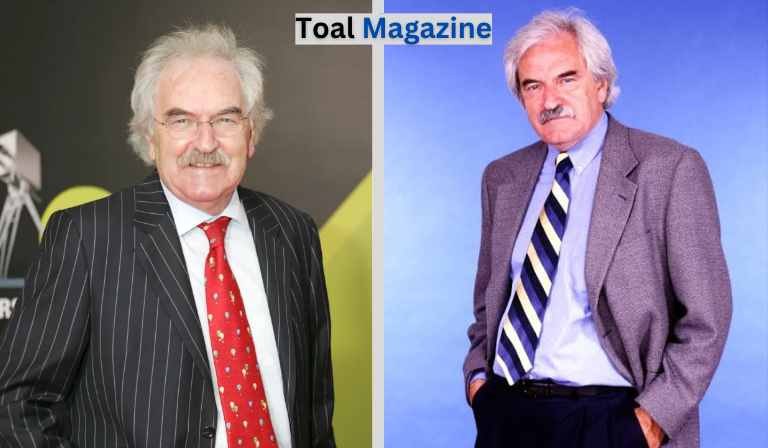
His appearance became almost as recognisable as his voice. The trademark moustache, neat clothing and relaxed posture contributed strongly to his television identity.
But his enduring image was really a combination of appearance and manner. The calm voice, precise phrasing and dry humour made him instantly identifiable even before audiences saw him on screen.
Personality and Interests
Away from the studio, Lynam has spoken about his enjoyment of travel, golf, reading and sport. He has described a particular affection for Thailand and Venice and has talked about enjoying golf while travelling.
His personality in interviews often reflected the same characteristics viewers saw on television: dry humour, self-awareness and a preference for keeping things understated.
He also understood that sport should not become overly serious. One of the most frequently noted aspects of his presenting philosophy was his ability to recognise the emotional importance of sport while maintaining a sense of perspective.
Does Desmond Lynam Have Children?
Yes. He has one son, Patrick Lynam, who was born in 1970 during his first marriage to Susan Skinner. Lynam has generally kept his family away from the intense publicity surrounding his broadcasting career.
That privacy is consistent with the way he has handled much of his personal life. While he has discussed his career extensively, he has rarely used his family relationships as part of his public profile.
Net Worth and Income
There is no reliably verified public figure for Lynam’s current net worth. Various websites have published estimates, but these figures are generally difficult to substantiate and should therefore be treated cautiously.
What is clear is that his career placed him among Britain’s highest-profile television presenters during several decades. His long-running BBC roles, ITV contract and work on programmes outside sport all contributed to his professional earnings.
Rather than relying on an unverified net-worth figure, it is more useful to measure his success through the scale and longevity of his broadcasting career.
Social Media Presence
Lynam built his reputation long before social media existed, and he has never been known as a major social-media personality.
That is significant because his generation of broadcasters established their public identities through television, radio, newspapers and live events rather than Instagram, TikTok or X.
Today, much of the online discussion surrounding him comes from football fans and broadcasting communities sharing memorable clips, photographs, interviews and quotations from his career.
Public Image and Legacy
Lynam’s public image has remained remarkably durable. He was admired not simply because he presented major programmes, but because he changed expectations of what a sports presenter could be.
He demonstrated that a presenter could be authoritative without sounding stiff, humorous without being distracting and glamorous without appearing artificial.
His influence can be seen in the generations of broadcasters who followed. Presenters such as Gary Lineker inherited the role of becoming the recognisable personality who connects football coverage with the viewer at home. Lynam’s influence on British sports television is therefore larger than any individual programme.
Desmond Lynam’s Autobiography
Lynam also reflected on his career in his autobiography, I Should Have Been at Work, published in 2005.
The book offered an opportunity to look back at the experiences behind a broadcasting career that had taken him from local radio to some of the biggest television events in the world. The title itself captures something of his characteristic humour and personality.
For admirers of his work, the autobiography provides another way of understanding the person behind the familiar television voice.
Conclusion
The story of Desmond Lynam is ultimately the story of a presenter who made professionalism look effortless. His years at the BBC established him as one of the defining voices of British sport, while his time on Match of the Day gave football audiences a presenter whose calm authority became part of the programme’s identity.
From Grandstand and Wimbledon to World Cups, the Olympics, ITV football and Countdown, his career crossed formats and generations. His achievements, including the BAFTA Richard Dimbleby Award and later OBE, reflect the respect he earned throughout British broadcasting.
For many viewers, however, the simplest measure of his legacy is the feeling associated with hearing his voice introduce another big night of football. Few presenters achieved that kind of familiarity—and even fewer made it look as easy as Lynam did.
FAQs About Desmond Lynam
1. Who is Desmond Lynam?
Desmond Lynam is an Irish-born British television and radio presenter best known for presenting major BBC sporting programmes, including Match of the Day and Grandstand.
2. When did Desmond Lynam present Match of the Day?
He presented Match of the Day from 1988 to 1999, becoming one of the programme’s most memorable hosts.
3. What other sports did Desmond Lynam cover?
His BBC career included Wimbledon, the Grand National, FIFA World Cups, the Olympic Games and other major sporting occasions.
4. Why did Desmond Lynam leave the BBC?
He left the BBC in 1999 and joined ITV for a new challenge in live football broadcasting. His ITV work included the Champions League and major international tournaments.
5. Did Desmond Lynam present Countdown?
Yes. He became the presenter of Countdown in 2005, demonstrating his versatility outside sports broadcasting.
6. Is Desmond Lynam married?
Yes. He married Rosemary Diamond in 2011 after many years as her partner. He was previously married to Susan Skinner.
7. Does Desmond Lynam have children?
Yes. He has one son, Patrick, from his first marriage.
8. What awards has Desmond Lynam received?
Among his major honours are the BAFTA Richard Dimbleby Award in 1994 and an OBE in the 2008 New Year Honours.