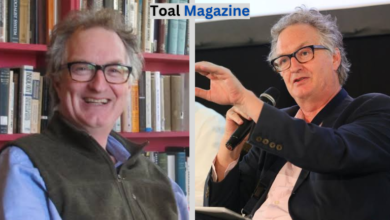

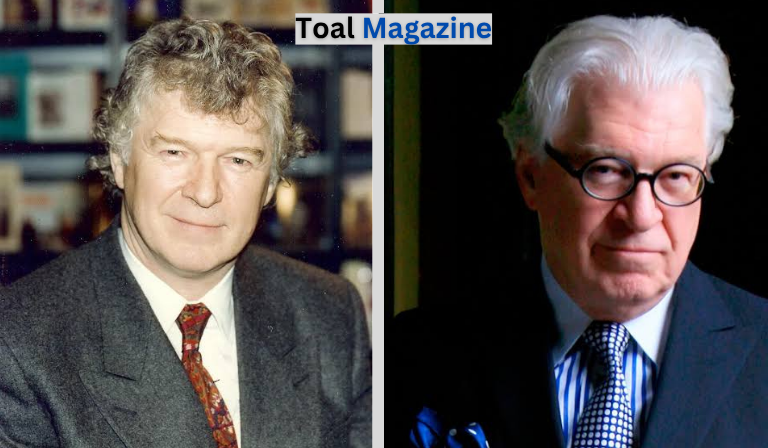
Frank Delaney was an acclaimed Irish novelist, journalist, broadcaster, and literary commentator whose career stretched across newspapers, radio, television, and fiction. Born in County Tipperary in 1942, he became widely recognized for his gift for storytelling, his fascination with Irish history, and his ability to make literature accessible to ordinary audiences. Before becoming a full-time writer, he worked in broadcasting and journalism, including a significant period with the BBC.
He later wrote the bestselling historical novel Ireland, along with several other works rooted in Irish history and storytelling traditions. He was also deeply interested in James Joyce and devoted years to explaining Ulysses through his Re:Joyce podcast. His death on February 21, 2017, brought an end to a remarkably varied career, but his books and broadcasts continue to preserve his literary legacy.
Quick Facts About Frank Delaney
| Fact | Details |
|---|---|
| Full name | Francis James Joseph Raphael Delaney |
| Born | October 24, 1942 |
| Birthplace | Thomastown, County Tipperary, Ireland |
| Died | February 21, 2017 |
| Age at death | 74 |
| Profession | Novelist, journalist, broadcaster, author |
| Best-known novel | Ireland |
| Major BBC programme | Bookshelf |
| Other broadcasting work | Word of Mouth, The Celts, Poetry Please |
| Famous later project | Re:Joyce podcast |
| Notable nonfiction | Simple Courage |
| Children | Three sons |
| Literary focus | Irish history, storytelling, language, literature |
Early Life and Background
Frank Delaney was born on October 24, 1942, in Thomastown, County Tipperary. He was the son of Edward Delaney, a primary school headteacher, and Elizabeth O’Sullivan, who worked as a kindergarten teacher. Both parents were also involved in teachers’ trade unionism.
From an early age, Delaney developed a strong appetite for reading. He attended the Abbey school in Tipperary, a Christian Brothers school, but his educational path did not follow the conventional route. He failed his leaving certificate and subsequently entered the Bank of Ireland, where he worked from 1961 until 1972.
That early experience is important because Delaney’s later career showed that formal academic success was not the only route to intellectual achievement. His curiosity, reading, communication skills, and determination eventually led him into broadcasting and literature.
His Age and Physical Features
Frank Delaney died on February 21, 2017, at the age of 74. He had been born in 1942, meaning his life covered a period of major changes in Irish society, British broadcasting, publishing, and international media.
Descriptions of Delaney generally focused more on his distinctive voice, intelligence, expressive speaking style, and Irish accent than on detailed information about his physical appearance. His public identity was strongly connected to the way he spoke and communicated.
He became famous for his eloquence, and the Guardian noted that his clear thinking and distinctive Irish accent helped make him especially memorable to radio audiences.
Career and Major Achievements
Delaney’s professional life began outside literature. After leaving the Bank of Ireland, he moved into broadcasting with Ireland’s state broadcaster RTÉ, working as a continuity announcer and newsreader. He subsequently joined the BBC as a news reporter, first based in Dublin before moving to London.
His BBC career became a major foundation for his later success. In 1978, he launched Bookshelf on BBC Radio 4, a programme that brought authors and their books to a broad audience. During the programme’s first six years, he interviewed more than 1,000 writers, including major international literary figures.
Delaney’s approach was deliberately accessible. He was interested in reaching readers rather than reinforcing literary elitism, a philosophy that helped distinguish him from more formal academic commentators.
His broadcasting work expanded further. He presented Poetry Please and created Word of Mouth, a programme dedicated to the English language and how it is spoken. On television, he presented the arts programme Omnibus and the six-part series The Celts, which was originally broadcast in 40 countries.
These achievements established him as much more than a novelist. He was an influential cultural broadcaster who could move comfortably between journalism, literature, history, and language.
Literary Career
Delaney eventually became a full-time writer, bringing together his journalistic discipline and his love of storytelling. His fiction often explored Ireland’s past, particularly the social and political changes that shaped the country during the nineteenth and twentieth centuries.
His best-known novel, Ireland, was published in 2004 and became a New York Times bestseller. The story begins in rural Ireland in 1951, when an itinerant storyteller arrives at a house and captivates a young boy with tales about the nation’s past.
This structure reflected one of Delaney’s central beliefs: history survives through stories. Rather than presenting Ireland’s past as a dry sequence of events, he used characters, memory, legends, conflict, and family experiences to make history feel personal.
Other major books included Tipperary, Shannon, Venetia Kelly’s Traveling Show, The Matchmaker of Kenmare, and The Last Storyteller. His novels were praised for combining historical research with adventure, romance, politics, and the traditions of Irish storytelling.
His nonfiction writing was also significant. Simple Courage: A True Story of Peril on the Sea examined a dramatic maritime disaster and the courage displayed by those involved.
Frank Delaney and James Joyce
One of the most fascinating aspects of Delaney’s career was his long relationship with the work of James Joyce.
His interest in Joyce began well before the Re:Joyce podcast. While working on Bookshelf, he became increasingly fascinated by Ulysses. In 1981, he published James Joyce’s Odyssey: A Guide to the Dublin of Ulysses, a detailed guide that included maps showing the routes taken by characters in the novel.
Years later, he returned to Joyce in an even more ambitious way. In 2010, he launched the weekly Re:Joyce podcast on Bloomsday, June 16, the date on which the events of Ulysses take place.
The project examined the novel line by line, exploring its language, history, references, symbolism, and cultural background. According to the Guardian’s obituary, the project eventually represented around 100 hours of material.
The podcast perfectly captured Delaney’s wider mission as a broadcaster: taking difficult literature and making it understandable without taking away its complexity.
Marriage and Family Life
Frank Delaney’s personal life included several marriages. He married Eilish Kelliher in 1966, and they had three sons: Frank, Bryan, and Owen. The marriage later ended in divorce.
He subsequently married Susan Collier in 1988 and novelist Salley Vickers in 1999; both marriages also ended in divorce. In 2002, he married Diane, who was his wife at the time of his death.
Delaney was survived by Diane, his three sons, three grandchildren, and four siblings. His family remained an important part of the private side of a life that was otherwise highly public through broadcasting and publishing.
Relationship With Literature and Storytelling
For Delaney, storytelling was not merely a profession. It was a way of understanding people, culture, and history.
His novels repeatedly featured storytellers or characters who carried memories from one generation to another. This interest was also evident in his broadcasting, where he encouraged writers to discuss their work in ways that could engage a broad audience.
He once described his approach to literary broadcasting as aiming for the widest possible audience because of his suspicion of literary snobbery. That attitude helps explain why his programmes reached people who might otherwise have found literary discussion intimidating.
Social Media Presence
Frank Delaney died in 2017, before social media became as central to authors’ public identities as it is today. Consequently, there is no modern personal social-media presence from him in the way living writers commonly maintain Instagram, X, Facebook, or TikTok accounts.
His digital legacy instead exists through archives, publisher pages, recordings, and the Re: Joyce material associated with his literary work. His continued online visibility comes primarily from readers, publishers, literary organizations, and people interested in Joyce and Irish history.
Personality and Interests
Accounts of Delaney portray him as articulate, curious, enthusiastic, and deeply interested in communication. His nickname, described in the Guardian obituary as “the most eloquent man in the world,” reflected his extraordinary command of spoken language.
His interests were broad but consistently connected by language. Irish history, literature, the English language, journalism, storytelling, broadcasting, and James Joyce all became major parts of his professional life.
He also enjoyed engaging with popular culture and was known for discussing subjects beyond books. His ability to move naturally between serious literature and everyday conversation helped make him an unusually versatile broadcaster.
Net Worth and Income
There is no reliably verified public figure for Frank Delaney’s net worth at the time of his death. Publishing earnings, broadcasting contracts, speaking engagements, royalties, and other private financial arrangements were not publicly documented in a way that would support a trustworthy exact estimate.
For that reason, online figures claiming a specific net worth should be treated cautiously. What can be established is that Delaney had a long and successful career across BBC broadcasting, publishing, journalism, television, and international book sales.
His Ireland novel became a New York Times bestseller, while books such as Tipperary, Shannon, and The Matchmaker of Kenmare continued his commercial publishing career.
Public Image and Legacy
Frank Delaney’s public image was shaped by two qualities: his extraordinary verbal skill and his commitment to making culture accessible.
As a broadcaster, he introduced countless listeners to authors and ideas. As a novelist, he transformed Irish history into expansive stories filled with memorable characters. As a Joyce enthusiast, he attempted to make one of the most challenging novels in English literature easier to understand.
His work also had an international reach. The Celts was broadcast in 40 countries, while his books attracted readers far beyond Ireland.
Perhaps his most lasting contribution was his belief that literature should belong to everyone. He did not treat books as possessions of academics or critics. Instead, he presented them as stories that could be shared, discussed, questioned, and enjoyed.
What Happened to Frank Delaney?
Frank Delaney died on February 21, 2017, at the age of 74, following complications from a stroke. His death came after decades of journalism, broadcasting, writing, and literary exploration.
At the time of his death, he was still closely associated with the Re:Joyce project and remained an active intellectual voice. His passing marked the loss of one of the distinctive Irish literary broadcasters of his generation.
However, his influence did not end with his death. His novels remain available to readers, his broadcasts and interviews continue to be remembered, and his detailed exploration of Joyce remains particularly valuable for readers seeking a guided way into Ulysses.
Conclusion
Frank Delaney lived a career that was unusually broad yet remarkably consistent. Whether he was reporting for the BBC, interviewing an author on Bookshelf, presenting a television documentary, writing about Irish history, or explaining James Joyce, he was always concerned with the power of words.
His life ended in 2017, but his books and recordings continue to demonstrate why he became such a respected cultural figure. His greatest legacy is perhaps his ability to turn history and literature into stories that feel alive, personal, and relevant.
For anyone interested in Irish writing, broadcasting, or literary history, his career offers an extraordinary example of how journalism, storytelling, and scholarship can come together.
FAQs About Frank Delaney
Who was Frank Delaney?
Frank Delaney was an Irish novelist, journalist, broadcaster, and author best known for his historical fiction, BBC broadcasting career, and work explaining James Joyce.
When was Frank Delaney born?
He was born on October 24, 1942, in Thomastown, County Tipperary, Ireland.
When did Frank Delaney die?
He died on February 21, 2017, aged 74, following complications from a stroke.
What was Frank Delaney’s most famous book?
His best-known novel was Ireland, published in 2004. It became a New York Times bestseller and explored Irish history through the tradition of storytelling.
What BBC programme did Frank Delaney host?
He created and hosted Bookshelf on BBC Radio 4 and interviewed more than 1,000 authors during the programme’s early years. He also worked on Word of Mouth, Poetry Please, Omnibus, and The Celts.
Did Frank Delaney write about James Joyce?
Yes. He wrote James Joyce’s Odyssey: A Guide to the Dublin of Ulysses and later created the Re:Joyce podcast, which examined Ulysses in detail.
Was Frank Delaney married?
Yes. He married several times and had three sons, Frank, Bryan, and Owen. His final marriage was to Diane, whom he married in 2002.
Why is Frank Delaney still remembered?
He is remembered for bringing Irish history and literature to broad audiences through books, radio, television, and his work on Joyce. His storytelling style and belief in accessible literature remain central to his reputation.