
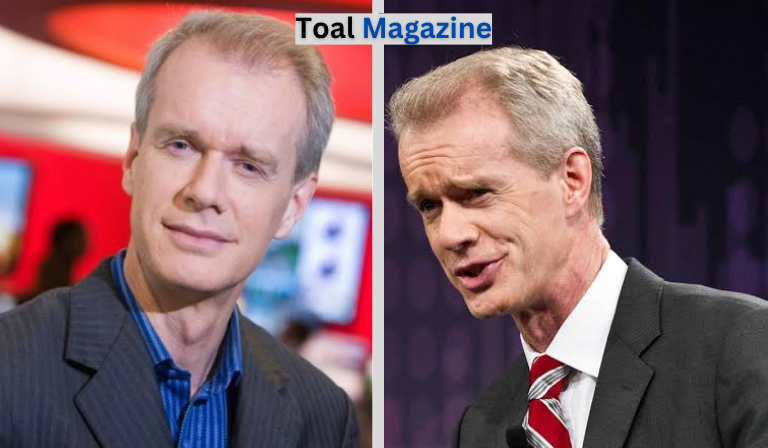
Stephen Sackur is one of the most recognizable names in British international journalism, best known for his long-running role as the presenter of the BBC’s acclaimed current affairs program HARDtalk. For nearly two decades, he became famous for asking direct, challenging questions to presidents, prime ministers, business leaders, activists, and other influential figures.
However, his career began long before HARDtalk. Sackur spent many years working as a foreign correspondent, reporting from major global news centers and covering wars, elections, political upheaval, and international crises. His experience in the field helped shape the calm, informed, and persistent interviewing style that later became his trademark.
After HARDtalk ended in March 2025, Sackur moved into a new phase of his broadcasting career with Times Radio. His professional journey offers a fascinating look at how a reporter can evolve from frontline correspondent to one of television’s most respected interviewers.
Quick Facts About Stephen Sackur
| Fact | Details |
|---|---|
| Full Name | Stephen Sackur |
| Date of Birth | 9 January 1964 |
| Birthplace | Spilsby, Lincolnshire, England |
| Nationality | British |
| Profession | Journalist, Broadcaster, Interviewer, Author |
| Education | King Edward VI Grammar School; Emmanuel College, Cambridge; Harvard University |
| Degree | BA Honours in History |
| Famous For | Presenting BBC HARDtalk |
| BBC Career | Foreign correspondent and HARDtalk presenter |
| HARDtalk | Main presenter from 2005 until March 2025 |
| Current Broadcasting Work | Times Radio |
| Major Book | On the Basra Road |
| Recent Book | Hard Truth |
| Award | International TV Personality of the Year, 2010 |
Early Life and Background
Stephen Sackur was born on 9 January 1964 in Spilsby, Lincolnshire, England. He was educated at King Edward VI Grammar School before continuing his studies at Emmanuel College, Cambridge, where he earned a BA Honours degree in history.
His academic background is important when looking at his later career. History requires careful examination of evidence, context, political developments, and competing interpretations—all qualities that became central to Sackur’s approach to journalism.
He later attended Harvard University’s John F. Kennedy School of Government as a Henry Fellow. His time in the United States added an international dimension to his education and broadened his understanding of politics and public affairs.
Sackur’s early professional path eventually led him into BBC journalism, where he developed experience that would later become invaluable in high-profile interviews.
Stephen Sackur’s Age and Physical Features
Born in 1964, Stephen Sackur is 62 years old in 2026. His long broadcasting career means that many viewers have watched him evolve from a younger international reporter into one of Britain’s most established interviewers.
Sackur is often recognized on screen for his composed appearance and professional presentation. Rather than relying on dramatic gestures or an exaggerated broadcasting personality, he tends to maintain a serious and controlled style that keeps attention on the interview itself.
Publicly available information does not consistently provide detailed verified measurements such as his exact height or weight, so such figures should not be treated as established facts.
Stephen Sackur’s Journalism Career
The foundation of Stephen Sackur’s career was built through foreign reporting. According to his publisher’s biography, he joined the BBC as a graduate trainee and later spent many years reporting internationally, covering major events including the 1989 revolutions, the fall of the Berlin Wall, and the first Gulf War.
His overseas assignments included Cairo, Jerusalem, Washington, and other important political centers. These roles exposed him to governments, diplomats, military conflicts, elections, and social unrest.
Reporting from different parts of the world also required him to work under pressure. A foreign correspondent has to understand complicated stories quickly, communicate clearly, and separate facts from competing political narratives.
That background became one of Sackur’s greatest professional strengths when he moved into television interviewing.
His Work as a Foreign Correspondent
Sackur spent a significant part of his early BBC career covering the Middle East. He was based in Cairo from 1992 to 1995 and later worked from Jerusalem between 1995 and 1997, according to Hachette’s biography.
He subsequently moved to Washington, where he covered the 2000 U.S. presidential election. His journalism career therefore developed across different political systems and regions rather than being limited to British domestic affairs.
His reporting experience also included the first Gulf War. One of the major stories associated with Sackur was his reporting on the killing of retreating Iraqi forces on the Basra road, an episode that later inspired his book On the Basra Road.
These experiences helped establish him as a journalist comfortable with difficult subjects and international political stories.
Stephen Sackur and BBC HARDtalk
The biggest chapter in Stephen Sackur’s career began in 2005 when he became the main presenter of BBC HARDtalk.
The program was built around serious, focused interviews with influential people. Instead of offering guests an easy platform for prepared statements, HARDtalk encouraged detailed questioning about controversial policies, political decisions, international disputes, and public accountability.
Sackur became closely associated with this format. His interviews were often intense, but they were usually driven by research rather than confrontation for its own sake.
He frequently returned to unanswered questions, challenged inconsistencies, and asked guests to explain how their claims matched the available evidence. This was a major reason viewers came to associate his name with rigorous political interviewing.
Why Was Stephen Sackur Famous?
Stephen Sackur became famous largely because of his interviewing technique. His style was persistent, analytical, and direct.
Many television interviews are designed partly to create a comfortable conversation. Sackur’s approach was different. When a guest avoided a question, he was willing to repeat or reframe it. When an answer appeared inconsistent, he often challenged the contradiction rather than simply moving to another topic.
The Association for International Broadcasting recognized these qualities when it named Sackur International TV Personality of the Year for 2010. The judges praised him as knowledgeable and well prepared and highlighted his willingness to hold interviewees to account.
That recognition reflected something audiences had already noticed: Sackur’s interviews were built around preparation and accountability.
Major Achievements and Career Highlights
One of Sackur’s most significant achievements was his successful transition from international reporting to high-profile interviewing without losing the investigative qualities of his earlier work.
His reporting career gave him first-hand knowledge of global politics, while HARDtalk allowed him to use that knowledge in direct conversations with powerful people.
Another important achievement is the longevity of his BBC career. He presented HARDtalk from 2005 until its final episode in March 2025, giving him a two-decade run on one of the BBC’s best-known international interview programs.
His work has also expanded beyond television. Sackur has written about journalism, war reporting, politics, and the responsibilities of the media, reinforcing his position as both a broadcaster and an author.
Stephen Sackur as an Author
Sackur’s writing career began with On the Basra Road, inspired by his reporting during the Gulf War.
His more recent work takes a wider look at the role of journalism itself. Hard Truth examines major investigative stories and the risks faced by journalists trying to uncover corruption, abuses of power, and political wrongdoing.
According to publisher information, Hard Truth explores ten major investigations and considers the future of journalism in an environment increasingly shaped by disinformation, political pressure, and technological change.
The book fits naturally with the central theme of Sackur’s professional life: the importance of asking difficult questions and holding people in power to account.
Relationship, Marriage and Family Life
Stephen Sackur has generally kept his private life away from the intense public attention surrounding his professional career. Unlike some television personalities, he does not regularly use his broadcasting profile to discuss intimate family matters.
As a result, there is limited reliable public information about his marriage, spouse, or wider family life. Claims circulating online about private relationships should be treated carefully unless supported by a trustworthy source.
This privacy appears consistent with the way Sackur has conducted himself professionally. He has generally allowed his journalism, rather than his personal life, to define his public image.
Social Media Presence
Stephen Sackur has maintained a public profile primarily through journalism and broadcasting rather than celebrity-style social media activity.
His professional work is the main focus of public discussion around him, including interviews, current affairs appearances, journalism events, and his writing. Unlike many contemporary media personalities, he has not built his reputation around sharing large amounts of personal lifestyle content online.
For audiences interested in his latest professional activities, Times Radio and established media outlets are generally more relevant sources than unofficial social media accounts.
Personality and Interests
Stephen Sackur’s on-screen personality is serious, composed, and highly focused. His interviews suggest an interviewer who values preparation and accuracy more than entertainment.
His professional interests clearly include international politics, journalism, democracy, media freedom, conflict, and public accountability. His books also demonstrate a strong interest in investigative reporting and the role journalists play in challenging powerful institutions.
His approach is sometimes described as tough, but his award recognition also points to another quality: preparation. The AIB judges specifically praised his knowledge of his subjects and his ability to stay focused on the questions that mattered to viewers.
Does Stephen Sackur Have Children?
There is no consistently verified public information that provides a detailed account of Stephen Sackur’s children or family arrangements.
Because he keeps his personal affairs relatively private, it is best to avoid presenting unverified claims about children, family members, or private relationships as fact.
For public-interest profiles, the strongest focus remains his documented journalism career, which is where most reliable information about Sackur is available.
What Is Stephen Sackur Doing Now?
After the conclusion of HARDtalk in March 2025, Sackur began a new chapter with Times Radio. Hachette’s current biographical material states that he joined Times Radio in June 2025 as a regular presenter of The Times at One.
The move represents a continuation rather than a complete change of direction. Sackur remains involved in current affairs broadcasting, using the interviewing and analytical skills he developed during his BBC career.
His transition to radio also shows the durability of his professional reputation. Even after leaving the program most closely associated with his name, he remains active in serious political and news broadcasting.
Public Image and Legacy
Stephen Sackur’s legacy is closely connected to the idea of the demanding interview. During his time on HARDtalk, he helped preserve a style of broadcasting in which prominent guests were expected to answer detailed questions rather than simply promote themselves.
His career also illustrates the value of experience. Before becoming a well-known interviewer, he spent years reporting from some of the world’s most difficult and politically important locations.
That combination of field reporting and studio interviewing gave him a distinctive perspective. He understood not only how politicians speak but also how international events unfold beyond official statements.
In an era when short clips and social media reactions often shape interviews, Sackur’s career represents a more traditional model of journalism: research deeply, challenge claims, and keep asking questions when the answers are incomplete.
Why Stephen Sackur Remains Relevant
Even though HARDtalk has ended, the issues that shaped Sackur’s journalism remain highly relevant. Political polarization, misinformation, international conflict, government accountability, and media independence continue to dominate public debate.
His move into radio and his work as an author allow him to continue engaging with these subjects from different angles.
His career also offers a useful lesson for aspiring journalists. Strong interviewing is not simply about speaking confidently. It requires preparation, subject knowledge, careful listening, recognizing evasive answers, and the courage to pursue difficult questions.
Conclusion
Stephen Sackur has had a remarkable career that stretches from frontline international reporting to some of the most challenging interviews in British broadcasting. His years as a foreign correspondent gave him practical experience of global politics, while his long tenure on HARDtalk turned him into a familiar and respected television interviewer.
From the Gulf War and major political elections to conversations with influential world leaders, Sackur has consistently focused on accountability and serious journalism. His 2010 International TV Personality of the Year award recognized the knowledge and preparation that became central to his professional reputation.
With HARDtalk ending in 2025, his work at Times Radio marks a new stage rather than the end of his career. Through broadcasting and writing, Stephen Sackur continues to explore the role of journalism in questioning power and pursuing the truth.
FAQs About Stephen Sackur
1. Who is Stephen Sackur?
Stephen Sackur is a British journalist and broadcaster best known for presenting BBC HARDtalk from 2005 until the program’s final episode in March 2025.
2. How old is Stephen Sackur?
Stephen Sackur was born on 9 January 1964, making him 62 years old in 2026.
3. Where was Stephen Sackur born?
He was born in Spilsby, Lincolnshire, England.
4. What did Stephen Sackur study?
He studied history at Emmanuel College, Cambridge, and later attended Harvard University’s John F. Kennedy School of Government as a Henry Fellow.
5. Why is Stephen Sackur famous?
He is famous for his rigorous interviewing style on HARDtalk, where he questioned politicians, world leaders, public figures, and other influential guests.
6. When did Stephen Sackur leave HARDtalk?
Sackur presented HARDtalk until its final episode in March 2025.
7. What is Stephen Sackur doing now?
He joined Times Radio in June 2025 as a regular presenter of The Times at One.
8. What books has Stephen Sackur written?
His notable books include On the Basra Road and Hard Truth: 10 Investigations That Shook the World – and Why They Matter Now.