

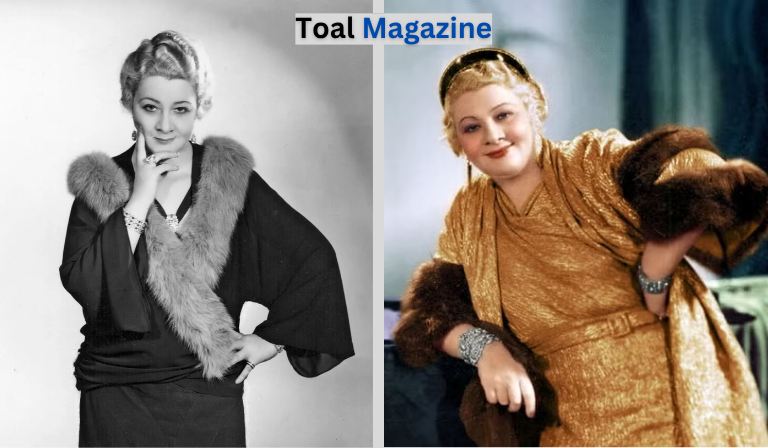
Sophie Tucker was one of the most memorable entertainers of the 20th century. Known as “The Last of the Red-Hot Mamas,” she became famous for her powerful singing voice, fearless humor, and confident stage presence. Her career stretched across vaudeville, Broadway, recordings, radio, film, and television, making her one of the most versatile performers of her generation.
Born into a Jewish immigrant family, she overcame discrimination and restrictive beauty standards to build an international reputation. Her performances of “Some of These Days” and “My Yiddishe Momme” became closely associated with her name, while her outspoken personality helped her connect with audiences from different backgrounds.
But her success involved more than music and comedy. Sophie Tucker also supported charitable causes and advocated for fellow entertainers. Her remarkable journey explains why she remains an important figure in American entertainment history.
Sophie Tucker Quick Facts
| Fact | Details |
|---|---|
| Full name | Sophie Tucker |
| Birth name | Sofia Kalish |
| Date of birth | January 13, 1886, according to the Connecticut Women’s Hall of Fame |
| Place of birth | Tulchyn, Russian Empire, now Ukraine |
| Nationality | American |
| Ethnicity | Jewish heritage |
| Profession | Singer, comedian, actress, and radio personality |
| Famous nickname | The Last of the Red-Hot Mamas |
| Signature song | Some of These Days |
| Other famous song | My Yiddishe Momme |
| First husband | Louis Tuck |
| Children | One son, Bert |
| Marriages | Three |
| Known for | Vaudeville, music, comedy, and philanthropy |
| Date of death | February 9, 1966 |
| Age at death | 80 years |
Early Life and Background
Sophie Tucker was born Sofia Kalish on January 13, 1886, in Tulchyn, a town in the Russian Empire that is now part of Ukraine. Some biographical accounts list her birth year as 1887, so historical sources do not agree on the exact year.
Her Jewish family immigrated to the United States when she was an infant. They settled in Hartford, Connecticut, where her parents opened a kosher restaurant to earn a living and establish a new home.
Growing up in a hardworking immigrant family taught Sophie the importance of determination. She helped with the family business and discovered that entertaining customers could earn her extra money. She began singing in the restaurant, often receiving tips from people who enjoyed her performances.
These early experiences helped her develop confidence and an understanding of what audiences enjoyed. She learned how to use humor, facial expressions, and an expressive voice to make people pay attention.
However, performing was not necessarily the future her family had imagined for her. Sophie wanted independence and dreamed of becoming a professional entertainer.
After marrying Louis Tuck as a teenager and becoming a mother, she eventually decided to pursue her ambitions in New York City. The move marked a major turning point in her life.
Her early experiences did not guarantee success, but they gave her a foundation for building a career in a competitive industry.
Her Age and Physical Features
Sophie Tucker was 80 years old when she died on February 9, 1966. She spent nearly six decades performing professionally, demonstrating remarkable endurance in an industry where entertainers often faced pressure to remain young and fashionable.
She was known for her full-figured appearance, expressive face, and distinctive stage costumes. At a time when women in entertainment were frequently expected to meet narrow beauty standards, Tucker did not fit the conventional image of a glamorous leading lady.
Some early managers believed that audiences would not accept her appearance as it was. Instead of allowing those judgments to end her ambitions, she gradually developed a performance style that made her individuality part of her appeal.
Her clothing, jewelry, confident expressions, and commanding movements contributed to her recognizable stage image. She understood that an entertaining personality could be just as important as conventional beauty.
Rather than hiding her appearance, Tucker used self-deprecating humor to connect with audiences. Her jokes often addressed subjects that other performers might have avoided, allowing her to challenge expectations on her own terms.
Her physical presence became an important part of her act, but her musical ability and comedic timing were equally essential to her success.
How Sophie Tucker Started Her Career
Sophie Tucker began her professional journey during an era when vaudeville and burlesque provided opportunities for singers, comedians, dancers, and other live performers.
After moving to New York around 1906, she searched for work at theaters and entertainment venues. Like many aspiring performers, she faced rejection and financial uncertainty while trying to establish herself.
One of the most troubling parts of her early career involved blackface performances. Some managers believed audiences would not accept Tucker performing as herself because of her appearance, so they encouraged her to adopt a minstrel-style act.
Blackface was rooted in racist theatrical traditions that mocked Black people. Although Tucker initially performed in this format to obtain work, she eventually abandoned the disguise and established a stage identity based on her own personality.
A frequently recounted story describes her taking the stage without blackface when her makeup was unavailable before a performance. The audience responded favorably, helping demonstrate that she could succeed as herself.
Her career developed quickly after she established her distinctive style. She gained attention through vaudeville performances, humorous songs, and a direct relationship with her audience.
In 1909, Tucker briefly appeared in the Ziegfeld Follies, a famous theatrical revue. The experience exposed her to a wider entertainment world, but she continued building her reputation through independent performances.
Her early struggles eventually became part of the larger story of how she challenged industry expectations and created her own path to success.
Career and Major Achievements
Sophie Tucker’s career stands out because she adapted to changing entertainment trends while maintaining a recognizable personality. She performed on stage, recorded songs, appeared in films, worked in radio, and later reached television audiences.
Her achievements reflected both her artistic abilities and her understanding of popular entertainment.
One of her most important accomplishments was recording “Some of These Days” in 1911. Written by African American composer Shelton Brooks, the song became her signature number and helped strengthen her reputation as a recording artist.
Tucker also gained recognition for “My Yiddishe Momme,” which she began performing in 1925. The emotional song celebrated the bond between a child and a Jewish mother, connecting her musical success with her cultural background.
Her performances often combined sentimental music with cheeky humor. She could make an audience laugh with a playful number and then move listeners with a heartfelt ballad.
In 1929, she made her film debut in Honky Tonk. She later appeared in films including Thoroughbreds Don’t Cry and Broadway Melody of 1938, the latter featuring Judy Garland.
Radio provided another way for her to reach people beyond the theater. As television gained popularity, she appeared on programs including The Ed Sullivan Show, introducing her performance style to new generations.
Her career also included important professional and charitable accomplishments. In 1938, she became president of the American Federation of Actors, reflecting her involvement in efforts to organize and represent professional performers.
In 1945, she published her autobiography, Some of These Days, offering readers a personal account of her life and career.
Together, these achievements established Tucker as far more than a popular singer. She was an entertainer who understood how to remain relevant as the industry evolved.
Why Was Sophie Tucker Called the Last of the Red-Hot Mamas?
Sophie Tucker’s famous nickname reflected her bold approach to music, comedy, and public performance.
The term “Red-Hot Mama” was associated with songs about romance, relationships, and desire. Tucker performed these numbers with confidence and humor, often discussing subjects that were considered risqué for women entertainers during her time.
She did not present herself as a shy or reserved performer. Instead, she embraced an outspoken personality and used jokes, expressive delivery, and playful storytelling to hold an audience’s attention.
Her humor frequently challenged expectations about how women should look and behave. She could make fun of herself while also questioning the standards that society imposed on female performers.
This style helped her connect with audiences who appreciated her honesty and larger-than-life personality.
The word “last” also linked her identity to the vaudeville tradition. As live variety shows lost ground to other forms of entertainment, Tucker continued working and carrying elements of that performance style into radio, film, and television.
Her nickname became more than a catchy description. It represented the independent spirit and distinctive personality that helped make her famous.
Marriage and Family Life
Sophie Tucker’s family life included three marriages and one son. Her first husband was Louis Tuck, whom she married when she was young.
The couple had a son named Bert, but their marriage eventually ended. Tucker later used a variation of her former husband’s surname as her professional name, becoming known as Sophie Tucker.
As her career developed, she spent long periods away from home performing for audiences. Her son was cared for by family members during her early years in show business, a decision that reflected the personal sacrifices involved in pursuing her ambitions.
Her second husband was Frank Westphal, a pianist associated with her professional world. That marriage also ended in divorce.
She later married Al Lackey, her business manager. This marriage, too, ended.
Although these relationships did not last, Tucker remained focused on her professional goals and maintained connections with her family.
Her personal experiences were often reflected indirectly in the themes of her songs and humor. She understood that love, heartbreak, independence, and family responsibilities were familiar subjects for audiences.
Personality and Interests
Sophie Tucker was known for her confidence, wit, generosity, and ability to make people feel connected to her performances.
Her stage personality was bold and outspoken, but she also had a sentimental side. Songs such as “My Yiddishe Momme” revealed an emotional depth that contrasted with the cheekier material for which she was famous.
She took pride in her Jewish heritage and supported causes connected to Jewish communities. Her philanthropy also extended to hospitals, educational programs, youth organizations, and other charitable institutions.
Tucker was generous toward family members and friends. Historical accounts also describe her as a capable businesswoman who made investments and used her earnings to support people and organizations important to her.
Her professional interests went beyond performing. As president of the American Federation of Actors, she took part in efforts to improve representation for entertainers.
Her life demonstrated that humor and compassion could exist alongside ambition. She enjoyed the rewards of her success while also recognizing the importance of supporting others.
Did Sophie Tucker Have Children?
Yes, Sophie Tucker had one son, Bert, from her first marriage to Louis Tuck.
Becoming a mother at a young age presented a difficult challenge as she began pursuing a professional career. When she left Hartford for New York, her infant son remained in the care of family members.
This decision helped Tucker pursue opportunities in an entertainment industry that required extensive travel and long working hours. It also reflected the difficult choices women sometimes faced when balancing family responsibilities with career ambitions.
Although Tucker became widely recognized for her performances, her family remained part of her personal story.
She did not have a publicly documented large family of her own, and Bert was her only widely recorded child.
Net Worth and Income
Sophie Tucker earned money through several parts of the entertainment industry, including live performances, music recordings, film appearances, radio work, and television.
Her long career and international popularity allowed her to build financial success at a time when relatively few women achieved comparable prominence in show business.
She also demonstrated business sense by investing some of her earnings. Historical accounts describe her supporting relatives, contributing to charitable causes, and using her wealth to help organizations in which she believed.
However, there is no sufficiently reliable, widely accepted public estimate of her net worth at the time of her death. Modern figures sometimes attributed to historical celebrities can be speculative, especially when they do not account for historical currency values, assets, expenses, or charitable donations.
For that reason, assigning an exact dollar amount to Tucker’s wealth would be misleading.
Her financial achievements are better understood through her sustained professional success, investments, and generosity than through an unsupported net worth estimate.
Social Media Presence
Sophie Tucker lived long before social media platforms existed, so she never maintained a personal Instagram, Facebook, TikTok, or X account.
During her lifetime, her connection with fans came through live performances, recordings, radio appearances, television programs, press coverage, and fan mail.
Her popularity was substantial enough that she received large amounts of correspondence from admirers. This personal connection helped sustain her public profile throughout her career.
Today, her performances and historical photographs can still be discovered through online archives, music collections, documentaries, and entertainment-history websites. These resources help introduce her work to audiences who were born long after her death.
Although she cannot communicate directly with modern fans, her recordings preserve elements of her voice, humor, and personality.
Her continuing presence in historical and musical discussions shows how artists can remain culturally relevant even when they belong to a very different media era.
Public Image and Lasting Legacy
Sophie Tucker’s legacy rests on her music, comedy, independence, and determination to succeed despite prejudice.
She challenged the beauty expectations placed on women entertainers and demonstrated that a successful public identity could be built around personality rather than conventional glamour.
Her career also offers an important historical lesson about discrimination. Her early experiences with blackface reflected the racist traditions of American entertainment. Her eventual success performing without that disguise marked a turning point in her own professional life, although it does not erase the wider history of the practice.
Tucker’s music also preserved important connections to Jewish culture. “My Yiddishe Momme” became especially meaningful to Jewish listeners, and the song was later prohibited under Nazi rule because of its Jewish associations.
Her philanthropic work strengthened her legacy beyond the stage. She helped support charitable causes, educational institutions, hospitals, and performers’ organizations.
Later entertainers have been associated with her influence, particularly through her combination of comedy, musical performance, and an unapologetically bold stage personality.
Her story continues to interest historians and music lovers because it captures an era of enormous change in entertainment.
Ultimately, Tucker showed that individuality could become a source of strength. Her talent helped her succeed, but her willingness to challenge expectations made her particularly memorable.
Conclusion
Sophie Tucker became a legendary American entertainer because she combined exceptional musical talent with confidence, humor, business sense, and a willingness to challenge convention.
From singing for tips at her family’s restaurant to entertaining audiences internationally, she built a career that spanned vaudeville, recordings, film, radio, and television. Her signature songs, distinctive comedy, and famous nickname helped establish her place in popular culture.
Her influence extended beyond entertainment through her philanthropy and support for fellow performers. She also confronted restrictive beauty standards and developed a public identity that reflected her own personality.
Although she died in 1966, her recordings and historical legacy continue to introduce her work to new generations.
Her story remains an inspiring example of persistence and independence. She did not become successful by fitting every expectation placed on her. Instead, she demonstrated the lasting power of talent, originality, and confidence.
Frequently Asked Questions About Sophie Tucker
1. Who was Sophie Tucker?
Sophie Tucker was an American singer, comedian, actress, and radio personality. She became famous for her powerful voice, provocative humor, and long career in entertainment.
2. Why was Sophie Tucker famous?
She was best known for her signature song “Some of These Days,” her performance of “My Yiddishe Momme,” and her nickname, “The Last of the Red-Hot Mamas.”
3. When was Sophie Tucker born?
She was born on January 13. The Connecticut Women’s Hall of Fame lists her birth year as 1886, although some biographies give 1887.
4. How old was Sophie Tucker when she died?
She was 80 years old when she died on February 9, 1966, according to the commonly cited 1886 birth year.
5. Was Sophie Tucker married?
Yes. She married Louis Tuck, Frank Westphal, and Al Lackey at different points in her life. All three marriages eventually ended.
6. Did Sophie Tucker have children?
Yes. She had one son named Bert with her first husband, Louis Tuck.
7. What were Sophie Tucker’s most famous songs?
Her best-known songs included “Some of These Days” and “My Yiddishe Momme.” Both became closely associated with her musical career.
8. What made Sophie Tucker an important figure in entertainment history?
She challenged conventional beauty standards, developed a distinctive style of comedy and singing, adapted to changing entertainment technologies, and supported charitable causes. Her long career helped make her one of the most memorable entertainers of her era.