
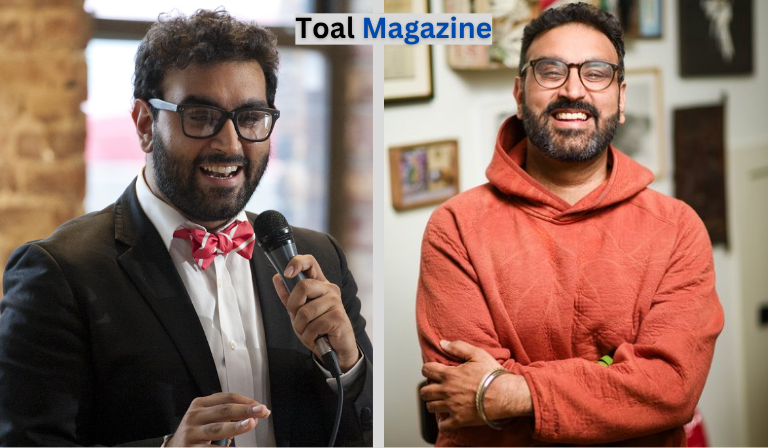
Rohit Malhotra is an American civic leader, social entrepreneur, and political candidate who has spent much of his career working to make government more transparent and responsive to local communities. As the founder of Atlanta’s Center for Civic Innovation, he has focused on public policy, community development, and helping residents understand how government decisions affect their daily lives. In 2026, he brought that experience into electoral politics by running as a Democrat for Fulton County Commissioner in District 4, Georgia. But what motivated his decision to seek public office, and what does he hope to change? His campaign highlights protecting local democracy, improving healthcare and public safety, creating economic opportunities, supporting small businesses, and making government spending easier to understand. His candidacy represents an effort to translate years of civic work into practical action within county government.
Quick Facts About Rohit Malhotra
| Category | Details |
|---|---|
| Full Name | Rohit Malhotra |
| Profession | Civic leader, social entrepreneur, political candidate |
| Known For | Founding the Center for Civic Innovation |
| Hometown | Atlanta, Georgia |
| Political Party | Democratic Party |
| Current Campaign | Fulton County Commissioner, District 4 |
| Undergraduate Education | Emory University |
| Graduate Education | Harvard Kennedy School |
| Government Experience | Ash Center Government Innovations Fellow |
| Major Organization | Center for Civic Innovation |
| Key Interests | Public policy, election protection, government transparency, community development |
| Election Date | November 3, 2026, special election |
The biographical and candidacy details are drawn from his professional background and the published Fulton County candidate information. The election date is confirmed by the county’s official election schedule.
Who Is Rohit Malhotra?
Rohit Malhotra is best known for his work in civic innovation and his efforts to improve the relationship between government institutions and the communities they serve.
He founded the Center for Civic Innovation in Atlanta in 2014. The organization focuses on local public policy, government transparency, and supporting community-led solutions to social and economic challenges. Rather than limiting his work to traditional political campaigning, Malhotra has spent years exploring how residents, nonprofit organizations, and public officials can work together to improve their communities.
His professional background combines nonprofit leadership, digital communications, public policy research, and community organizing. These experiences have exposed him to different ways of addressing public problems and involving residents in decisions that affect their lives.
In 2026, Malhotra qualified as a Democratic candidate for Fulton County Commissioner in District 4. The district includes Atlanta, East Point, Hapeville, and College Park, according to his campaign.
His move into county politics is significant because it represents a shift from working outside government to seeking a role in the institution responsible for making decisions about county budgets, public services, and local priorities.
Why Is Rohit Malhotra Running for Fulton County Commissioner?
The central reason Malhotra gives for running is his belief that Fulton County needs leadership capable of protecting local democracy, strengthening public institutions, and ensuring that government serves residents effectively.
On his campaign website, he describes a sense of urgency and responsibility to use his experience to represent the district. His campaign also emphasizes integrity, accountability, and stronger support for working-class people, small businesses, and communities that may be overlooked in public decision-making.
Several factors help explain his decision to seek the commission seat.
First, his professional career has consistently focused on how public institutions work. Through the Center for Civic Innovation, he has researched local policies, explained public budgets, and supported community-driven initiatives. Running for office creates an opportunity to pursue these interests through elected government.
Second, his campaign argues that protecting elections and strengthening public systems should be major priorities for county leadership. Fulton County plays an important role in administering elections, making the commission seat especially relevant to his stated interest in civic participation and democratic accountability.
Finally, Malhotra wants to address practical concerns that affect local residents, including healthcare, mental health services, public safety, workforce opportunities, and access to information about public spending.
His decision to run can therefore be understood as an attempt to connect his previous civic work with the responsibilities of local government. Whether he can achieve his goals will depend on election results, the authority of the commission, available resources, and collaboration with other officials.
His First Major Priority Is Protecting Local Democracy
Election protection is one of the most prominent issues in Malhotra’s campaign.
His campaign describes Fulton County as an important institution for protecting local democracy, especially amid concerns about the administration of elections and voting rights. It also points to recent events involving the county’s election offices and broader disputes surrounding voting rights as reasons for increased attention to the county government’s responsibilities. These are elements of the campaign’s stated rationale for the race.
This priority connects directly with Malhotra’s background in civic engagement. His work has focused on helping people understand public institutions and encouraging residents to participate in decisions that shape their communities.
For him, protecting local democracy involves more than discussing elections during campaign season. It also means ensuring that the institutions responsible for administering elections can perform their duties effectively and that residents can access reliable information.
If elected, he would need to work within the commission’s legal authority and coordinate with election administrators and other relevant government bodies. Election administration is governed by established legal and procedural requirements, so a commissioner cannot independently change every aspect of the system.
Nevertheless, the issue forms an important part of his platform and helps explain why he believes local government leadership matters.
Improving Healthcare, Mental Health, and Public Safety
Healthcare and public safety are also central to Malhotra’s campaign.
His platform specifically highlights Grady Hospital, mental health services, the justice system, and the need to strengthen public systems that residents depend on. These responsibilities affect many families, particularly those who need accessible healthcare or support during difficult circumstances.
Supporting Healthcare Services
Grady Hospital is an important part of the healthcare system in the Atlanta area. Malhotra’s campaign identifies strengthening healthcare as one of its priorities, with particular attention to this institution.
Improving healthcare systems can involve questions about access to treatment, funding, service quality, and cooperation between healthcare providers and public authorities.
The exact policies that could be implemented would depend on the relevant institutions, available funding, and agreements between public bodies. His campaign’s position, however, makes clear that healthcare access is among the concerns he wants to address.
Giving Greater Attention to Mental Health
Mental health services are another specific area highlighted in his platform.
Access to appropriate mental health support can affect families, schools, healthcare providers, and public safety systems. When people cannot obtain suitable care, they may face additional difficulties finding support through the services available to them.
Malhotra’s stated priority is to strengthen the broader systems involved in these issues rather than treat public safety as an isolated concern.
Building More Effective Public Systems
Public safety and justice depend on coordination among multiple agencies. County officials must consider service quality, operational performance, legal responsibilities, and spending decisions when evaluating these systems.
Malhotra’s background in public policy and social innovation is relevant to these discussions because it involves examining how public programs operate and how their results can be improved.
His campaign emphasizes the goal of strengthening these systems, although the practical results would depend on the policies adopted and their implementation.
Expanding Opportunities Through Education and Workforce Development
Another reason Malhotra is running involves creating more opportunities for residents.
His campaign highlights libraries, workforce development, and entrepreneurship as areas where county government and community institutions can help people build skills and improve their economic prospects.
Libraries are more than places to borrow books. Depending on the services they provide, they can give residents access to technology, educational materials, research resources, and programs that support lifelong learning.
Workforce development can also help people prepare for employment, improve existing skills, or explore different career paths. Effective programs often require partnerships among public institutions, employers, educational providers, and community organizations.
Entrepreneurship is another part of this agenda. Small businesses can create jobs, provide useful services, and contribute to local economic activity. However, starting and maintaining a business can be challenging when people lack access to training, professional networks, or other resources.
Malhotra’s campaign proposes using public and community partnerships to expand these opportunities. This approach reflects his earlier experience working with organizations that seek practical solutions to local challenges.
Supporting Small Businesses and Nonprofit Organizations
Small businesses and nonprofit organizations feature prominently in Malhotra’s vision for Fulton County.
Small businesses contribute to employment and local economic activity, while nonprofits frequently provide services that support residents and strengthen neighborhoods. Both can face difficulties related to funding, staffing, operating costs, and access to useful networks.
Malhotra’s campaign proposes building stronger partnerships between Fulton County and these organizations. Such partnerships could help connect community needs with existing resources and encourage cooperation between government and local groups.
His experience with the Center for Civic Innovation provides useful context for this priority. The organization has worked to support community-based solutions and help local leaders develop ideas for addressing public problems.
Still, partnerships alone do not guarantee results. Their success would depend on clear objectives, fair processes, responsible spending, and evidence that the initiatives are helping residents.
For voters, an important consideration is how campaign proposals would be turned into specific programs and how their outcomes would be measured.
Making Government Budgets and Taxes More Transparent
Government transparency has been one of the defining themes of Malhotra’s professional career.
His campaign identifies fairness and transparency in Fulton County’s budget and tax system as important goals. It refers to the county budget as approximately $1.5 billion, highlighting the scale of public resources involved in county decisions.
A county budget helps determine how public money is distributed among services, programs, employees, facilities, and other responsibilities. For residents, understanding these decisions can make it easier to evaluate government priorities and ask informed questions.
However, budgets can be difficult to follow because they contain financial terminology, allocations, projections, and administrative details.
Through the Center for Civic Innovation, Malhotra has focused on making government information more accessible. His campaign brings that experience into a political platform that calls for greater public understanding of spending and taxes.
Transparency can help residents see how money is allocated, but it is only one part of financial accountability. Effective oversight also requires accurate records, clear explanations, sound financial management, and appropriate monitoring.
The challenge for any elected official is to turn the general goal of transparency into practices that people can actually use. That might involve clearer explanations of budget decisions, accessible public information, and meaningful opportunities for residents to engage with the process.
How His Education and Career Prepared Him for Public Office
Malhotra’s professional background helps explain why he is pursuing the commission seat.
He earned a bachelor’s degree from Emory University and later completed a Master in Public Policy at Harvard University’s John F. Kennedy School of Government. During his time at Harvard Kennedy School, he served as student government president.
His experience also includes an Ash Center Government Innovations Fellowship connected to the White House Office of Management and Budget during the Obama administration. His work there focused on social impact bonds and pay-for-performance approaches to public programs.
These experiences connect to several themes in his campaign: public accountability, government performance, budget decisions, and the importance of evaluating whether programs achieve their intended results.
Malhotra also gained experience through nonprofit and advocacy work before establishing his Atlanta-based civic organization. This professional path gave him opportunities to examine public challenges from outside government institutions.
Seeking elected office involves a different set of responsibilities, including representing constituents, working within government procedures, and making decisions alongside other commissioners. His education and career provide relevant experience, but voters will ultimately judge his candidacy based on his proposals, priorities, and ability to deliver results.
What Would His Election Mean for Fulton County?
If Malhotra wins the election, his role as commissioner would give him a position in county-level decision-making. The commission’s responsibilities make the office relevant to many of the issues featured in his campaign.
His priorities suggest an emphasis on transparent government, strong public services, and community participation. Those themes could influence how he evaluates budget proposals, discusses county programs, and works with other officials.
However, one commissioner cannot independently control every county service or guarantee that every campaign promise will be fulfilled. Public decisions often involve votes, administrative implementation, legal requirements, and financial limitations.
The practical impact of his election would therefore depend on both his own work and his ability to collaborate with the rest of the commission and other institutions.
For residents, the most important questions are whether the proposals are achievable, whether public resources would be used responsibly, and whether the resulting policies would address local needs.
These are the kinds of issues voters can consider when comparing candidates in the District 4 special election.
Rohit Malhotra’s Public Image and Approach to Leadership
Malhotra presents himself as a civic leader focused on integrity, community involvement, and government accountability.
His public profile has been shaped by the Center for Civic Innovation, his policy experience, and his involvement in professional and community organizations. He has also received recognition during his career, including an Echoing Green fellowship and recognition from the Atlanta Business Chronicle.
One recurring feature of his work is an interest in making complicated public issues easier to understand. His approach emphasizes the importance of connecting research and policy discussions with the needs of actual communities.
His campaign uses similar themes. It presents local leadership as a responsibility to represent residents, strengthen institutions, and ensure that government decisions are made with accountability.
Whether these qualities translate into effective elected leadership remains to be seen. A candidate’s public image and professional background provide context, but the performance of an elected official is ultimately measured by decisions, conduct, and results.
When Is the Fulton County Commissioner District 4 Election?
The special election for Fulton County Commissioner District 4 is scheduled for November 3, 2026, according to Fulton County’s official election information. The county’s published list of qualified candidates includes Rohit Malhotra as a Democrat.
The race will determine who fills the District 4 commission seat. The campaign identifies Atlanta, East Point, Hapeville, and College Park among the communities the district represents.
Residents who plan to participate should consult official county election information for ballot details, polling arrangements, and other requirements. Campaign statements can explain what a candidate intends to do, while official election authorities provide information about the voting process.
The result of the election will determine whether Malhotra has an opportunity to pursue his proposed priorities as an elected county commissioner.
Conclusion
Rohit Malhotra‘s campaign for Fulton County Commissioner District 4 builds on a career centered on civic participation, public policy, and government transparency. Through the Center for Civic Innovation, he has worked to make public information easier to understand and support community-based approaches to local challenges.
His campaign brings these themes into electoral politics, with priorities that include protecting elections, strengthening healthcare and public safety, expanding economic opportunities, supporting local organizations, and improving budget transparency.
The motivation behind his candidacy is his stated belief that local government should be accountable, accessible, and responsive to residents. His background provides a foundation for pursuing those goals, but turning campaign priorities into measurable progress would require effective policymaking, cooperation, and responsible use of public resources.
As the November 2026 special election approaches, his candidacy offers Fulton County voters an opportunity to evaluate how his experience and proposed priorities compare with those of the other candidates seeking to represent District 4.
Frequently Asked Questions About Rohit Malhotra
Frequently Asked Questions About Rohit Malhotra
1. Who is Rohit Malhotra?
Rohit Malhotra is an American civic leader, social entrepreneur, and political candidate. He founded the Center for Civic Innovation in Atlanta, an organization focused on public policy, civic engagement, and government transparency.
2. Why is Rohit Malhotra running for Fulton County Commissioner?
He says he is running because he believes the county needs strong leadership to protect local democracy, strengthen public services, create economic opportunities, and make government more accountable to residents.
3. Which political party does Rohit Malhotra represent?
Malhotra is running as a Democrat in the special election for Fulton County Commissioner in District 4.
4. What are his main campaign priorities?
His campaign focuses on election protection, healthcare and mental health services, public safety, workforce development, libraries, entrepreneurship, support for small businesses and nonprofits, and greater transparency in county budgets and taxes.
5. What is the Center for Civic Innovation?
The Center for Civic Innovation is an Atlanta-based organization founded by Malhotra in 2014. It works to make government information more accessible, research local policy issues, encourage civic participation, and support community-based solutions.
6. Where did Rohit Malhotra study?
He earned his bachelor’s degree from Emory University and his Master in Public Policy from Harvard University’s John F. Kennedy School of Government.
7. When is the election for Fulton County Commissioner District 4?
The special election is scheduled for November 3, 2026. Fulton County’s published candidate information lists Malhotra among the qualified Democratic candidates for the seat.
8. What makes his campaign different from his previous civic work?
His previous work focused largely on civic innovation, community engagement, and public policy outside elected office. His campaign seeks to bring that experience into county government, where he would participate directly in decisions about budgets, public services, and local priorities if elected.