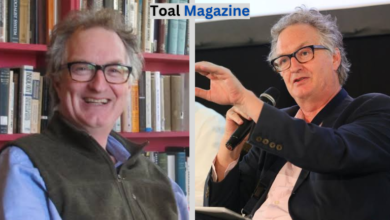


For decades, television journalism has played an important role in questioning official versions of events, but few reporters left a more meaningful mark on British investigative broadcasting than Martin Young. Best remembered as a co-creator and reporter on the BBC’s Rough Justice, Young investigated possible miscarriages of justice at a time when challenging criminal convictions through television was both unusual and controversial. His work helped bring attention to weaknesses in evidence, questionable convictions and people who continued to insist they had been wrongly imprisoned.
Born in Glasgow in 1947, Young built a varied broadcasting career that included Nationwide, Newsnight and Panorama. His professional journey combined traditional reporting with a strong interest in human stories and difficult questions. Through Rough Justice, he became closely associated with cases in which television investigations contributed to people being released from prison or having convictions challenged. He died in May 2024 aged 76, leaving behind a complicated but highly significant journalistic legacy.
Quick Facts About Martin Young
| Fact | Details |
|---|---|
| Full name | Martin Young |
| Born | 5 July 1947 |
| Birthplace | Glasgow, Scotland |
| Died | 10 May 2024 |
| Age at death | 76 |
| Profession | Television journalist, reporter and presenter |
| Best known for | Co-creating and reporting on Rough Justice |
| Major BBC programmes | Nationwide, Newsnight, Panorama |
| Education | Dulwich College and Gonville and Caius College, Cambridge |
| Spouse | Susan Fowler |
| Children | Two |
| Known for | Investigative journalism and miscarriage-of-justice reporting |
Introduction
The story of Martin Young is closely connected with one of the most important chapters in British investigative television. While he worked across several major BBC programmes, his name became particularly associated with Rough Justice, a series that examined whether people convicted of serious crimes had actually committed them.
The programme asked uncomfortable questions about evidence, police investigations and courtroom decisions. In several cases, the investigations helped bring fresh attention to convictions and contributed to prisoners being released. The BBC’s own programme records show Young reporting on individual cases in the series from its earliest broadcasts in 1982.
His career was not without controversy. His determination to pursue difficult stories eventually resulted in a suspension from the BBC after the corporation concluded that he and producer Peter Hill had used unjustifiable threats in an effort to obtain an interview. That episode remains an important part of the complicated story behind his career.
Early Life and Background
Martin Young was born in Glasgow on 5 July 1947. He was educated at Dulwich College before attending Gonville and Caius College, Cambridge, where he studied English and became involved in student theatre. He served as president of the Marlowe Society and was also connected with Footlights, reflecting an early interest in performance and entertainment.
Before establishing himself at the BBC, Young entered the television industry through regional broadcasting. He began as a researcher with Border Television in 1969 and moved into reporting and presenting at Tyne Tees Television the following year.
His early career gave him practical experience in television production and reporting before he moved to the BBC. That progression from regional broadcasting to national television helped prepare him for the more demanding work that followed.
His Age and Physical Features
At the time of his death in May 2024, Martin Young was 76 years old. He was born in 1947 and spent more than five decades associated with broadcasting and media work.
Detailed information about his height, weight or other physical measurements is not reliably documented in major biographical sources. Rather than repeating unverified figures, it is more useful to focus on the characteristics that defined his public career: his distinctive interviewing approach, confidence on camera and determination when investigating controversial stories.
Career and Major Achievements
Young joined the BBC in the early 1970s and became a reporter on Nationwide, one of the corporation’s best-known current-affairs programmes of the period. He later worked on Newsnight and Panorama, two programmes that gave him opportunities to cover major national and international stories.
His career took a major turn when he became involved with Rough Justice. The programme first aired on BBC One in April 1982 and focused on serious criminal cases in which questions remained about whether the convictions were safe. BBC programme records specifically identify Young as the investigator or reporter on several of its early cases.
The concept was straightforward but powerful: revisit old cases, scrutinize evidence and ask whether the original verdict had been justified. At a time when forensic science and access to historical case materials were not as advanced as they are today, the programme brought sustained public attention to possible miscarriages of justice.
One of the best-known cases was that of Mervyn “Jock” Russell. Rough Justice examined the evidence surrounding his conviction and helped raise serious questions about the case. Young also investigated cases involving people such as John Walters, Margaret Livesey and Ernie Clarke, with the BBC archive documenting his involvement in these investigations.
The wider impact of the programme was considerable. Contemporary and retrospective accounts credit Rough Justice with contributing to a broader national debate about wrongful convictions and legal safeguards. The series eventually became associated with multiple cases in which convictions were overturned or prisoners were released.
Rough Justice and Wrongful Convictions
For many viewers, Rough Justice remains the defining achievement of Young’s career. The programme did something television rarely attempted with such persistence: it reopened disputed criminal cases and brought the evidence before a national audience.
Its significance was not simply that a television programme could influence public opinion. The investigations could lead to further legal scrutiny, appeals and official reviews. The BBC programme archive records that some of the early investigations created questions in Parliament and prompted debate about legal procedure.
The programme also helped demonstrate the potential of investigative journalism as a form of public accountability. Instead of treating a criminal conviction as the end of a story, Young and his colleagues examined what happened before and during the trial.
That approach made the programme influential, but it also made it controversial. Investigative reporting can involve difficult ethical boundaries, and Young’s career eventually demonstrated the risks of pushing those boundaries too far.
A Major BBC Controversy
In 1986, Young and producer Peter Hill were suspended from the BBC after an investigation into their methods for securing an interview connected with the Rough Justice programme.
The BBC said that the journalists had used unjustifiable threats to obtain the interview. The controversy followed an investigation involving Anthony Mycock, whose conviction was later overturned after a Rough Justice report challenged the case against him.
The incident was a serious setback for Young. According to his obituary in The Guardian, the suspension effectively ended his career in television investigative journalism at its previous level.
Yet the controversy does not erase the significance of his earlier work. Instead, it illustrates the tension that can exist between aggressive investigative reporting and the ethical standards expected of journalists. Young’s career is therefore best understood as both influential and complex.
Relationship With Susan Fowler
Martin Young was married to Susan Fowler, and the couple had two children. His family life remained largely outside the public spotlight, which is consistent with the relatively private nature of his personal life.
Most of the information available about him focuses on his professional work rather than his marriage or home life. His wife and children were mentioned in accounts following his death, but there is little reliable public material about their day-to-day family experiences.
Marriage and Family Life
Despite spending much of his working life in front of television audiences, Young appears to have maintained a relatively private family life. His marriage to Susan Fowler and the fact that he had two children are among the few consistently reported personal details.
This privacy is important when considering biographical information about journalists from an earlier generation. Unlike modern television personalities and online creators, many broadcasters of Young’s era did not maintain public social-media profiles or share extensive personal information with audiences.
As a result, his public identity was shaped overwhelmingly by his journalism rather than by his private life.
Social Media Presence
There is no significant verified social-media presence associated with Martin Young today. This is unsurprising because much of his professional career took place long before platforms such as Facebook, Instagram, X and YouTube became central to public communication.
His legacy instead survives through newspaper obituaries, archival television material, BBC programme records and discussions of investigative journalism. For anyone researching his work, historical broadcasts and reliable journalistic archives are much more useful than social-media accounts carrying his name.
Who Is Martin Young?
Martin Young was a British television journalist, reporter and presenter best known for helping create Rough Justice. He worked for major BBC programmes including Nationwide, Newsnight and Panorama, establishing a reputation for combining television reporting with serious investigative work.
His importance comes largely from his willingness to challenge criminal convictions and examine evidence that had already been accepted by courts. His work helped bring several cases back into public discussion and contributed to a wider understanding of miscarriages of justice.
There are several other notable people named Martin Young, including a former first-class cricketer, so it is important to distinguish the journalist from those individuals. The journalist discussed in this article was born in Glasgow in 1947 and became one of the recognizable investigative figures in British television.
Personality and Interests
Young was known for an energetic, determined approach to journalism. His work frequently involved persistent questioning and a willingness to confront difficult subjects, qualities that became particularly visible through Rough Justice.
His interests were not limited entirely to journalism. Later accounts of his life noted an interest in cricket, while his earlier university years demonstrated his enthusiasm for theatre and performance.
This mixture of communication skills, curiosity and confidence on camera helped him move comfortably between entertainment-oriented reporting and serious investigative broadcasting.
Does Martin Young Have Children?
Yes. Martin Young and his wife, Susan Fowler, had two children. Publicly available biographical accounts do not provide extensive details about their children, and the family largely remained away from the media spotlight.
That privacy means claims circulating online about their identities, careers or personal lives should be treated carefully unless supported by trustworthy sources.
Net Worth and Income
There is no reliable public figure for Martin Young’s net worth, and reputable obituaries do not provide a confirmed estimate of his wealth.
He spent much of his career working in British broadcasting and later worked in radio and media training, but salary information from different periods of his career is not sufficiently documented to calculate a trustworthy lifetime net worth.
For that reason, precise online estimates should be regarded as speculation rather than established fact.
Later Career and Work
After the controversy surrounding Rough Justice, Young continued working in media in different capacities. He co-presented a news programme on LBC Newstalk and also worked with BBC Radio 4, where he hosted the panel game Who Goes There?.
He also made appearances on the early series of Have I Got News for You and later worked as a media trainer. These roles show that his career did not simply end after his time at Rough Justice; instead, it developed in less prominent but still media-focused directions.
Public Image and Legacy
Martin Young’s legacy is closely tied to the idea that journalism can challenge mistakes within powerful institutions. His work on Rough Justice helped make miscarriages of justice a subject of sustained public discussion and demonstrated how television investigations could influence the conversation around criminal convictions.
The BBC archive shows how the programme repeatedly examined disputed evidence and questioned whether defendants had been convicted beyond reasonable doubt. Some of these investigations generated parliamentary discussion and contributed to pressure for changes in legal procedures.
Later accounts have also linked the broader impact of Rough Justice to the development of stronger mechanisms for reviewing possible miscarriages of justice in Britain. The series is widely regarded as an important part of the history of investigative television.
At the same time, his suspension serves as a reminder that ambitious journalism has ethical limits. His story is therefore not a simple tale of triumph. It is a more nuanced example of how determination, public service, controversy and professional responsibility can intersect.
Martin Young’s Death
Martin Young died on 10 May 2024 at the age of 76. His death was reported by major British newspapers, which highlighted his contribution to investigative journalism and his role in creating Rough Justice.
His passing prompted renewed interest in the programme and its influence on British television journalism. For many former colleagues and viewers, his most important contribution was the decision to question convictions that others had accepted as final.
His career remains a reminder that investigative reporting can have consequences far beyond a single broadcast.
Conclusion
Martin Young was far more than a television reporter. Through Rough Justice, he helped establish investigative television as an important tool for examining possible miscarriages of justice and gave national attention to people who argued that they had been wrongly convicted.
His career included prominent BBC programmes such as Nationwide, Newsnight and Panorama, but it was his work investigating disputed criminal cases that became his defining achievement. His journalism helped generate public and political discussion about wrongful convictions, while his later professional controversies revealed the difficult ethical territory that investigative reporters can face.
Although his career had setbacks, the lasting importance of his work is difficult to ignore. Martin Young left behind a complicated but influential legacy, particularly in the history of British investigative journalism.
FAQs About Martin Young
1. Who was Martin Young?
Martin Young was a British television journalist and presenter best known for co-creating and reporting on the BBC investigative programme Rough Justice. He also worked on Nationwide, Newsnight and Panorama.
2. What was Martin Young famous for?
He was best known for his role in Rough Justice, which investigated possible miscarriages of justice and helped bring attention to wrongful convictions.
3. When was Martin Young born?
Martin Young was born on 5 July 1947 in Glasgow, Scotland.
4. How old was Martin Young when he died?
He was 76 years old when he died on 10 May 2024.
5. Was Martin Young married?
Yes. He was married to Susan Fowler, and they had two children.
6. Did Martin Young work for the BBC?
Yes. He worked on several major BBC programmes, including Nationwide, Newsnight, Panorama and Rough Justice.
7. Why was Martin Young suspended by the BBC?
Young and producer Peter Hill were suspended after the BBC concluded that they had used unjustifiable threats in an attempt to secure an interview during a Rough Justice investigation.
8. What is Martin Young’s legacy?
His strongest legacy is his contribution to investigative journalism and the examination of possible wrongful convictions. Rough Justice became an influential programme in the history of British television investigations and helped keep miscarriages of justice in the public conversation.