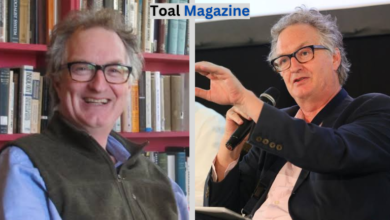

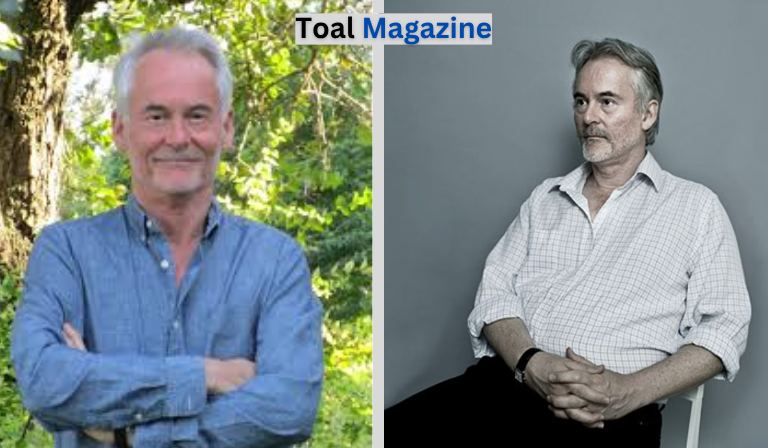
Martin Sixsmith has built a remarkably varied career across journalism, international reporting, government communications, broadcasting, and publishing. For decades, he has been associated with some of the major political stories of the late 20th and early 21st centuries, particularly those involving Russia and the former Soviet Union.
Born on 24 September 1954, Sixsmith began his professional life at the BBC, where he worked as a foreign correspondent from 1980 to 1997. During that period, he reported from Moscow, Washington, Brussels, and Warsaw and witnessed the dramatic political changes surrounding the end of the Cold War and the collapse of the Soviet Union.
His career later took an unexpected turn when he entered British government communications under Tony Blair. However, many people outside journalism know him best as the author of The Lost Child of Philomena Lee, the book that inspired the acclaimed 2013 film Philomena, starring Judi Dench and Steve Coogan.
Quick Facts About Martin Sixsmith
| Fact | Details |
|---|---|
| Full name | Martin Sixsmith |
| Date of birth | 24 September 1954 |
| Birthplace | Cheshire, England |
| Profession | Journalist, author, presenter, former government communications director |
| Education | Oxford, Harvard and the Sorbonne |
| BBC career | 1980–1997 |
| Government career | 1997–2002 |
| Known for | BBC foreign reporting, Philomena, books on Russia and the Cold War |
| Best-known book | The Lost Child of Philomena Lee |
| Film adaptation | Philomena (2013) |
| Film portrayal | Steve Coogan |
| Current professional identity | Writer, presenter and journalist |
The biographical details above are consistent with publisher and literary-agency biographies of Sixsmith.
Early Life and Background
Martin Sixsmith was born in Cheshire and developed an academic interest in languages and international affairs. His education included study at Oxford, Harvard, and the Sorbonne, as well as Russian studies in St Petersburg, according to his literary agency.
His academic background helped prepare him for a career that would become heavily focused on international politics. Russian history, Soviet politics, and the relationship between governments and societies eventually became recurring subjects throughout his journalism and books.
Rather than following a narrowly defined career path, he developed expertise that could be used in several fields. That flexibility would later become one of the defining characteristics of his professional life.
His Age and Physical Features
Born on 24 September 1954, Martin Sixsmith is 71 years old as of September 2026.
Unlike many television personalities, Sixsmith has generally been known for his professional work rather than a carefully managed celebrity image. Reliable biographical sources tend to focus on his journalism, writing, education, and public career rather than providing detailed information about his height, weight, or other physical statistics.
For that reason, specific measurements or descriptions should not be treated as established facts unless confirmed by a reliable source.
Career and Major Achievements
The most important part of Sixsmith’s professional story is the range of his work. He has successfully moved between journalism, political communications, broadcasting, and authorship.
His BBC career lasted from 1980 to 1997. During those years, he reported from important international locations, including Moscow, Washington, Brussels, and Warsaw. He was particularly closely associated with coverage of the Soviet Union during the final years of communist rule.
His reporting from Moscow placed him close to the events of the Gorbachev and Yeltsin eras. He witnessed the political upheaval of the late 1980s and early 1990s, including the transformation of the Soviet political system.
This experience became highly valuable later in his writing career. His understanding of Russia was not simply based on historical research; it was also informed by years of professional observation and reporting.
From BBC Correspondent to Government Communications
In 1997, Sixsmith left journalism for a completely different environment: British government.
He worked for the Labour government under Tony Blair as Director of Communications and Press Secretary, serving first Harriet Harman, then Alistair Darling, and later Stephen Byers. He subsequently held a communications leadership role at the Department for Transport, Local Government and the Regions.
The move was notable because Sixsmith went from explaining government decisions as a journalist to helping government departments communicate their policies.
This experience gave him a behind-the-scenes understanding of Westminster, political messaging, public relations, and the relationship between ministers and the press.
Martin Sixsmith and The Thick of It
His experience in government communications also led to work connected with political satire.
Sixsmith served as a consultant on the BBC political comedy The Thick of It and the film In the Loop. His real-world understanding of government communications helped provide insight into the show’s depiction of political advisers, ministers, press officers, and media management.
Interestingly, this part of his career shows how his journalism and government experience could translate into entertainment as well as nonfiction.
Martin Sixsmith and Philomena
Perhaps the biggest reason Sixsmith became known to a worldwide audience was his book about Philomena Lee.
Originally published in 2009 as The Lost Child of Philomena Lee, the book tells the story of an Irish mother who spent decades searching for the son she had lost after becoming pregnant as a teenager. Her son had been adopted in the United States and later became known as Michael Hess.
Sixsmith investigated the story and turned it into a detailed narrative about family separation, secrecy, adoption, religion, politics, and the enduring bond between a mother and her child.
The story resonated because it combined a deeply personal human experience with wider questions about historical social institutions and the treatment of unmarried mothers in Ireland.
The Film Philomena
The success of the book eventually led to the 2013 film Philomena.
Directed by Stephen Frears, the movie starred Judi Dench as Philomena Lee and Steve Coogan as Martin Sixsmith. Coogan also co-wrote the screenplay with Jeff Pope.
The film transformed Sixsmith from a respected journalist and author into a figure recognizable to a much wider international audience.
Philomena received major critical recognition and was nominated for four Academy Awards, including Best Picture, Best Actress for Judi Dench, Best Adapted Screenplay, and Best Original Score.
The film’s success also brought renewed attention to Sixsmith’s original investigation and demonstrated the impact that investigative storytelling can have beyond newspapers and books.
A Career Built Around Russian History
Although Philomena is perhaps his most famous work among general audiences, Russia has remained one of the central themes of Sixsmith’s writing.
His books include Russia: A 1,000-Year Chronicle of the Wild East, The Litvinenko File, Putin’s Oil, and Putin and the Return of History. He has also written Moscow Coup and explored Cold War psychology in The War of Nerves: Inside the Cold War Mind.
His background makes this subject particularly appropriate. Having worked as a BBC correspondent in Moscow during the final stages of the Soviet Union, he experienced major political changes at close range.
That combination of firsthand reporting and historical research gives his work a distinctive perspective on Russia’s political development.
The Litvinenko File and Investigative Writing
Another important work is The Litvinenko File, which examines the murder of former Russian security officer Alexander Litvinenko in London.
The book draws on Sixsmith’s long experience as a Moscow correspondent and his knowledge of Russian political networks. It examines the circumstances surrounding Litvinenko’s death and places the case within a broader story of political conflict between the Kremlin and its opponents.
This book illustrates another recurring feature of Sixsmith’s career: taking complicated international events and presenting them through a narrative that general readers can follow.
The War of Nerves and the Cold War
Sixsmith’s interest in the Cold War extends beyond traditional political history.
In The War of Nerves: Inside the Cold War Mind, he looks at the psychological side of the conflict. Instead of focusing only on governments, military strategies, and nuclear weapons, the book explores fear, paranoia, propaganda, and the impact of geopolitical tension on ordinary people.
This reflects a broader characteristic of his writing. Sixsmith often tries to explain not only what happened but also why people behaved as they did and how major political events affected human lives.
Relationship With Philomena Lee
The relationship between Sixsmith and Philomena Lee became central to one of the most important stories of his writing career.
Their connection began through the investigation into Philomena’s lost son. Together, their search became the foundation for the book and later the film.
The official film material describes Sixsmith as a journalist who becomes involved in Philomena’s story and joins her on the search for her son.
However, the relationship shown on screen should not be confused with every detail of the real-life relationship. Movies often reshape events for dramatic storytelling, so the book remains the better source for Sixsmith’s original account.
Marriage and Family Life
Martin Sixsmith has generally kept his personal and family life away from the level of public attention given to his professional work.
Public biographies focus primarily on his journalism, government service, books, and broadcasting rather than providing extensive details about his marriage or family.
That privacy makes it difficult to responsibly provide a detailed account of his private relationships without relying on unverified information. His professional achievements remain much better documented.
Social Media Presence
Sixsmith’s public profile has historically been built around traditional journalism, television, radio, books, and public appearances rather than influencer-style social media activity.
There may be online profiles or accounts using his name, but readers should distinguish between verified professional accounts and unofficial pages. His established public identity continues to be closely associated with his books, journalism, broadcasting, and speaking work.
Who Is Martin Sixsmith Today?
Today, Sixsmith is best understood as a writer, presenter, journalist, and commentator whose career crosses several generations of media.
His work has evolved from frontline foreign reporting to political communications and then to long-form nonfiction and historical writing.
Publisher and literary-agency biographies continue to describe him as a writer and journalist, with London given as his home.
His books demonstrate that his interests remain focused on politics, history, Russia, society, and extraordinary human stories.
Personality and Interests
It is difficult to make definitive claims about someone’s private personality, but Sixsmith’s professional interests reveal several clear themes.
He has a sustained fascination with Russia, political history, international affairs, psychology, and human resilience. These interests appear repeatedly in his journalism and books.
His work also shows an ability to move comfortably between serious political analysis and deeply personal storytelling. That combination has helped him reach audiences interested in both history and biography.
Does Martin Sixsmith Have Children?
There is no sufficiently reliable public information that would justify giving a detailed account of Sixsmith’s children or private family arrangements.
Because personal information about relatives can easily become speculative online, it is better to separate documented professional facts from claims that have not been reliably established.
Net Worth and Income
There is no reliably established public figure for Martin Sixsmith’s net worth.
His income over the years has come from several professional areas, including journalism, government communications, writing, broadcasting, consulting, book publishing, and related media work. However, earnings from these activities have not been publicly documented in a way that would support a precise net-worth estimate.
Online claims about celebrity or author net worth often rely on speculation rather than verified financial records. A specific figure should therefore not be presented as fact.
Public Image and Legacy
Sixsmith’s legacy rests on several distinct achievements.
As a BBC correspondent, he reported during a period when Europe was undergoing extraordinary political transformation. His work from Moscow and elsewhere gave audiences insight into the final years of the Soviet Union and the changing relationship between East and West.
As a government communications director, he gained an insider’s perspective on British politics. That experience later became useful when he worked with political satire such as The Thick of It.
As an author, however, his influence extends beyond political journalism. The Lost Child of Philomena Lee transformed a personal family tragedy into a widely known story about adoption, identity, secrecy, and forgiveness. Its adaptation into Philomena gave that story a global audience.
His books about Russia and the Cold War have also added to his reputation as a writer capable of explaining complicated historical events in an accessible way.
Why Is Martin Sixsmith Famous?
So, why is Martin Sixsmith famous?
The answer is not simply one book or one job. His reputation comes from a multi-stage career that includes nearly two decades as a BBC foreign correspondent, senior government communications roles, work connected with political comedy, and a substantial career as an author.
For the general public, Philomena is probably the most recognizable part of his story. For students of journalism and international affairs, his reporting from Russia and Eastern Europe may be even more significant.
Together, these different chapters explain why Sixsmith remains an interesting figure in British journalism and publishing.
Conclusion
Martin Sixsmith‘s career is unusual because it bridges journalism, politics, broadcasting, and literature. He reported on the end of the Cold War, worked inside the British government, contributed expertise to political satire, and went on to write books exploring some of the most complicated political and human stories of recent history.
His association with Philomena gave him international recognition, while his books on Russia and the Cold War established a broader literary identity.
Ultimately, the story of Sixsmith’s career is a story of reinvention. From BBC foreign correspondent to government communications director and bestselling author, he has repeatedly used research, reporting, and storytelling to examine how political events affect real people.
FAQs About Martin Sixsmith
1. Who is Martin Sixsmith?
Martin Sixsmith is a British journalist, author, presenter, and former government communications director. He is particularly known for his BBC foreign correspondence and his book The Lost Child of Philomena Lee.
2. How old is Martin Sixsmith?
Martin Sixsmith was born on 24 September 1954, making him 71 years old in September 2026.
3. What is Martin Sixsmith famous for?
He is best known for his career as a BBC foreign correspondent and for writing The Lost Child of Philomena Lee, which became the basis for the film Philomena.
4. Did Martin Sixsmith work for the BBC?
Yes. He worked for the BBC from 1980 to 1997, reporting from places including Moscow, Washington, Brussels, and Warsaw.
5. Did Martin Sixsmith work for Tony Blair’s government?
Yes. From 1997 to 2002, he worked for the British government as a senior communications official and press secretary to several Labour cabinet ministers.
6. Did Martin Sixsmith write the book behind Philomena?
Yes. His book was originally published as The Lost Child of Philomena Lee in 2009 and later became widely known as Philomena.
7. Who played Martin Sixsmith in Philomena?
Steve Coogan played Martin Sixsmith in the 2013 film, while Judi Dench portrayed Philomena Lee.
8. What books has Martin Sixsmith written?
His works include The Lost Child of Philomena Lee, The Litvinenko File, Russia: A 1,000-Year Chronicle of the Wild East, Putin’s Oil, Putin and the Return of History, Moscow Coup, and The War of Nerves.