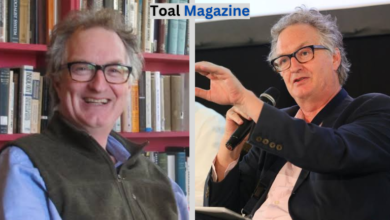

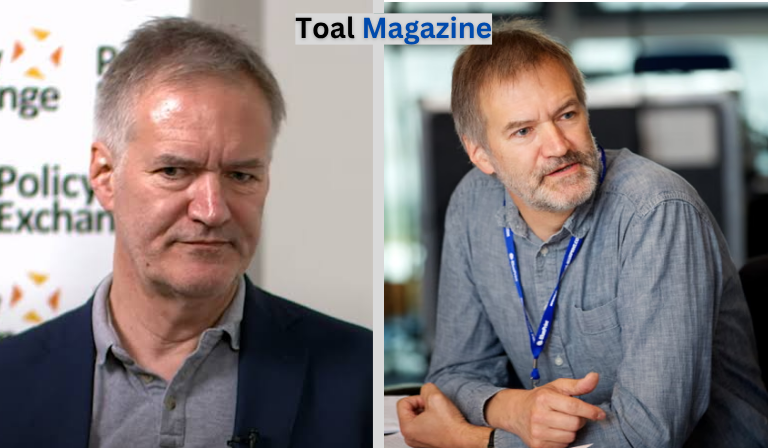
David Goodhart has spent decades examining how Britain is changing, from immigration and national identity to education, work, family life, and population trends. His career began in journalism, including more than a decade at the Financial Times, before he became the founding editor of Prospect magazine and later moved into think-tank research and political commentary.
In recent years, Goodhart has become particularly associated with debates about immigration, integration, demographic change, meritocracy, and the role of community in modern society. At Policy Exchange, he currently works as Head of Demography, Immigration & Integration.
His books, including The British Dream, The Road to Somewhere, Head, Hand, Heart, and The Care Dilemma, have explored different aspects of these themes. His arguments have attracted both support and criticism, making his work a notable part of Britain’s wider public debate.
Quick Facts About David Goodhart
| Fact | Details |
|---|---|
| Full Name | David Goodhart |
| Date of Birth | September 12, 1956 |
| Nationality | British |
| Profession | Journalist, Author, Political Commentator |
| Known For | Writing on immigration, demography, community and social change |
| Former Role | Founding Editor of Prospect |
| Current Role | Head of Demography, Immigration & Integration at Policy Exchange |
| Former Public Appointment | EHRC Commissioner, 2020–2024 |
| Major Books | The British Dream, The Road to Somewhere, Head, Hand, Heart, The Care Dilemma |
| Education | University of York |
| Main Areas of Interest | Immigration, demographics, work, education, family and social cohesion |
His Policy Exchange profile currently lists him as Head of Demography, Immigration & Integration. His EHRC appointment began on December 1, 2020 and ran for an initial four-year term through November 30, 2024.
Early Life and Background
Born in 1956, Goodhart grew up in Britain and eventually developed an interest in journalism, politics, economics, and public affairs. He studied at the University of York before beginning his professional career in journalism.
His early career was closely connected to the Financial Times. He spent about 12 years with the newspaper and worked as a correspondent, including reporting from Germany during the period surrounding German reunification.
That experience gave him an opportunity to observe major political and economic changes in Europe at close range. It also helped shape a career that would later combine journalism with broader arguments about politics and society.
Rather than concentrating on one narrow subject, his interests gradually expanded toward questions about national identity, social class, economic change, immigration, and political representation.
Age and Physical Features
David Goodhart was born on September 12, 1956. Based on that date, he is 70 years old in September 2026.
His public profile is centered primarily on his work as a writer and commentator rather than on personal lifestyle coverage. Reliable biographical sources do not provide a detailed set of verified information about his height, weight, or other physical measurements, so those details are best left unreported rather than estimated.
Career and Major Achievements
Goodhart’s professional career has developed across journalism, magazine publishing, think tanks, and authorship.
His time at the Financial Times established his reputation as a journalist. He then became one of the most recognizable figures behind Prospect, which he helped establish in 1995.
As founding editor, he played a central role in developing the magazine’s identity as a publication focused on politics, economics, culture, and ideas. He edited Prospect until 2010 and subsequently continued as editor-at-large.
His career later moved toward think tanks. He directed Demos, a centre-left think tank, before joining Policy Exchange and taking a leading role in its work on demography, immigration, and integration.
Policy Exchange established its Demography, Immigration and Integration unit in 2016 under Goodhart’s directorship to study immigration and the way it was changing Britain.
His role at Policy Exchange continues today, where he writes and comments on immigration policy, population trends, employment, integration, and related social questions.
Another significant part of his public career was his appointment as an Equality and Human Rights Commission commissioner in 2020. The government announced that Goodhart and other new commissioners would serve an initial four-year term from December 1, 2020 to November 30, 2024.
The EHRC’s annual report for 2023–24 records Goodhart as a commissioner during that reporting year.
His Views on Immigration
Immigration is one of the subjects most closely associated with Goodhart’s public writing.
His approach generally focuses not only on the economic effects of immigration but also on questions of integration, social cohesion, public confidence, wages, skills, and national identity.
In Policy Exchange publications, he has argued for a more controlled approach to immigration and has discussed whether employers and government should place greater emphasis on training workers already in Britain.
He has also argued that immigration cannot be discussed solely through economic measures. In his writing, cultural and community effects are treated as important parts of the debate.
This position has made his work particularly relevant to discussions surrounding Brexit and Britain’s post-Brexit immigration system. Policy Exchange has published his arguments concerning immigration levels, integration, skills, and public confidence.
It is important, however, to distinguish Goodhart’s arguments from established consensus. Immigration policy remains highly contested, and economists, political researchers, policymakers, and commentators differ considerably over its effects and the best policy response.
Demography and Population Change
Demography has become increasingly central to Goodhart’s work.
Demographic questions include birth rates, ageing populations, migration, household structures, workforce participation, and the ability of institutions to provide care for older people and children.
Goodhart has argued that falling fertility and population ageing create problems that cannot be separated from questions about family life, employment, and government policy.
His interest in these issues is reflected in both his Policy Exchange work and his later book The Care Dilemma. The book examines falling birth rates alongside changes in family structures and the growing demand for care.
The demographic argument is broader than immigration. It asks how societies will support an ageing population, maintain essential services, and balance the needs of children, working-age adults, and older generations.
The British Dream
Published in 2013, The British Dream: Successes and Failures of Post-war Immigration was an important milestone in Goodhart’s career as an author.
The book examines Britain’s experience with immigration and multiculturalism after the Second World War. It considers how migration changed British society while questioning whether economic benefits alone provide a sufficient measure of successful integration.
The book attracted considerable public attention and became part of wider arguments over multiculturalism, identity, and social cohesion.
Goodhart’s critics have challenged some of his interpretations, while supporters have viewed the book as an attempt to raise questions that they believe were sometimes under-addressed in mainstream political discussion.
The book was shortlisted for the Orwell Prize, helping to establish Goodhart as a significant political writer beyond his magazine and newspaper career.
The Road to Somewhere
The Road to Somewhere, published in 2017, introduced the concept that perhaps made Goodhart most recognizable to a broad audience: the division between “Anywheres” and “Somewheres.”
In Goodhart’s framework, Anywheres are generally people whose identities are shaped more by education, professional achievement, and mobility. They may be comfortable moving between places and adapting to different environments.
Somewheres, in contrast, tend to have stronger connections to particular towns, communities, regions, or national traditions.
Goodhart used the distinction to explore political disagreements that do not fit neatly into traditional left-versus-right categories. The framework became especially prominent in discussions of Brexit and the political tensions associated with globalization.
The idea has also been debated and criticized, and it should be understood as Goodhart’s analytical framework rather than an objectively fixed classification of every person in British society.
Head, Hand, Heart
His 2020 book Head, Hand, Heart shifted attention toward education, work, meritocracy, and social status.
The basic argument is that modern Western societies often place unusually high value on cognitive and academic ability. Goodhart suggests that practical skills and caring professions can receive less recognition, despite being essential to everyday life.
He divides capabilities into three broad categories: Head, representing cognitive work; Hand, representing practical and technical work; and Heart, representing caring and interpersonal work.
The book asks whether society has placed too much emphasis on university education and professional careers while failing to give sufficient status to skilled trades and caring occupations.
This theme connects with some of his broader arguments about social class and political alienation. People whose work is less academically credentialed, he argues, can feel that society values their contribution less than it should.
The Care Dilemma
Published in October 2024, The Care Dilemma is Goodhart’s most recent major book.
The book examines changes in family life over roughly the past six decades. It considers the effects of greater autonomy for women, changing household structures, paid employment, childcare responsibilities, elder care, and declining fertility.
Goodhart does not simply describe these changes as positive or negative. His central argument explores what may have been gained through greater personal freedom while also asking about unintended consequences for family stability, care systems, and demographic trends.
A key part of the book is the question of who should provide care. Families, employers, communities, and governments all have different responsibilities, and the balance between them has become increasingly difficult as populations age and birth rates fall.
The book therefore connects demographic change with everyday experiences such as raising children, supporting older relatives, and balancing employment with family responsibilities.
Relationship With Politics and Public Debate
Goodhart is a political commentator, but his work does not fit neatly into one conventional ideological category.
Earlier in his career, he was associated with the centre-left through his leadership at Prospect and his work with Demos. Over time, his writing became increasingly focused on immigration, integration, community, national identity, and the concerns of voters affected by rapid social change.
He has also described a gradual change in his own thinking about modern liberalism and immigration rather than presenting his views as unchanged throughout his career.
This evolution is relevant when studying his work because his arguments have developed alongside major changes in British politics.
His writing is often discussed in connection with debates about Brexit and populism, but he has also written extensively on subjects that extend beyond electoral politics, including work, family, education, and demographics.
Marriage and Family Life
Goodhart has generally kept much of his private family life away from the center of his public career.
Reliable public biographical information does not provide enough consistently verified detail to give a complete account of his marriage, spouse, or day-to-day family life. For that reason, claims about private relationships should be treated cautiously unless supported by a reputable source.
His public writing does, however, show a strong intellectual interest in family structures, parenting, caregiving, and demographic change, particularly through The Care Dilemma.
Social Media Presence
David Goodhart’s public profile is primarily built around journalism, books, interviews, and think-tank publications.
His ideas frequently appear through Policy Exchange material, media interviews, articles, and discussions related to his books. Rather than relying on social media as his main platform, much of his public work is distributed through established publications and institutional research.
Readers looking for his latest commentary are therefore more likely to encounter him through Policy Exchange and media appearances than through lifestyle-oriented online content.
Who Is David Goodhart?
At the simplest level, David Goodhart is a British journalist and author who has spent much of his career studying the relationship between economic change and social change.
His work covers several connected questions: what happens when communities become more diverse, how immigration affects integration, why educational credentials have become so important, how work is valued, and what falling birth rates mean for the future.
He is perhaps best understood as a writer interested in the social consequences of large structural changes.
Rather than staying within one academic discipline, he moves between journalism, political commentary, demographic research, and public policy.
Personality and Interests
Publicly, Goodhart is best known for his analytical and argumentative writing style.
His interests tend to center on large social questions rather than celebrity culture or entertainment. Immigration, work, education, family life, social class, community, and demographics have remained recurring subjects throughout his career.
The range of his books also demonstrates how these topics overlap. His writing on immigration connects with community questions, while his work on meritocracy connects with education and employment. His most recent work on care brings family life and demographics into the same discussion.
Does David Goodhart Have Children?
Publicly available biographical information does not provide a reliable, comprehensive account of Goodhart’s children or private family arrangements.
Because family details are personal and online claims can easily become inaccurate, it is better not to present unverified names, numbers, or personal information as fact.
What is well documented is his professional interest in family policy, fertility, caregiving, and the social effects of demographic change, especially in The Care Dilemma.
Net Worth and Income
There is no widely accepted, independently verified public figure for David Goodhart’s personal net worth.
As a journalist, author, speaker, editor, and think-tank researcher, he has had several professional sources of income over the course of his career. However, publicly available sources do not establish a reliable total figure for his wealth.
Online estimates that provide an exact net-worth number should therefore be treated cautiously unless they are supported by financial records or a highly credible source.
It is also important not to confuse compensation from a particular public appointment with someone’s overall wealth. For example, the EHRC annual report records Goodhart receiving £10,000 in commissioner fees during 2023–24, alongside £263 in expenses and travel costs for that reporting year.
Public Image and Legacy
Goodhart’s public image has been shaped by his willingness to challenge established assumptions.
His career is unusual in that he has worked across institutions with different political traditions. He helped establish Prospect, worked with Demos, and later became a senior figure at Policy Exchange.
His writing has also influenced the vocabulary used in discussions of political identity. The phrase “Anywheres and Somewheres,” in particular, became widely used as a way of discussing the cultural and geographic dimensions of political disagreement.
His legacy will likely be connected not to one single policy proposal but to the questions he has repeatedly raised about how societies handle rapid change.
Whether discussing immigration, meritocracy or family life, his work asks how economic and social institutions affect people’s sense of belonging, opportunity, status, and security.
Conclusion
David Goodhart has built a long career examining some of the most difficult questions facing Britain and other Western societies. From his early journalism at the Financial Times to founding Prospect, working in think tanks, writing influential books, and serving as an EHRC commissioner, his professional path has crossed several important areas of public life.
His work on immigration emphasizes integration, community, public confidence, and the relationship between migration and the economy. His writing on demographics highlights falling fertility and ageing populations, while Head, Hand, Heart explores the changing value assigned to different types of work.
His books remain debated because they address subjects where political and academic opinions differ. That debate is part of what has made Goodhart a prominent figure in modern British political and social commentary.
8 FAQs About David Goodhart
1. Who is David Goodhart?
David Goodhart is a British journalist, author, and political commentator known for writing about immigration, demographics, social class, work, education, family life, and political divisions.
2. How old is David Goodhart?
David Goodhart was born on September 12, 1956. He is 70 years old in September 2026.
3. What is David Goodhart known for?
He is particularly known for his books The British Dream, The Road to Somewhere, Head, Hand, Heart, and The Care Dilemma, as well as his work on immigration and demography.
4. What are Anywheres and Somewheres?
They are terms Goodhart introduced in The Road to Somewhere to describe two broad approaches to identity. Anywheres are generally more mobile and education-oriented, while Somewheres tend to have stronger roots in particular places and communities.
5. Where does David Goodhart work?
Policy Exchange currently lists him as its Head of Demography, Immigration & Integration.
6. Was David Goodhart an EHRC commissioner?
Yes. He was appointed as an Equality and Human Rights Commission commissioner in 2020 for an initial four-year term running from December 1, 2020 to November 30, 2024.
7. What is David Goodhart’s latest book?
His latest major book is The Care Dilemma, published in October 2024. It examines family life, caregiving, fertility, ageing, and demographic change.
8. What does David Goodhart write about?
His writing covers immigration, integration, social cohesion, political identity, education, meritocracy, work, family life, care, fertility, and demographic change. His career has consistently focused on how major economic and social transformations affect communities and individuals.