
Andrew Niccol has built one of modern science fiction’s most distinctive careers by asking a simple but unsettling question: what happens when technology becomes normal before society is ready for it? Instead of depending on distant planets, alien wars, or impossible machines, his stories bring the future uncomfortably close to the present. They examine genetic engineering, surveillance, artificial celebrity, digital identity, inequality, drone warfare, and the loss of privacy.
Films such as Gattaca, The Truman Show, S1m0ne, In Time, and Anon often feel prophetic because their technology is tied to recognizable human behavior. He does not simply imagine inventions; he explores how people, corporations, governments, and culture might use or misuse them. That combination of high-concept storytelling and human anxiety explains why his work remains important in discussions of modern science fiction.
Quick Facts About Andrew Niccol
| Fact | Details |
|---|---|
| Full Name | Andrew M. Niccol |
| Date of Birth | June 10, 1964 |
| Age | 62 years old as of August 2026 |
| Birthplace | Paraparaumu, New Zealand |
| Nationality | New Zealander |
| Profession | Screenwriter, director, producer |
| Known For | Gattaca, The Truman Show, Lord of War, In Time, Anon |
| Major Award | BAFTA Award for Original Screenplay for The Truman Show |
| Academy Recognition | Oscar nomination for The Truman Show screenplay |
| Wife | Rachel Roberts |
| Children with Rachel Roberts | Two |
Who Is Andrew Niccol?
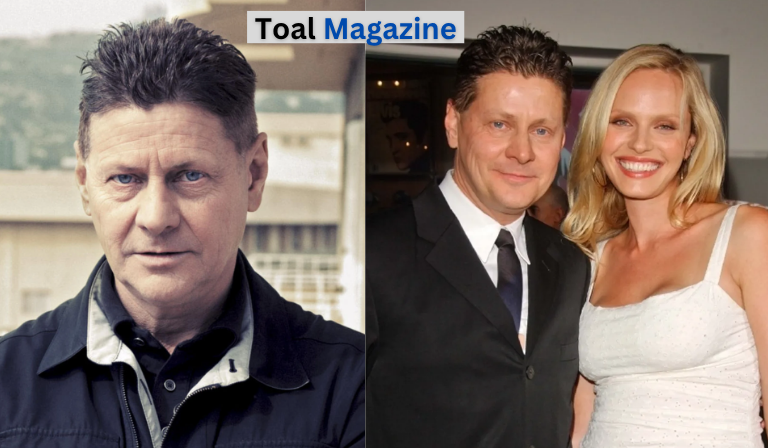
He is a New Zealand filmmaker best known for intelligent, idea-driven movies about technology, identity, freedom, class, privacy, and social control. He wrote and directed Gattaca, S1m0ne, In Time, The Host, and Anon, and wrote and produced The Truman Show.
NZ On Screen describes his work as taking contemporary concerns and pushing them to inventive extremes.
Early Life and Background
Andrew Niccol was born on June 10, 1964, in Paraparaumu, New Zealand, and grew up in Auckland. He attended Auckland Grammar School, left New Zealand at 21, and moved to London, where he spent about a decade directing television commercials before moving into feature films.
Wired also reported that he later became creative director at BBDO’s London branch before pursuing film.
As a child, he saw 2001: A Space Odyssey, which he later described as a deeply immersive experience.
Age and Physical Features
Born in 1964, he is 62 years old as of August 2026. Reliable sources do not widely publish an officially confirmed height, so it is better not to repeat unsourced figures found on celebrity websites.
Profiles have described his blue-gray eyes and his preference for black clothing. Wired portrayed him as soft-spoken, careful in interviews, and visually understated.
Career and Major Achievements
The defining early moment in his career came with Gattaca in 1997, his feature directing debut. The film imagines a society where genetic information determines opportunity and social status, turning DNA-based discrimination into something bureaucratic and disturbingly believable. BFI has praised the film as an intelligent and affecting science-fiction drama whose exploration of genetic engineering remains relevant.
Soon afterward came The Truman Show. Directed by Peter Weir from Andrew Niccol’s screenplay, the 1998 film follows a man whose entire life has secretly become entertainment. The screenplay earned an Academy Award nomination, while BAFTA named it the winner for Original Screenplay in 1999.
In 2002, Andrew Niccol explored a digitally created actress who becomes a celebrity in S1m0ne. The film questioned whether audiences care if a star is real as long as the illusion is convincing. Wired documented how the production itself used extensive digital manipulation around actress Rachel Roberts.
His later work broadened those concerns. In Time turned time into currency to dramatize economic inequality, Good Kill examined remote drone warfare, and Anon imagined a society where personal experience is continuously recorded and privacy has nearly disappeared.
New Zealand On Screen lists I, Object as a 2026 film written, directed, and produced by Niccol.
How Andrew Niccol Changed Modern Science Fiction Cinema
One of his biggest contributions to modern science fiction is the focus on technology as a social system rather than a visual spectacle. In his films, the most dangerous inventions rarely threaten people because they explode. They become dangerous because institutions and ordinary citizens accept them.
Gattaca is the clearest example. Its future looks elegant and controlled, but society judges people according to their genetic profile before they can prove themselves. The fear comes not from genetic science alone but from what happens when biological data becomes a permanent measure of human worth.
The Truman Show works in a similar way. Truman’s surveillance is packaged as entertainment rather than oppression. As reality television, social media, livestreaming, data tracking, and voluntary oversharing became increasingly familiar, the film’s central idea gained even more cultural relevance. Wired later highlighted how closely the movie’s concerns aligned with a world of widespread surveillance and oversharing.
S1m0ne pushed another issue forward: artificial fame. Its central question—whether authenticity matters when the illusion is appealing enough—now feels closely connected to virtual personalities and generative media.
That pattern is central to Andrew Niccol’s influence. His stories rarely ask only whether a technology can exist. They ask what social habits, business incentives, inequalities, and moral compromises will grow around it.
That is what separates his work from many spectacle-driven science-fiction films. The technology is important, but the human response is usually the real subject.
Relationship with Rachel Roberts
Andrew Niccol’s best-known relationship is with Canadian model and actress Rachel Roberts. Roberts became closely linked with his creative work through S1m0ne, where she served as the principal physical performer behind the movie’s supposedly artificial star.
She later appeared in In Time, The Host, and Anon. Wired and UPI have both referred to Roberts as Niccol’s wife, and profiles describe the couple as having two children together.
Marriage and Family Life
The couple have two children together, a son named Jack and a daughter named Ava. People reported that Ava was born in January 2008 and joined her older brother, Jack.
Jack appeared as young Nicolai in Lord of War, but the children have not been made central to Andrew Niccol’s filmmaking career.
That strong separation between public work and private life is particularly interesting for a filmmaker whose stories repeatedly examine surveillance and the erosion of privacy.
Social Media Presence
Unlike many directors who build a public brand through daily posts, Andrew Niccol maintains a relatively low-profile public presence. His name appears widely across entertainment pages and fan discussions, but interviews and film releases—not constant personal posting—remain the main ways audiences encounter him.
Wired has described him as cautious about interviews and interested in letting his work speak for itself.
That approach is especially fitting for the creative mind behind stories such as The Truman Show and Anon, where constant visibility and the disappearance of privacy become major concerns.
Personality and Interests
Interviews portray Niccol as thoughtful, private, precise, and highly interested in how technology affects human behavior. He has expressed reluctance to explain his own films too heavily, preferring audiences to read meaning from the work itself.
His recurring interests include authenticity, surveillance, inequality, control, identity, and freedom. These ideas appear repeatedly even when the stories themselves are very different.
Wired also reported his unusually close attention to visual details such as typography, props, vehicles, costumes, and locations, helping explain why his fictional worlds often feel coherent without long explanations.
Does Andrew Niccol Have Children?
Yes. He and Rachel Roberts have two children together, Jack and Ava. Public reporting about them is limited, reflecting the family’s generally private approach.
Jack appeared as young Nicolai in Lord of War, providing a small family connection to Niccol’s filmmaking career.
Net Worth and Income
There is no authoritative public financial filing that confirms Andrew Niccol’s exact personal net worth. Some entertainment websites estimate it at around $14 million, but such figures are unofficial and should not be presented as verified fact.
His professional income comes from work as a screenwriter, director, and producer across films distributed internationally. Given the lack of verified financial disclosure, describing his net worth as publicly unconfirmed is more accurate than treating an online estimate as fact.
Public Image and Legacy
Andrew Niccol has never needed the profile of a celebrity director for his work to remain influential. His legacy comes from the durability of his ideas.
Gattaca continues to appear in conversations about genetic selection and genomic privacy, while The Truman Show has become a cultural reference point for manufactured reality and surveillance. S1m0ne has gained fresh relevance as synthetic media and AI-generated personalities have become easier to imagine. BFI and Wired have both emphasized the continuing relevance of his futuristic ideas.
What makes his legacy unusual is that many of his films seem to gain meaning after release. Technologies that once felt speculative later become more recognizable, allowing new audiences to see familiar modern anxieties in older stories.
His best work does not literally predict the future. It identifies enduring human weaknesses—status, greed, control, vanity, and convenience—and asks what happens when technology gives those impulses more power.
Modern science fiction increasingly explores algorithms, artificial intelligence, surveillance, data ownership, biotechnology, and virtual identity. Niccol’s earlier films helped establish a cinematic language for examining those subjects through individual human stories rather than technical explanations.
Conclusion
Andrew Niccol changed modern science fiction by making the future feel personal, plausible, and socially dangerous. From genetic discrimination in Gattaca to manufactured reality in The Truman Show, artificial celebrity in S1m0ne, economic inequality in In Time, and surveillance in Anon, his stories place human choices at the center of technological change.
His greatest strength is not predicting individual inventions. It is recognizing how quickly people can normalize systems that reduce privacy, freedom, or individuality.
That is why his work remains relevant decades after his breakthrough. Andrew Niccol showed that powerful science fiction does not always need a distant galaxy. Sometimes the most disturbing future is the one that looks almost exactly like the present.
FAQs About Andrew Niccol
1. Who is Andrew Niccol?
He is a New Zealand screenwriter, director, and producer known for stories about technology, society, surveillance, identity, and personal freedom.
2. What is he best known for?
He is especially associated with Gattaca and The Truman Show, along with S1m0ne, Lord of War, In Time, Good Kill, and Anon.
3. How old is he?
He was born on June 10, 1964, making him 62 years old in August 2026.
4. Did he direct The Truman Show?
No. Peter Weir directed the film. Niccol wrote the original screenplay and served as a producer.
5. Did he win an Oscar?
No. His The Truman Show screenplay received an Academy Award nomination, while it won the BAFTA for Original Screenplay.
6. Who is his wife?
His wife is Canadian model and actress Rachel Roberts.
7. Does he have children?
He and Roberts have two children together, Jack and Ava.
8. Why is he important to science fiction?
His films made science fiction feel socially immediate by exploring believable consequences of genetic engineering, surveillance, artificial celebrity, inequality, and digital control rather than relying only on futuristic spectacle.