
Introduction
Andrew Gilligan has built an unusual career that connects investigative journalism, British politics, London transport, and national infrastructure policy. Best known initially as a journalist, he later moved into senior advisory roles where transport became a central part of his work. His career has included advising Boris Johnson in City Hall, serving as a senior adviser to Prime Minister Boris Johnson, and later advising Prime Minister Rishi Sunak.
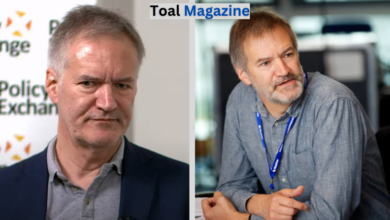
Today, Gilligan is a Senior Fellow and Head of Transport, Infrastructure and Liveable London at Policy Exchange. His work covers major questions about railways, roads, buses, cycling, urban development, and the future of London.
His background in journalism also influences his approach. He has developed a reputation for challenging large public projects and questioning established assumptions about how transport investment should be planned and delivered.
Quick Facts About Andrew Gilligan
| Fact | Details |
|---|---|
| Full name | Andrew Paul Gilligan |
| Date of birth | 22 November 1968 |
| Nationality | British |
| Profession | Journalist, political adviser, policy specialist |
| Current role | Senior Fellow and Head of Transport, Infrastructure and Liveable London at Policy Exchange |
| Journalism background | Sunday Times, Telegraph, BBC and Evening Standard |
| London government role | Cycling Commissioner, 2013–2016 |
| Boris Johnson advisory role | Transport and infrastructure adviser, 2019–2022 |
| Rishi Sunak advisory role | Senior adviser, 2023–2024 |
| Main areas of interest | Transport, infrastructure, London policy and public policy |
Policy Exchange currently lists Gilligan as Senior Fellow and Head of Transport, Infrastructure and Liveable London. Its own publications also describe his previous advisory positions under Boris Johnson and Rishi Sunak.
Early Life and Background
Andrew Paul Gilligan was born on 22 November 1968 in Britain. Publicly available biographical material tends to focus more heavily on his professional career than on his private upbringing, education, or childhood.
His early professional identity was firmly rooted in journalism. Over time, he worked for several major British media organisations and became particularly associated with political and investigative reporting. Policy Exchange describes him as a former senior correspondent of The Sunday Times and notes his earlier work with the Telegraph, BBC and other publications.
That journalistic background became an important foundation for his later policy work. Investigative journalism requires close attention to evidence, institutions, public spending, and political decision-making—areas that continued to feature prominently in Gilligan’s later career.
Journalism Career and the Hutton Inquiry
Before moving into government and policy, Gilligan spent many years working as an investigative journalist. He held positions at publications including The Sunday Times, The Daily Telegraph, the Evening Standard and the BBC. Policy Exchange has also highlighted his recognition as a former British Press Awards Journalist of the Year.
His journalism became nationally significant in 2003 because of his reporting on the Iraq weapons dossier. A report he made for BBC Radio 4’s Today programme raised allegations about the way intelligence material had been presented by the government.
The controversy surrounding that report became part of the wider political and institutional crisis associated with the death of weapons expert David Kelly and the subsequent Hutton Inquiry. The inquiry examined the circumstances surrounding Kelly’s death and the dispute over the BBC’s reporting.
The episode had lasting consequences for British public institutions and journalism. It also became one of the defining chapters of Gilligan’s public career, placing him at the centre of one of the most intensely debated media controversies of the early 2000s.
From Journalism to Public Policy
Gilligan’s move from journalism into policy did not represent a complete break from his earlier career. Instead, it placed his investigative and analytical skills into a different setting.
At Policy Exchange, he became involved in research concerning London and national infrastructure. He also led the Capital City Foundation, where his work addressed urban transport and the operation of London’s infrastructure.
His policy interests have included taxis, buses, railways, cycling, roads and major infrastructure projects. One recurring theme in his work is the question of whether public money is producing the level of economic and practical benefit that policymakers expect.
This focus helped establish Gilligan as a prominent voice in debates about Britain’s transport strategy.
Role as London Cycling Commissioner
One of the most visible positions in Gilligan’s career came when he served as London’s Cycling Commissioner from 2013 to 2016.
The role placed him close to Boris Johnson during Johnson’s time as Mayor of London. Gilligan became associated with the expansion of cycling infrastructure and London’s broader efforts to increase cycling as a form of urban transport.
His work during this period was part of a much wider transformation in London’s transport debate. Cycle superhighways, segregated cycling infrastructure and road-layout changes generated strong public interest as well as controversy.
Supporters viewed the expansion of cycling infrastructure as an important step toward safer and more sustainable travel. Critics raised concerns about road capacity, congestion, construction costs and the impact on other road users.
Gilligan’s position placed him directly in the middle of these debates, helping to shape his later reputation as a transport commentator.
Advising Boris Johnson on Transport and Infrastructure
Gilligan’s relationship with Boris Johnson continued after the London mayoralty. According to Policy Exchange, he advised Johnson as Mayor between 2013 and 2016 and later served as a policy adviser on transport and infrastructure to the Prime Minister from 2019 to 2022.
This period gave him a significant role in national discussions about infrastructure.
Transport policy at Westminster involves enormous levels of public spending and long-term decisions. Rail investment, road networks, regional connectivity and major infrastructure schemes can affect economic development for decades.
Gilligan became known for bringing a critical perspective to these questions. Rather than automatically supporting large-scale investment, he often examined whether projects offered value for money and whether alternative approaches might provide greater benefits.
Work With Rishi Sunak
After his time advising Boris Johnson, Gilligan continued working at the heart of government policy. Policy Exchange states that he served as Senior Adviser to Prime Minister Rishi Sunak from 2023 to 2024.
His work during this period continued to connect politics with questions of transport and infrastructure. The role placed him in an environment where decisions about growth, public spending, regional development and national infrastructure were closely linked.
This also reinforced a distinctive feature of his career: Gilligan has moved between journalism, local government, national government and think-tank research while maintaining a strong interest in public policy.
Andrew Gilligan and HS2
HS2 has been one of the most important transport issues associated with Gilligan’s policy work.
He has been a prominent critic of aspects of the high-speed rail project and has argued that Britain should reconsider how transport investment is prioritised. In a Policy Exchange publication titled HS2: The kindest cut of all, Gilligan argued that scaling back the scheme could release substantial public funds for other transport projects.
His position reflects a broader argument about infrastructure policy: a project can be ambitious and politically important without necessarily being the most efficient use of available resources.
Gilligan’s later work has continued this theme. Policy Exchange publications identify him as an author or contributor on alternative approaches to high-speed rail and broader transport investment.
His views on HS2 have attracted both attention and disagreement, but the debate illustrates why he remains influential in British transport discussions.
Work on Buses, Rail and Public Transport
Gilligan’s interests extend beyond major railway projects. His Policy Exchange research has also examined how everyday public transport can be made more affordable and useful.
In Ticket to save, published in 2023, he and Policy Exchange proposed extending tax relief to bus and rail season tickets. The proposal was designed to reduce the cost of commuting while encouraging greater use of public transport.
This illustrates a more practical side of his transport thinking. His work is not exclusively about large infrastructure schemes; it also considers how existing networks can serve passengers more effectively.
That distinction is important because Britain’s transport challenges are not limited to building new railways. Affordability, reliability, road space, local connectivity and the efficient use of existing infrastructure all shape everyday travel.
London Transport, Taxis and Urban Planning
London has remained a recurring focus throughout Gilligan’s career.
Earlier Policy Exchange work involving Gilligan examined the future of London’s iconic black cabs and the effects of changing competition in the taxi market. The research considered employment, accessibility, regulation and the wider role of taxis in London’s transport system.
He has also written about London’s roads and urban environment. These subjects reflect a wider interest in how transport policy affects the character and economic performance of a city.
For Gilligan, transport is therefore not simply a question of moving vehicles from one location to another. It is connected to housing, business activity, public space, accessibility and the quality of urban life.
Current Role and Recent Work
Gilligan remains active at Policy Exchange, where he is currently listed as Senior Fellow and Head of Transport, Infrastructure and Liveable London.
His recent work has expanded beyond traditional transport policy into broader political and social questions. Policy Exchange publications from 2025 and 2026 list him as an author or contributor on subjects involving community cohesion, media monitoring and political debates.
At the same time, transport remains central to his work. His continuing publications demonstrate that he still engages with major infrastructure and public policy questions.
Age and Physical Features
Andrew Gilligan was born on 22 November 1968, which makes him 57 years old in September 2026.
Reliable public sources provide limited information about his personal physical characteristics. Details such as height, weight and specific measurements are not consistently documented by authoritative sources, so it is better not to present unverified figures as fact.
His public profile is primarily based on his journalism, policy research and advisory roles rather than his personal appearance.
Relationship and Family Life
Gilligan has maintained a relatively private personal life compared with many public figures.
There is considerably more reliable public information about his professional activities than about his romantic relationships, spouse or children. Because of that, claims about his marriage, partner or family should be treated carefully unless supported by a strong and reliable source.
His public record is overwhelmingly centred on journalism, politics, transport and policy rather than family life.
Social Media Presence
Gilligan’s public visibility is driven largely by journalism, policy publications and media appearances rather than extensive personal social-media activity.
His ideas and commentary can be encountered through professional publications, interviews and Policy Exchange material. This reflects his broader role as a policy commentator whose work is often distributed through institutional and media channels.
Readers looking for his latest views are therefore more likely to find them through his published policy work and commentary than through details about his private life.
Personality and Professional Interests
Based on his public career, Gilligan appears particularly interested in evidence, public spending, institutional accountability and practical transport outcomes.
His writing frequently challenges conventional assumptions. Whether discussing HS2, cycling, public transport or London infrastructure, he tends to focus on costs, benefits and whether policies deliver their promised results.
That approach is consistent with his transition from investigative journalism to policy advising. He appears most comfortable where complex public decisions require scrutiny and a willingness to question established positions.
Net Worth and Income
There is no reliably documented public figure for Andrew Gilligan’s personal net worth.
His income over the years has likely come from professional roles in journalism, government advising, policy work and related activities, but publicly available authoritative sources do not provide a verified personal wealth estimate.
For that reason, online claims assigning him a specific net worth should be approached with caution unless they are supported by credible financial records or direct disclosures.
Public Image and Legacy
Gilligan’s legacy is closely connected to two different but overlapping careers.
In journalism, he is remembered for high-profile investigative reporting and his involvement in the Hutton controversy. In transport policy, he has become known for challenging major infrastructure assumptions and advocating different priorities for public investment.
His time as London’s Cycling Commissioner also forms an important part of his public record. The debates surrounding London’s cycling infrastructure reflected wider disagreements about how modern cities should allocate road space and balance the needs of cyclists, pedestrians, public transport and motorists.
Today, his influence comes from his ability to operate across several worlds. He has worked as a journalist, government adviser, London transport figure and think-tank policy specialist.
Conclusion
Andrew Gilligan‘s career is notable because it has crossed the boundaries between journalism, politics and transport policy. From investigative reporting to advising national governments, he has remained closely involved in debates about how Britain should manage public institutions and infrastructure.
His work on cycling in London, national transport strategy, public transport costs and HS2 has made him a recognisable figure in Britain’s infrastructure debate. His current position at Policy Exchange ensures that he continues to contribute to discussions about transport, London and the future of major public investment.
For readers interested in British transport and political policy, his career offers a useful example of how journalism can lead into government advisory work and long-term public policy influence.
FAQs About Andrew Gilligan
Who is Andrew Gilligan?
Andrew Gilligan is a British journalist, political adviser and transport policy specialist. He is currently a Senior Fellow and Head of Transport, Infrastructure and Liveable London at Policy Exchange.
How old is Andrew Gilligan?
He was born on 22 November 1968, making him 57 years old in September 2026.
What is Andrew Gilligan known for?
He is known for investigative journalism, his work as London’s Cycling Commissioner, his government advisory roles and his commentary on transport and infrastructure.
Did Andrew Gilligan work for Boris Johnson?
Yes. Policy Exchange states that he advised Boris Johnson as Mayor of London from 2013 to 2016 and later served as a transport and infrastructure policy adviser to Johnson as Prime Minister from 2019 to 2022.
Did Andrew Gilligan advise Rishi Sunak?
Yes. Policy Exchange states that he served as Senior Adviser to Rishi Sunak from 2023 to 2024.
What role did he have in London’s cycling policy?
Gilligan served as London’s Cycling Commissioner between 2013 and 2016, working on the city’s cycling strategy and infrastructure during Boris Johnson’s mayoral administration.
What is Andrew Gilligan’s position on HS2?
Gilligan has been critical of HS2 and has argued that scaling back the project could free substantial resources for other transport investments. His views are documented in Policy Exchange research on the project.
Where does Andrew Gilligan work now?
He currently works at Policy Exchange as Senior Fellow and Head of Transport, Infrastructure and Liveable London.