

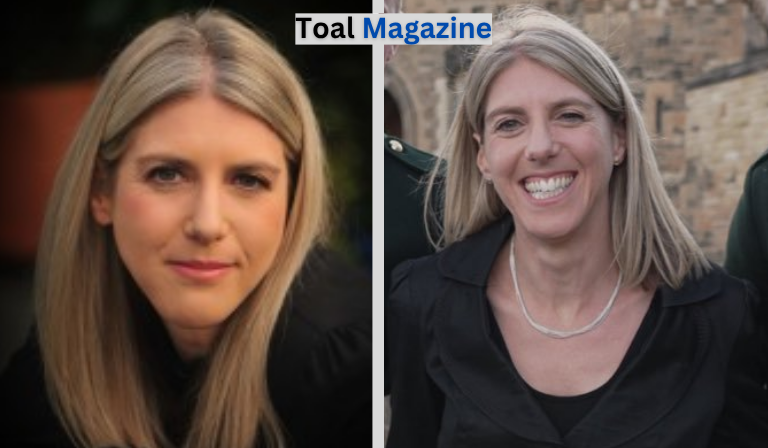
Judith Moritz has become one of the most recognisable BBC journalists covering major criminal cases, public inquiries and difficult national stories. Her career has been shaped by patience, detailed research and a strong understanding of the legal process, particularly in cases originating in northern England. Over the years, she has reported on some of the UK’s most significant and emotionally challenging stories, from Hillsborough and the Manchester Arena Inquiry to the Lucy Letby trial.
What makes her work especially distinctive is the way she combines complicated legal information with the human stories behind it. She has spent years following cases that do not end when the breaking-news headlines disappear. In 2024, she also moved into a national role as a BBC News Special Correspondent, with a brief to produce original, high-impact journalism for audiences across the UK.
Quick Facts About Judith Moritz
| Detail | Information |
|---|---|
| Full Name | Judith Moritz |
| Profession | Journalist and Special Correspondent |
| Employer | BBC News |
| Main Specialism | Court cases, investigations and public inquiries |
| Previous Role | BBC North of England Correspondent |
| Current Role | BBC News Special Correspondent |
| Based In | Manchester/Salford, England |
| Best Known For | Coverage of major legal cases and the Lucy Letby trial |
| Notable Subjects | Hillsborough, Manchester Arena Inquiry, Morecambe Bay and major criminal cases |
| Book | Unmasking Lucy Letby |
| Social Media | X/Twitter and Instagram |
The details above are based on professional biographies and Moritz’s own public professional profile.
Introduction
For many viewers, Judith Moritz is a familiar face whenever Britain is confronted with a major criminal investigation or lengthy public inquiry. Unlike reporters whose work is largely focused on daily political developments, Moritz has developed a specialist reputation for staying with difficult stories over long periods.
Her professional biography says she has spent around 25 years reporting complex court cases and inquiries. That experience includes proceedings involving Harold Shipman and Ian Brady, the Morecambe Bay disaster, grooming cases in Rochdale and Rotherham, the long legal aftermath of Hillsborough and the Manchester Arena Inquiry.
Her coverage of the Lucy Letby trial brought her work to an even wider international audience. She was the only TV journalist in the courtroom throughout the trial, according to her literary agency, and later co-authored a detailed book about the case.
Early Life and Background
Reliable public information about Judith Moritz’s early life is surprisingly limited compared with the amount of material available about her professional career.
Some online biographies claim specific details about her date of birth, schooling and childhood in Manchester, but those details are not consistently supported by high-quality primary or professional sources. Because of that, it is safer to focus on the career information that can be independently established.
Her professional identity is strongly connected with northern England. She has spent much of her BBC career reporting from the region, giving her particular knowledge of its communities, institutions and major legal stories.
That regional experience has been important to her success. Long-running cases often require journalists to understand local history and relationships as well as courtroom evidence. Moritz’s years covering northern stories gave her the background needed to report those cases with continuity and context.
Her Age and Physical Features
Judith Moritz’s exact age is not clearly established by the BBC or her professional agency biographies. Several websites publish a specific birth date, but these claims are not consistently backed by reliable primary documentation.
For that reason, stating an exact age as a confirmed fact would be misleading. Her physical appearance is also not something that defines her professional profile, and reputable biographies generally concentrate on her journalism rather than measurements or detailed personal descriptions.
What audiences recognise most clearly is her professional presence: a composed broadcast style, careful explanation of complex developments and a measured approach when covering emotionally difficult cases.
Career and Major Achievements
The foundation of Moritz’s career is her experience with court reporting and investigative journalism.
She has covered some of the UK’s most challenging cases, including proceedings connected with Harold Shipman, one of Britain’s most notorious doctors, and Ian Brady. Her work has also extended to the Morecambe Bay disaster and major investigations involving grooming and institutional failures.
Another major part of her career has been the legal aftermath of Hillsborough. Rather than treating the 1989 disaster simply as a historical event, she has followed the investigations and legal developments that continued for decades.
She also led BBC coverage of the Manchester Arena Inquiry. Public inquiries require journalists to digest large amounts of evidence and explain findings that can be difficult for a general audience to understand. Moritz’s specialist experience in this area made her an important BBC voice during the proceedings.
The Lucy Letby Trial
The Lucy Letby case became one of the defining assignments of Moritz’s career.
According to Hachette and her literary agency, she was one of the very few journalists given access to the courtroom throughout the trial and spent nearly a year following the proceedings. Her agency describes her as the only TV journalist who remained in the courtroom throughout the trial.
The importance of that access cannot be overstated. A trial involving extensive medical evidence, expert testimony and numerous individual allegations is difficult to explain through short news reports alone.
Moritz’s reporting allowed BBC audiences to follow the evidence as it developed. Her work became an important part of the broadcaster’s national and international coverage.
Hachette reports that BBC content concerning the Letby trial received more than 26 million page views, while Moritz’s first-person article about covering the proceedings ranked among the world’s most engaging online stories in 2023.
Unmasking Lucy Letby
Moritz’s work on the case eventually expanded beyond television and online reporting.
She co-authored Unmasking Lucy Letby with Jonathan Coffey. The book examines the case in greater depth, including Letby’s background, events at the Countess of Chester Hospital, the investigation and the evidence presented during the trial.
The book was also recognised at the True Crime Awards in 2025, where it won Best New Author and received further recognition in other book categories.
For Moritz, authorship provided an opportunity to explore a story that could not be fully explained within the limits of regular television reports.
Judith Moritz and Hillsborough
Hillsborough has been another defining subject in her career.
The disaster, which occurred in 1989, resulted in 97 deaths and was followed by years of campaigning, investigations, inquests and legal proceedings. For journalists, covering the story requires both historical knowledge and an understanding of complicated legal developments.
Moritz has specialised in the legal aftermath of Hillsborough, according to her professional biographies.
Her continued involvement illustrates an important part of her reporting philosophy: major public tragedies often require journalism long after the original event has left the front pages.
In February 2026, she was again credited as Special Correspondent on reporting concerning Hillsborough families and their campaign over historic court records, showing that the subject remains part of her journalistic work.
Her New Role as BBC Special Correspondent
A major milestone in Moritz’s career came when she announced that she was becoming Special Correspondent for BBC News.
In her own professional announcement, she explained that she would remain based in Salford while taking on a national remit focused on original, high-impact content.
The promotion reflects how her career has developed from regional reporting into journalism with a wider national reach.
Her recent work demonstrates that broader remit. She has continued to report on northern issues while contributing to major national investigations and political stories.
Southport Reporting
Moritz has also reported on the aftermath of the Southport knife attack, focusing on survivors and their families.
Her professional profile highlights a short film involving children injured in the attack and their parents. The reporting explored the experiences of survivors who had not previously appeared publicly and examined concerns about support and recognition after the attack.
This type of reporting reflects the more personal side of investigative journalism. Instead of concentrating solely on official statements, it can give affected people an opportunity to explain what happened in their own words.
Relationship With Journalism
There is no doubt that journalism has been at the centre of Moritz’s professional life.
Her career shows a long-term relationship with stories that demand persistence rather than quick reporting. Court proceedings, public inquiries and institutional investigations can continue for months or years, and Moritz has repeatedly worked in that environment.
Her ability to remain focused through lengthy cases has become one of her strongest professional qualities.
Marriage and Family Life
Moritz keeps most details of her personal life away from the public spotlight.
Her literary agency states that she lives in Manchester with her family, but reliable professional biographies do not provide extensive details about her marriage, spouse or children.
A number of websites make claims about her husband and children, but those details are not consistently confirmed by authoritative sources. It is therefore more responsible to avoid presenting unverified personal information as fact.
That privacy also fits the way Moritz conducts herself professionally. Her public profile is overwhelmingly defined by her work, rather than by her private relationships.
Social Media Presence
Judith Moritz has maintained a public professional presence on social media.
Her literary agency lists X/Twitter under @judithmoritz and an Instagram account under @judith.moritz.
Her public professional activity is primarily connected with journalism, reporting and BBC projects. Her LinkedIn profile also identifies her with BBC News and shows her sharing and discussing current reporting projects.
This provides audiences with another way to follow her journalism beyond traditional television broadcasts.
Who Is Judith Moritz?
Judith Moritz is a BBC News Special Correspondent and experienced investigative journalist known particularly for court reporting and complex public-interest stories.
She became widely recognised through years of reporting from northern England, eventually moving into a national Special Correspondent role. Her career includes extensive coverage of major criminal cases, public inquiries and national tragedies.
Her reporting on Lucy Letby, Hillsborough and the Manchester Arena Inquiry has helped establish her as a specialist in stories where legal detail, accountability and human experience intersect.
Personality and Interests
Moritz’s on-screen style is generally measured and serious, which suits the subjects she covers.
Her journalism requires concentration and emotional discipline. Reporting on bereaved families, victims and lengthy criminal proceedings can be demanding, yet her professional work consistently emphasises careful explanation rather than sensationalism.
Outside journalism, her literary agency notes that she is a slow but enthusiastic runner during her limited spare time.
That small detail offers a glimpse of a private interest rarely visible in her public-facing work.
Does Judith Moritz Have Children?
There is limited reliable information about Moritz’s children in authoritative professional biographies.
Her literary agency confirms that she lives in Manchester with her family, but it does not provide detailed information about the number, names or ages of any children.
Because these details concern private family life, unverified claims found on secondary websites should be treated cautiously.
Net Worth and Income
There is no reliable public figure for Judith Moritz’s personal net worth.
As a BBC journalist and Special Correspondent, her income would be connected to her professional employment, broadcasting work and other journalism-related activities. However, neither the BBC nor her professional biographies provide a verified personal net-worth figure.
Websites that publish precise estimates should therefore be treated with caution unless they provide credible financial documentation.
Public Image and Legacy
Moritz’s public image is largely based on accuracy, persistence and serious reporting.
Her strongest legacy may be her ability to remain involved with difficult stories after the initial public attention has faded. Hillsborough is a clear example, as is the Manchester Arena Inquiry and the extended coverage of the Lucy Letby case.
Her career also demonstrates the value of specialist correspondents in modern journalism. In an age when news moves extremely quickly, complex legal stories still require reporters who understand the evidence, remember the history and can explain what new developments actually mean.
The move to Special Correspondent gives Moritz a broader platform for that type of journalism. Her recent work shows that she continues to combine regional knowledge with stories of national importance.
Conclusion
Judith Moritz has built her reputation through years of careful reporting on cases and investigations that demand more than headline writing. Her work with the BBC has taken her from regional reporting in northern England to a national role as Special Correspondent, while her coverage of Lucy Letby, Hillsborough and the Manchester Arena Inquiry has placed her among the broadcaster’s experienced legal and investigative journalists.
Her journalism stands out because it combines detailed evidence with a strong awareness of the people affected by major events. Whether reporting from a courtroom, following an inquiry or interviewing survivors, she has developed a style based on patience, context and clear communication.
That combination explains why Judith Moritz remains an important figure in contemporary British broadcast journalism.
FAQs About Judith Moritz
1. Who is Judith Moritz?
Judith Moritz is a BBC News Special Correspondent and journalist known for covering major court cases, investigations, public inquiries and national tragedies.
2. What is Judith Moritz famous for?
She is particularly known for her coverage of the Lucy Letby trial, Hillsborough’s legal aftermath and the Manchester Arena Inquiry, as well as many other major criminal and investigative stories.
3. What is Judith Moritz’s current role?
She is a Special Correspondent for BBC News, a position she announced after previously working as the BBC’s North of England Correspondent.
4. Did Judith Moritz cover the Lucy Letby trial?
Yes. Her professional agency says she was the only TV journalist in the courtroom throughout the trial and spent nearly a year observing the proceedings.
5. Did Judith Moritz write a book about Lucy Letby?
Yes. She co-authored Unmasking Lucy Letby with Jonathan Coffey, examining the case and the evidence surrounding the investigation and trial.
6. Is Judith Moritz married?
Information about her private relationship status is not extensively documented in reliable professional biographies. Her agency confirms that she lives in Manchester with her family.
7. Does Judith Moritz have children?
Her professional biography does not provide reliable detailed information about her children. She generally keeps family matters private.
8. What social media accounts does Judith Moritz use?
Her literary agency lists X/Twitter as @judithmoritz and Instagram as @judith.moritz.