
For decades, John Humphrys was a familiar voice in British homes, particularly for listeners who began their mornings with BBC Radio 4’s Today. Known for his direct questions, persistence and refusal to accept vague answers, he became one of the country’s most recognizable political interviewers. His approach could be uncomfortable for politicians and controversial among critics, but it also made him a highly respected figure in journalism.
His reputation was not built overnight. It developed through years of reporting, foreign correspondence, television presenting and eventually more than three decades on Today. From a working-class childhood in Cardiff to the BBC’s most important news programmes, his career shows how preparation, curiosity and determination can shape an extraordinary broadcasting life.
Quick Facts About John Humphrys
| Detail | Information |
|---|---|
| Full name | Desmond John Humphrys |
| Born | 17 August 1943 |
| Birthplace | Adamsdown, Cardiff, Wales |
| Profession | Journalist, broadcaster and author |
| Education | Cardiff High School |
| BBC career | Began in 1966 |
| Nine O’Clock News | Main presenter, 1981–1987 |
| Today | Presenter, 1987–2019 |
| Mastermind | Host, 2003–2021 |
| Children | Three |
| Notable books | Lost for Words, Beyond Words, Devil’s Advocate, The Great Food Gamble |
| Current broadcasting association | Classic FM |
Early Life and Background
John Humphrys was born in Cardiff in 1943 and grew up in a working-class family. His early life was far removed from the world of national broadcasting. His father worked as a French polisher and his mother was a hairdresser, and Humphrys was one of five children.
He attended Cardiff High School but left at the age of 15. Rather than following a conventional academic route, he began working in journalism, joining the Penarth Times as a young reporter. He later moved to the Western Mail, gaining practical experience that would prove crucial to his future career.
That early newspaper experience also helped shape his attitude toward journalism. Reporting from the ground required asking questions, checking information and speaking directly to ordinary people. Those habits later became central to the interviewing style that made him famous.
From Local Reporter to BBC Journalist
Humphrys joined the BBC in 1966 as a district reporter covering Liverpool and the Northwest. He soon moved into more demanding reporting roles and eventually became a foreign correspondent.
His international assignments included major political developments in the United States and southern Africa. Among his notable reporting experiences was covering the resignation of US President Richard Nixon in 1974, while earlier and later foreign postings gave him exposure to major international stories.
Working as a foreign correspondent demanded more than a strong speaking voice. He had to understand complicated political events quickly, identify what mattered to audiences and question people in difficult circumstances. That combination of speed and skepticism became one of the strongest foundations of his later interviewing career.
Career and Major Achievements
A major milestone came in 1980, when Humphrys became the BBC’s Diplomatic Correspondent. A year later, he became one of the main presenters of the Nine O’Clock News, the BBC’s flagship television news programme. He remained in that role until 1987.
His move to Today in 1987 transformed his profile. For the next 32 years, he became closely associated with the programme and its political interviews. His ability to question senior ministers and public figures helped make him one of the defining broadcasters of British radio.
Humphrys also received recognition from the broadcasting industry. His honours included Journalist of the Year in 2000 and a Gold Sony Radio Award in 2003, reflecting both his journalistic reputation and his impact on radio broadcasting.
Why John Humphrys Became Such a Tough Interviewer
The reputation of John Humphrys as a tough interviewer came from several elements working together.
First, he was persistent. If an interviewee answered a different question from the one he had asked, he was likely to return to the original point. That could create tense exchanges, particularly during political interviews.
Second, he understood the value of follow-up questions. Many political interviews are conducted under strict time limits, so a presenter may only have minutes to establish what a politician actually believes or intends to do. Humphrys became known for using those minutes aggressively.
Third, he was prepared to challenge authority. Politicians, government ministers and other public figures knew that appearing on Today could involve uncomfortable questions about decisions, mistakes or contradictions.
His colleagues and interviewees did not always agree with his approach. Some critics considered him overly confrontational, while supporters argued that difficult questions were exactly what public-service journalism required. Intelligence Squared described him as a presenter who inspired both “love and loathing,” while noting his decades of forensic questioning of people in authority.
The Importance of His Working-Class Background
Humphrys’ upbringing is an important part of understanding his broadcasting personality. He came from a modest Cardiff background and entered journalism without a university degree or the conventional educational path often associated with elite media careers.
That background contributed to the distinctive confidence with which he questioned politicians and senior officials. His approach could be described as practical rather than ceremonious: ask the question, listen to the answer and decide whether the answer actually addresses the issue.
His later reflections on the BBC frequently returned to questions of class, access and representation. In more recent commentary, he has argued that the corporation has historically had problems representing working-class perspectives.
The Today Years
Humphrys’ 32-year association with Today is arguably the central achievement of his career.
Morning political broadcasting requires a very specific set of skills. The presenter has to absorb breaking news, understand complex policy arguments, challenge guests and maintain control of conversations, often before most of the country has started the working day.
Humphrys became particularly well known for interviews that moved beyond prepared political statements. Rather than allowing guests to simply deliver messages, he often pressed them on inconsistencies or demanded clearer answers.
His influence went beyond individual interviews. He became part of the wider culture of British political journalism, where political leaders understood that broadcasters could scrutinize their claims in real time.
Mastermind and a Different Side of His Personality
It might seem surprising that the same journalist known for grilling politicians would also become the host of a famous quiz show. Yet Mastermind became another major chapter of his career.
Humphrys hosted the BBC programme from 2003 until 2021, covering 18 years and hundreds of episodes. He also hosted Celebrity Mastermind.
The programme revealed a calmer side of his presentation style. The format required precision, concentration and an authoritative voice rather than political confrontation. His serious delivery suited the iconic black-chair format and helped make him strongly associated with the programme.
When he announced his departure in 2021, he ended an 18-year run before Clive Myrie took over.
His Age and Physical Features
Born on 17 August 1943, John Humphrys is 83 years old in 2026. He has remained active in broadcasting well beyond the age at which many journalists would have retired.
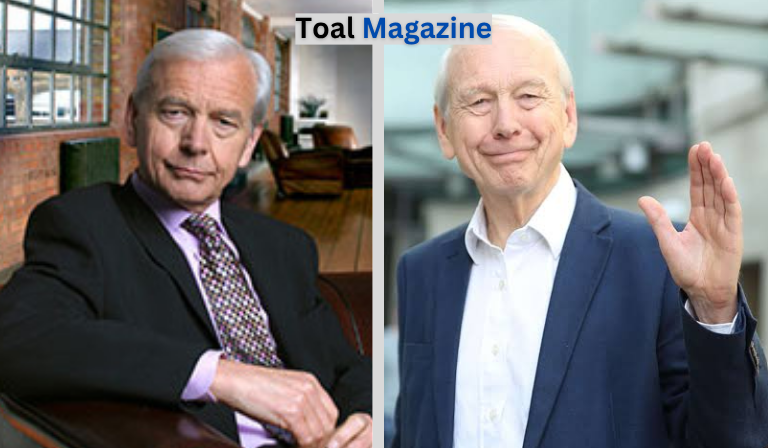
Older photographs and television appearances often show his distinctive white hair and lean appearance. Earlier profiles also described him as physically energetic and constantly moving while talking, a contrast with the controlled and serious impression he created behind a studio microphone.
His appearance, however, has always been secondary to his voice and personality. For radio listeners especially, his recognizable Welsh-influenced delivery became one of the defining sounds of Today.
Relationship and Marriage and Family Life
Humphrys married Edna Wilding in 1964. They had two children, Christopher and Catherine, and their marriage later broke down. Wilding died in 1997.
Humphrys subsequently had a son, Owen, with broadcaster Valerie Sanderson in 2000. Their relationship later ended.
Because Humphrys is primarily known for his professional work, details about his private family life should be treated carefully. His public career has received far more attention than his personal relationships.
Does John Humphrys Have Children?
Yes. John Humphrys has three children. His children are from different stages of his personal life, including his marriage to Edna Wilding and his later relationship with Valerie Sanderson.
He has generally kept family matters separate from his broadcasting career, although aspects of his family life have occasionally been discussed in interviews and biographies.
Personality and Interests
Away from hard-news interviews, Humphrys has shown a wide range of interests.
Language has been one of his most enduring passions. In books such as Lost for Words and Beyond Words, he explored concerns about changing English usage and the ways people communicate.
He has also written about religion. In God We Doubt: Confessions of a Failed Atheist examined his questions about faith and his own changing beliefs.
Food and agriculture became another important interest. His experience with an organic dairy farm informed The Great Food Gamble, in which he examined modern food production and farming practices.
Classical music is another significant interest. His later broadcasting work with Classic FM allowed him to combine journalism with music, including the Connecting Notes series, which explored stories and connections within classical music.
Social Media Presence
Unlike many contemporary broadcasters, John Humphrys has not built his public profile around a large personal social-media brand.
His public presence is primarily connected with journalism, radio appearances, interviews and published commentary. This is consistent with a career that developed long before social platforms became central to celebrity and media promotion.
For readers researching him online, established media organisations and broadcaster profiles are generally more useful than unofficial social-media accounts when checking biographical information.
What Is John Humphrys Doing Now?
After leaving Today in 2019 and Mastermind in 2021, Humphrys did not disappear from the media.
He became associated with Classic FM, where he has presented programmes focused on classical music. Classic FM describes him as a broadcaster with a career spanning six decades and has featured him in programmes such as Connecting Notes and special interview series.
He has also continued writing and offering views on journalism and broadcasting. In 2026, The Guardian published commentary from Humphrys about the modern Today programme, demonstrating that his interest in broadcasting remains active.
Net Worth and Income
There is no reliably verified public figure for John Humphrys’ current net worth, so precise online estimates should be treated cautiously.
His earnings during his BBC career were substantial and were publicly discussed, particularly after the BBC began publishing salary information. In a 2019 interview, Humphrys discussed a reported BBC salary of around £650,000 at one stage, while also explaining that he had voluntarily accepted significant pay reductions.
Other historical reporting also documented income from broadcasting and speaking engagements. However, those figures reflect particular periods of his career and should not be presented as his current annual income or personal wealth.
Public Image and Legacy
The legacy of John Humphrys is closely tied to the idea of the tough political interview.
For supporters, he represented a style of journalism that did not allow powerful people to control the conversation. His questions could be uncomfortable, but the purpose was to test claims and demand accountability.
For critics, his confrontational style sometimes went too far. That disagreement is part of what made him such a distinctive broadcaster. Unlike presenters who aimed to remain almost invisible, Humphrys developed a strong on-air personality of his own.
His career also demonstrates the changing nature of British broadcasting. He worked through the era of traditional newspapers, television news dominance, radio’s peak influence, and the digital transformation of journalism.
From a young reporter in South Wales to one of the best-known voices on BBC Radio 4, his journey is remarkable. His work on Today, Mastermind and later Classic FM shows an ability to adapt without losing the interviewing style that made him famous.
Conclusion
John Humphrys became one of Britain’s toughest interviewers because he combined experience, preparation, persistence and a willingness to challenge authority. His childhood in Cardiff, early newspaper career and years as an international reporter gave him a practical foundation for journalism long before he became a national broadcasting figure.
His 32 years on Today turned him into a household name, while Mastermind revealed his ability to succeed in a completely different format. His books and later work with Classic FM have added further dimensions to a career that has lasted six decades.
Whether viewers admired or disliked his style, few could ignore it. That lasting ability to provoke discussion is a major reason his name remains associated with the toughest traditions of British political interviewing.
FAQs About John Humphrys
Who is John Humphrys?
John Humphrys is a Welsh journalist, broadcaster and author best known for presenting BBC Radio 4’s Today programme from 1987 to 2019 and hosting Mastermind from 2003 to 2021.
How old is John Humphrys?
He was born on 17 August 1943, making him 83 years old in 2026.
Why is John Humphrys famous?
He is famous for his long BBC career and especially for his persistent and challenging interviews with politicians and other public figures on Today.
How long did John Humphrys present Today?
He presented on Today for 32 years, from 1987 until 2019.
Did John Humphrys host Mastermind?
Yes. He hosted Mastermind from 2003 to 2021, including its celebrity edition.
Is John Humphrys still working?
He has continued working in broadcasting and has been associated with Classic FM, including programmes exploring classical music.
How many children does John Humphrys have?
He has three children.
What books did John Humphrys write?
His notable books include Lost for Words, Beyond Words, Devil’s Advocate, In God We Doubt: Confessions of a Failed Atheist and The Great Food Gamble.