
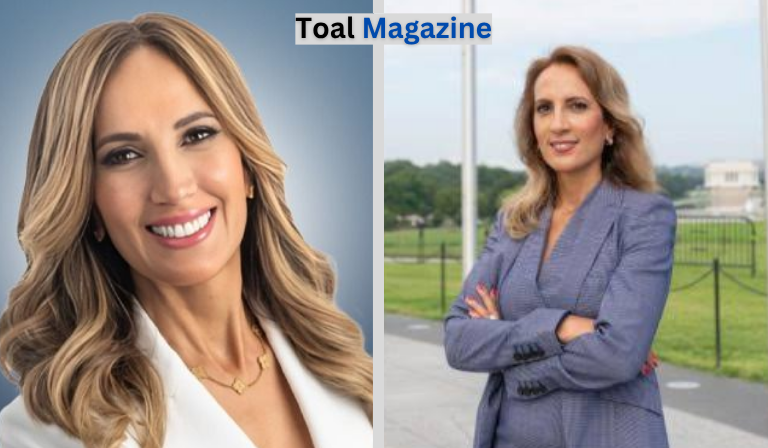
Ellie Cohanim has built an unusual career that connects personal experience, diplomacy, journalism, and Middle East policy. Born in Tehran and raised in New York after her family fled Iran following the 1979 Islamic Revolution, she developed a professional focus on Iran, antisemitism, religious freedom, Israel, and U.S. foreign policy.
Her government career first brought national attention when she served as Deputy Special Envoy to Monitor and Combat Antisemitism during Donald Trump’s first administration. In 2026, she returned to public service as a Senior Policy Advisor at the U.S. Mission to the United Nations, a position that places her closer to major international debates involving Iran, Israel, terrorism, religious freedom, and the role of the United States at the UN.
Beyond government, she has worked as a television journalist, interviewer, executive, and policy commentator. That mix of experience helps explain why her influence extends beyond traditional diplomacy.
Quick Facts About Ellie Cohanim
| Detail | Information |
|---|---|
| Full name | Ellie Cohanim |
| Birth name | Elham Cohanim |
| Date of birth | December 10, 1972 |
| Birthplace | Tehran, Iran |
| Nationality | American |
| Education | Barnard College, Columbia University; Hebrew University of Jerusalem; NYU Wagner/Muehlstein Institute |
| Profession | Diplomat, journalist, policy commentator |
| Current position | Senior Policy Advisor, U.S. Mission to the United Nations |
| Former government position | Deputy Special Envoy to Monitor and Combat Antisemitism |
| Main areas of interest | Iran, Middle East policy, antisemitism, religious freedom, U.S. foreign policy |
| Languages | Fluent in Farsi and Hebrew; familiar with Arabic and German |
Her educational and professional background has helped shape a career focused on international affairs and public policy. The U.S. Department of State previously noted her political science degree from Barnard College and graduate study in international relations at the Hebrew University of Jerusalem.
Early Life and Background
Ellie Cohanim was born in Tehran in 1972. Her early childhood unfolded before and during one of the most significant political transformations in modern Iranian history: the 1979 Islamic Revolution.
Her family left Iran after the revolution amid growing persecution of the country’s Jewish community. They eventually settled in the United States, and Cohanim was raised in New York. Her journey from Iran to America later became an important part of her public identity and helped inform her views on freedom, religious persecution, and authoritarian government.
Growing up in New York also exposed her to the multicultural and political environment of the United States. Over time, her personal history became closely connected to her professional interests. Instead of leaving her Iranian background behind, she incorporated it into a career centered on understanding Iran and explaining its regional influence.
Her story is especially relevant to discussions about the Middle East because she combines firsthand cultural knowledge with academic training and experience in American government.
Her Age and Physical Features
Ellie Cohanim was born on December 10, 1972, which makes her 53 years old as of September 2026. Public biographical sources consistently identify Tehran as her birthplace and December 1972 as her birth year.
Detailed information about her height, weight, body measurements, or other physical statistics is not reliably documented in authoritative public sources. For that reason, it is better not to repeat unverified numbers commonly found on biography websites.
Her professional image is much more strongly associated with public speaking, television appearances, diplomatic work, and policy discussions than with celebrity-style personal branding.
Career and Major Achievements
A major turning point in her career came when she entered the U.S. Department of State during Donald Trump’s first administration.
She served as Deputy Special Envoy to Monitor and Combat Antisemitism, beginning in November 2019. The State Department described her role as helping develop and carry out policies and initiatives aimed at combating antisemitism internationally. She was also identified as the department’s first Iranian-born official in the envoy role.
Her responsibilities connected her with some of the most complicated questions in international diplomacy. Antisemitism does not exist in isolation, and her work frequently intersected with religious freedom, extremism, diplomacy in the Middle East, and relations between countries and communities.
Another important part of her government career involved initiatives associated with the Abraham Accords. These agreements changed the diplomatic landscape of the Middle East by expanding formal relations between Israel and several Arab countries. Cohanim worked on what was described as the agreements’ people-to-people and “Warm Peace” efforts, which focused on cooperation beyond formal state relations.
Her earlier work in journalism also strengthened her ability to communicate complex foreign-policy issues to broader audiences.
Return to Government and Her UN Role
In June 2026, Ellie Cohanim returned to government as Senior Policy Advisor at the U.S. Mission to the United Nations under Ambassador Mike Waltz. The appointment was announced at the end of June and reported publicly in early July.
The new role is significant because the United Nations is a central arena for debates involving international security, Israel, Iran, sanctions, human rights, and humanitarian issues.
Cohanim arrives at the UN with experience that is broader than a conventional diplomatic résumé. She has worked inside the State Department, in journalism, in nonprofit leadership, and in policy advocacy. That combination gives her a public-facing style that can be useful in communicating American priorities beyond formal diplomatic meetings.
Her appointment also reflects the continuing importance of Iran in American foreign-policy discussions. Her firsthand understanding of Iran and her long history of speaking about the Iranian government make her particularly relevant to those debates.
Her Influence on Middle East Policy
The phrase “Middle East policy” covers a wide range of issues, but several themes stand out in Cohanim’s public career.
Iran has been one of the most consistent subjects. Her childhood experience, ability to speak Farsi, academic background, and government service all contribute to her credibility when discussing the country.
She has also addressed Israel and the broader Arab-Israeli relationship. Her involvement with initiatives surrounding the Abraham Accords placed her within one of the most consequential diplomatic developments of the previous Trump administration. (Israel & Jewish News – JNS)
Religious freedom is another major area of interest. Cohanim’s work against antisemitism often overlaps with broader questions about how governments protect religious communities and respond to discrimination.
At the UN, these subjects can become highly interconnected. Iran policy, Israel policy, international institutions, terrorism, religious freedom, and U.S. alliances can all appear in the same diplomatic debate.
Journalism and Media Career
Before returning to government, Cohanim developed considerable experience in journalism and broadcasting.
The State Department’s biography says she previously served as Senior Vice President and Special Correspondent for the Jewish Broadcasting Service, where she handled on-air reporting and anchored coverage of major international gatherings.
Her media work was valuable because it required her to translate complicated events into language ordinary viewers could understand. She interviewed public officials and covered international conferences, giving her experience in both research and live communication.
She later became associated with JNS’s “Global Perspectives,” a program that explored international affairs and featured discussions with political and diplomatic figures. Her media career helped establish her as a recognizable voice on Middle Eastern affairs before she returned to government.
In 2026, she also remained active in political and media discussions surrounding Iran, Israel, and U.S. policy, demonstrating that her public profile extends well beyond her official government position.
Relationship, Marriage and Family Life
Public information about Ellie Cohanim’s personal life is considerably more limited than information about her professional career.
Some biographical databases identify her husband as Aaron Goldberg and report that they married in 2015. Those sources also report that the couple has two children.
However, details about her family members, children’s identities, ages, education, and day-to-day life are not widely documented by major authoritative sources. Cohanim generally keeps the emphasis of her public profile on diplomacy, journalism, public policy, and advocacy.
That privacy is not unusual for a public official whose work involves politically sensitive subjects.
Social Media Presence
Cohanim maintains a public presence on social media, particularly through X and LinkedIn, where she discusses politics, foreign affairs, antisemitism, and international developments.
Her LinkedIn profile identifies her as Senior Policy Advisor at the U.S. Mission to the United Nations and lists her professional background and language skills.
Her online activity is generally policy-oriented rather than focused on lifestyle content. She uses social media to comment on current events, share interviews, and engage with political and diplomatic discussions.
This direct communication style is one reason she has developed visibility beyond traditional diplomatic circles.
Who Is Ellie Cohanim?
Ellie Cohanim is an Iranian-born American public servant and media personality with a career centered on foreign policy and combating antisemitism.
She is best known for three major areas of work: her service at the U.S. State Department, her career in journalism and broadcasting, and her return to government in 2026 as a Senior Policy Advisor at the U.S. Mission to the United Nations.
Her background is important to understanding her approach. She experienced displacement from Iran as a child, later studied international relations, worked in media, and eventually entered U.S. diplomacy.
This combination has made her a recognizable commentator on Iran and Middle Eastern affairs.
Personality and Interests
Based on her public work, Cohanim presents herself as an outspoken and strongly policy-focused figure.
She frequently emphasizes themes such as freedom, religious liberty, opposition to antisemitism, support for Israel, and a more assertive approach to international affairs. Her public career suggests a preference for direct communication rather than highly technical diplomatic language.
Her interests also extend to the role of international organizations and how the United States should use diplomacy to promote its national priorities.
Language has been another important part of her professional toolkit. The State Department lists her as fluent in Farsi and Hebrew, with familiarity in Arabic and German.
Does Ellie Cohanim Have Children?
Public biographical sources report that Ellie Cohanim has two children.
Beyond that basic information, reliable public sources provide few verified details about her children. She appears to maintain a clear boundary between her public career and the private lives of her family members.
For that reason, specific claims about their names, ages, schools, or personal activities should be treated carefully unless confirmed by a dependable source.
Net Worth and Income
There is no reliably verified public figure for Ellie Cohanim’s net worth.
Her career has included government service, nonprofit leadership, journalism, policy work, and speaking engagements, but publicly available sources do not provide enough consistent financial information to calculate an accurate personal fortune.
Online estimates may appear on celebrity or biography websites, but these figures should not be treated as facts without supporting financial records.
Her current government position means her professional importance is better measured through her policy responsibilities and influence than through speculative net-worth estimates.
Public Image and Legacy
Ellie Cohanim’s public image has been shaped strongly by her personal story and her willingness to discuss difficult geopolitical subjects.
Her journey from Tehran to New York and eventually to the U.S. government gives her biography a distinctive narrative. It also provides context for her longstanding focus on Iran and the protection of religious minorities.
Her work against antisemitism is another major part of her professional legacy. During her State Department service, she participated in international efforts to address antisemitism and promote religious freedom.
Her media career expanded that influence by allowing her to communicate with audiences outside government. Rather than working only behind diplomatic doors, she developed a reputation as a public communicator who discusses international issues in interviews, broadcasts, and online commentary.
Her 2026 appointment at the U.S. Mission to the United Nations is therefore more than simply another job title. It represents the continuation of a career built around explaining and advocating for particular U.S. foreign-policy priorities.
Why Her UN Role Matters
The significance of Cohanim’s 2026 appointment goes beyond her individual career.
The United Nations remains a critical venue for debates about Middle Eastern security, Iran, Israel, sanctions, human rights, humanitarian policy, and international legitimacy. A senior policy advisor with specialized knowledge of these topics can contribute to how U.S. positions are developed, communicated, and defended.
Her personal background may also affect how she approaches these subjects. Having escaped Iran as a child, she has spoken for years about the Iranian regime, persecution, and the experiences of Jews and other communities.
Her supporters see that background as a source of insight and conviction, while her strong political positions also make her a figure likely to attract debate and scrutiny.
That visibility could make her increasingly important in discussions surrounding U.S. policy toward Iran and the wider Middle East.
Conclusion
Ellie Cohanim‘s rise in American foreign policy is rooted in a combination of personal experience and professional preparation. Born in Tehran, raised in New York, educated in political science and international relations, and experienced in television journalism, she has moved through several fields before returning to government.
Her service as Deputy Special Envoy to Monitor and Combat Antisemitism established her as a significant voice on religious freedom and global antisemitism. Her work connected those issues with Middle Eastern diplomacy and initiatives related to the Abraham Accords.
Now, as Senior Policy Advisor at the U.S. Mission to the United Nations, she has a new platform from which to influence conversations involving Iran, Israel, international organizations, and U.S. foreign policy.
Whatever the future holds, her combination of refugee experience, diplomacy, journalism, and policy advocacy makes her a distinctive figure in contemporary American discussions about the Middle East.
FAQs About Ellie Cohanim
1. Who is Ellie Cohanim?
Ellie Cohanim is an Iranian-born American diplomat, journalist, and foreign-policy commentator. She previously served as Deputy Special Envoy to Monitor and Combat Antisemitism at the U.S. Department of State and joined the U.S. Mission to the United Nations as a Senior Policy Advisor in 2026.
2. Where was Ellie Cohanim born?
She was born in Tehran, Iran, on December 10, 1972. Her family later fled Iran following the 1979 Islamic Revolution and settled in the United States.
3. How old is Ellie Cohanim?
Born on December 10, 1972, she is 53 years old as of September 2026.
4. What is Ellie Cohanim’s current job?
As of 2026, she serves as Senior Policy Advisor at the U.S. Mission to the United Nations under Ambassador Mike Waltz.
5. What did Ellie Cohanim do at the State Department?
She served as Deputy Special Envoy to Monitor and Combat Antisemitism during the first Trump administration, working on international efforts to combat antisemitism and related policy initiatives.
6. Is Ellie Cohanim married?
Public biographical sources identify Aaron Goldberg as her husband and report that they married in 2015.
7. Does Ellie Cohanim have children?
Yes. Public biographical sources report that she has two children, although detailed information about them is limited.
8. What is Ellie Cohanim known for?
She is known for her work on Iran, Middle Eastern affairs, antisemitism, religious freedom, U.S. foreign policy, journalism, and diplomacy. Her 2026 appointment to the U.S. Mission to the United Nations has further increased her public profile.