
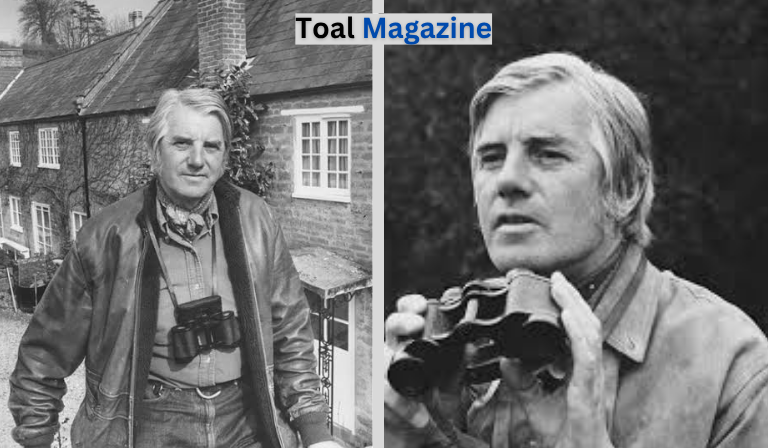
Kenneth Allsop was one of the most distinctive British broadcasters and writers of the 20th century. Born in Leeds in 1920, he built an unusual career that moved from Fleet Street journalism to television, literature, travel writing, and environmental campaigning. By the 1960s, his work on BBC programmes such as Tonight had made him a familiar face to millions of viewers. He later became closely associated with 24 Hours and developed a reputation for sharp interviews, strong opinions, and an unmistakable on-screen presence. Yet there was another side to his public life: a deep love of birds, wildlife, and the British countryside. His campaigning against destructive development showed that his environmental concerns were more than a passing interest. His life ended in 1973, but his writing and conservation legacy continue to attract attention.
Quick Facts About Kenneth Allsop
| Fact | Details |
|---|---|
| Full name | Kenneth Allsop |
| Born | 29 January 1920 |
| Birthplace | Leeds, England |
| Died | 23 May 1973 |
| Age at death | 53 |
| Profession | Journalist, broadcaster, author, naturalist |
| Best known for | Tonight, 24 Hours, environmental campaigning |
| Major prize | John Llewellyn Rhys Prize |
| Award-winning novel | Adventure Lit Their Star |
| Notable books | The Angry Decade, The Bootleggers, Hard Travellin’, In the Country |
| Wartime service | Royal Air Force |
| Known cause of death | Barbiturate overdose; inquest recorded an open verdict |
| Environmental legacy | Kenneth Allsop Memorial Trust and Steep Holm |
Early Life and Background
Kenneth Allsop was born in Leeds and left school at the age of 17 to join the Slough Observer. This early entry into journalism gave him practical experience at a young age and set the direction for a career that would eventually span newspapers, books, radio, and television.
His interests were never limited to traditional news reporting. He developed a lasting fascination with literature and the natural world, particularly birds and wildlife. That mixture of journalism and natural history would later become one of the most defining features of his work.
During the Second World War, Allsop joined the RAF. An injury during his service eventually resulted in the amputation of his leg. The physical consequences were severe, and he continued to experience pain for many years afterward.
Despite those difficulties, he pursued an energetic professional life. His career was already developing when he entered the post-war media world, a period in which British newspapers and broadcasting were undergoing major changes.
Kenneth Allsop’s Career and Major Achievements
The foundation of Allsop’s career was journalism. He worked for respected publications including Picture Post, the Daily Mail, and The Sunday Times, while also contributing to magazines and other newspapers. His work included reporting, book criticism, feature writing, and cultural commentary.
Television eventually transformed his public profile. He began reporting on television in 1955 and joined the BBC’s Tonight in 1960. The programme became one of the most influential current-affairs shows of its era, and Allsop emerged as one of its best-known presenters and commentators.
He later became one of the main anchormen associated with 24 Hours, a BBC current-affairs programme launched in 1965. The programme focused on news analysis, investigative reporting, interviews, and short documentaries, helping shape the style of British television journalism.
His appeal came from more than professional skill. Allsop had an authoritative voice, an intelligent manner, and a memorable appearance. He could discuss serious public issues while still projecting the personality of a television celebrity.
His achievements were not confined to broadcasting. In 1949, his novel Adventure Lit Their Star won the John Llewellyn Rhys Prize. He subsequently produced a broad body of fiction and non-fiction, proving that his talents extended well beyond the television studio.
Literary Work and Best-Known Books
Writing remained extremely important to Allsop throughout his life. A major example is The Angry Decade, his influential study of the cultural changes and literature of 1950s Britain. The book examined the so-called “Angry Young Men” and the wider social environment that produced their work.
He also turned his attention to the United States. The Bootleggers explored the history of Prohibition and the world surrounding illegal alcohol production and distribution in America. His approach combined journalism, historical investigation, and an interest in the people behind the events.
Another ambitious project was Hard Travellin’: The Hobo and His History. To research the subject, Allsop travelled around 9,000 miles across the United States, following historic hobo routes and interviewing people along the way. The result was part travel narrative and part social history.
His later work took him in a more personal direction. In the Country brought together newspaper columns written after he moved to west Dorset. The book captured his daily observations of country life, wildlife, farming, and the changing landscape.
A Passion for Nature and Environmental Campaigning
One of the most remarkable aspects of Allsop’s life was his early commitment to environmental causes. Long before environmental protection became a mainstream media subject, he was already warning about damage to wildlife and landscapes.
He campaigned against oil exploration in Dorset and opposed woodland clear-felling. According to the Steep Holm account of his life, he helped protect around 200 acres of ancient oak woodland below Eggardon Hill that had been scheduled for felling.
His environmental concerns also reached television. His documentary Do You Dig Our National Parks? challenged open-pit mining in Snowdonia and became an important example of environmental broadcasting in Britain.
What made these campaigns unusual was the combination of public influence and personal commitment. Allsop did not merely comment on conservation from a distance. He became involved in campaigns and used his reputation to draw attention to threats facing the countryside.
His Life in Dorset
Toward the end of the 1960s, Allsop left London and settled at Milton Mill in west Dorset. The move represented a major lifestyle change for someone who had spent so much of his career in the world of Fleet Street and television.
Dorset allowed him to live much closer to the landscapes and wildlife that had long fascinated him. He wrote a weekly newspaper column about life at the mill, and those pieces later formed the basis of In the Country, first published in 1972.
His writing from this period was not simply romantic praise for rural England. He also addressed agricultural modernization, social change, and the pressures placed on the countryside. His concerns about the environment give the work a modern relevance, even decades after it was written.
This period is particularly important for understanding the man behind the television image. Away from the studio, Allsop was deeply observant, humorous, curious, and emotionally connected to the natural world.
Personal Life, Marriage and Family
Allsop’s private life was considerably less visible than his public career. Available biographical records identify his wife as Betty Ashton Creak, whom he married in 1942. Records also indicate that they had three children.
Family life existed alongside a demanding professional schedule. Journalism, television assignments, travel, and writing kept Allsop exceptionally busy, while his later years in Dorset created a quieter setting in which he could concentrate more closely on nature and rural life.
His relationships with friends and fellow writers were also significant to his legacy. Among those friends was author John Fowles, who later became closely involved with the memorial efforts created in Allsop’s name.
Personality, Interests and Public Image
Allsop’s public image was a striking combination of intelligence, style, confidence, and individuality. He was not the stereotypical anonymous newsreader. Viewers knew his personality and recognized his distinctive approach to interviews and commentary.
His interests were unusually broad. Literature, journalism, travel, wildlife, birds, social history, and the countryside all featured strongly in his life and work. That range helps explain why his career moved so naturally between newspapers, television, books, and environmental campaigning.
He also became something of a fashion figure. His appearance attracted considerable attention during the 1960s, reinforcing his status as a recognizable television celebrity rather than simply another journalist.
Does Kenneth Allsop Have Social Media Accounts?
No official social media presence belongs to Allsop because he died in 1973, decades before social media existed.
Today, interest in his work survives mainly through books, archives, historical broadcasting material, and organizations connected to his conservation legacy. His published works, particularly In the Country, have also been reissued and reviewed by later generations of readers.
Kenneth Allsop’s Net Worth and Income
There is no reliable public figure for Kenneth Allsop’s exact net worth. Unlike modern television personalities, he lived in a period when celebrity earnings were rarely disclosed in the detailed way they sometimes are today.
His income would have come from several areas of professional work, including newspaper journalism, television broadcasting, books, and other writing assignments. His exceptionally productive career suggests that he was a successful professional writer and broadcaster, but assigning a precise modern net-worth figure would be speculative.
For that reason, claims online giving a specific amount should be treated cautiously unless supported by documentary evidence.
Final Years and Death
Allsop’s final years were overshadowed by continuing physical pain following the loss of his leg and by struggles with depression. Despite these difficulties, he continued to work and remained deeply engaged with nature and writing.
He died on 23 May 1973, aged 53, at his Dorset home. His death followed a barbiturate overdose, while the inquest recorded an open verdict.
His death was a tragic conclusion to a remarkably varied career. He had been a successful journalist, bestselling-style non-fiction writer, pioneering environmental campaigner, and one of the most recognizable faces of British television.
Public Image and Lasting Legacy
The strongest part of Allsop’s legacy may be the way several aspects of his life came together. His journalism gave him a platform, television gave him a national audience, literature gave him another way to examine society, and his interest in nature eventually became a serious conservation mission.
After his death, friends and supporters established the Kenneth Allsop Memorial Trust. The organization originally considered protecting Eggardon Hill in Dorset, an area closely associated with his conservation efforts. Instead, the trust eventually purchased Steep Holm, an island in the Bristol Channel, in 1976.
Steep Holm has since been maintained as a nature reserve and bird sanctuary. The memorial project is an especially fitting tribute because Allsop had spent so much of his later life campaigning for wildlife, landscapes, and the responsible treatment of the countryside.
His books also keep his voice alive. Modern editions and renewed interest in In the Country have introduced his observations of rural England to new readers. The environmental concerns expressed in that work can feel surprisingly contemporary.
Conclusion
Kenneth Allsop was a rare kind of public figure who refused to stay in one professional box. He was a Fleet Street journalist, award-winning author, television presenter, cultural commentator, and committed naturalist.
His success on programmes such as Tonight and 24 Hours turned him into a household name, but his wider body of work reveals a much more complex character. He travelled extensively, wrote about literature and American social history, lived close to nature, and used his influence to defend Britain’s landscapes.
His life was also marked by serious physical suffering and a tragic death at the age of 53. Yet his legacy did not end there. His books remain available, his environmental ideas continue to attract interest, and Steep Holm stands as a lasting memorial to the causes he cared about.
FAQs About Kenneth Allsop
1. Who was Kenneth Allsop?
He was a British journalist, television broadcaster, author, naturalist, and environmental campaigner best known for his work with the BBC.
2. What was Kenneth Allsop famous for?
He became famous through BBC programmes including Tonight and 24 Hours, while also gaining recognition for books and environmental campaigning.
3. When was Kenneth Allsop born?
He was born on 29 January 1920 in Leeds, England.
4. When did Kenneth Allsop die?
He died on 23 May 1973 at the age of 53.
5. What books did Kenneth Allsop write?
His notable works include Adventure Lit Their Star, The Angry Decade, The Bootleggers, Hard Travellin’, Scan, and In the Country.
6. Was Kenneth Allsop an environmental campaigner?
Yes. He campaigned against threats to landscapes and wildlife, including oil exploration and woodland destruction, and used television to highlight environmental issues.
7. Was Kenneth Allsop married?
Yes. Biographical records identify his wife as Betty Ashton Creak, whom he married in 1942, and records indicate they had three children.
8. What is Kenneth Allsop remembered for today?
He is remembered for his television journalism, literary work, passion for nature, and the conservation legacy associated with the Kenneth Allsop Memorial Trust and Steep Holm.