
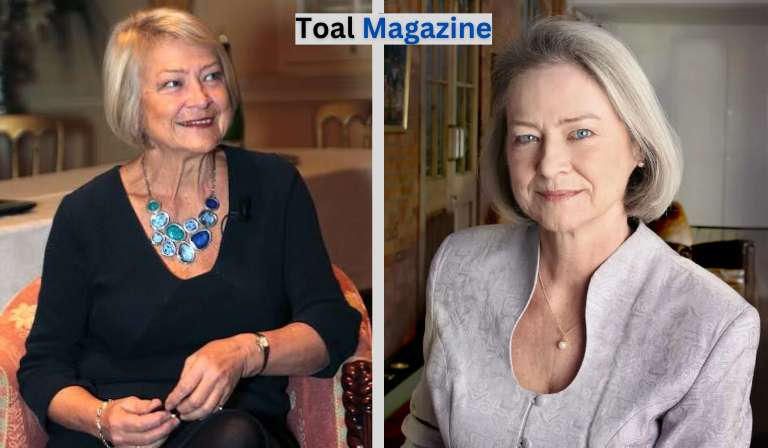
Kate Adie is one of the most respected names in British journalism, known for her calm voice, fearless reporting, and decades of experience covering some of the world’s biggest and most dangerous stories. From the dramatic Iranian Embassy siege in London to the Gulf War and the Tiananmen Square crackdown, she built a reputation as a journalist who could stay composed when events around her were anything but calm.
Her career is especially significant because she succeeded in a field that was once heavily dominated by men. As a BBC correspondent, she reported from conflict zones, political crises, and major breaking-news events, eventually becoming the BBC’s Chief News Correspondent from 1989 to 2003.
Even after leaving that position, her connection with journalism continued through radio, writing, broadcasting, and public speaking. This article explores Kate Adie’s early life, career, achievements, personal life, interests, and lasting legacy.
Quick Facts About Kate Adie
| Fact | Details |
|---|---|
| Full Name | Kate Adie |
| Born | 28 September 1945 |
| Birthplace | Sunderland, England |
| Nationality | British |
| Profession | Journalist, broadcaster, author |
| Best Known For | BBC frontline and war reporting |
| BBC Chief News Correspondent | 1989–2003 |
| Famous Assignment | Iranian Embassy siege |
| Other Major Coverage | Tiananmen Square, Gulf War, Balkans |
| Honours | OBE, BAFTA Richard Dimbleby Award, CBE |
| CBE Award | 2018 |
| Known Radio Programme | From Our Own Correspondent |
| Notable Book | The Kindness of Strangers |
Early Life and Background
Kate Adie was born on 28 September 1945 in Sunderland, England. She was adopted as a baby and grew up in a family environment that encouraged education and independence.
She studied at the University of Newcastle upon Tyne, where she developed interests that would later contribute to her career in broadcasting. Her university years helped build the confidence and communication skills that became important throughout her professional life.
Before becoming a familiar face on national television, Adie gained experience in local broadcasting. Like many successful journalists, she worked her way upward through the industry rather than becoming a national correspondent overnight.
Her early experience taught her how to work under pressure, prepare quickly, and communicate information clearly. These skills eventually became essential when she was sent to cover major international crises.
Kate Adie’s Age and Physical Features
Born in 1945, Kate Adie is 80 years old as of 2026. Her long career has made her one of the most recognizable veteran journalists associated with British broadcasting.
Adie has never relied heavily on an elaborate on-screen image. Her professional appearance has generally been practical and understated, reflecting the demands of frontline journalism.
Her most recognizable feature, however, has arguably been her distinctive voice and delivery. Her calm, controlled speaking style became part of her professional identity and helped audiences remain focused on the story rather than the reporter.
Kate Adie’s Career in Journalism
Kate Adie’s professional breakthrough came after she established herself within the BBC and began covering major national and international stories.
She became particularly well known for reporting from difficult environments where journalists faced physical danger, political restrictions, and unpredictable conditions. Rather than simply appearing on television from a studio, Adie frequently travelled to the locations where major events were unfolding.
Her reporting career eventually led to her becoming the BBC’s Chief News Correspondent in 1989. She held the role until 2003, becoming one of the corporation’s most prominent journalists during a period that included numerous major international conflicts.
Her career was built on preparation, courage, clear communication, and the ability to remain calm during chaotic situations.
The Iranian Embassy Siege That Made Her Famous
One of the most memorable moments in Kate Adie’s career occurred during the Iranian Embassy siege in London in 1980.
When the siege reached its dramatic conclusion, British special forces launched an operation to rescue the hostages. Adie was reporting live from outside the building when the assault began.
She continued broadcasting as smoke filled the area and the situation rapidly developed around her. Her calm, unscripted reporting became one of the most memorable live-news moments in British television history.
The broadcast made her nationally famous and demonstrated an important quality that would define her career: the ability to communicate clearly while surrounded by danger and uncertainty.
Reporting on Tiananmen Square
Another major assignment came in 1989 when Adie covered the Tiananmen Square protests in Beijing.
The demonstrations had attracted international attention, but the situation became increasingly dangerous as Chinese authorities moved against protesters. Adie was present while reporting on the crackdown and was injured during the unrest.
Her experience highlighted the physical risks that frontline journalists can face. It also reinforced her reputation for being willing to report directly from difficult and dangerous situations rather than observing events from a safer distance.
Kate Adie and the Gulf War
The Gulf War was another major chapter in her career. Adie travelled to the region and reported on the conflict while British troops were deployed in the desert.
The assignment required journalists to work in difficult conditions, often with limited information and serious security concerns. Her reports helped British audiences understand the realities facing military personnel and others caught up in the conflict.
Her presence in the Gulf further strengthened her reputation as a leading female correspondent in international conflict reporting.
Coverage of Global Conflicts and Major Events
Kate Adie covered a remarkable range of major stories during her BBC career.
Among them were the US bombing of Tripoli, the Lockerbie bombing, and conflicts throughout the Balkans. She spent considerable time reporting on the wars and political instability affecting the region.
These assignments demanded much more than simply reading prepared material. She had to gather information, assess rapidly changing circumstances, interview people, and explain events to audiences who were often thousands of miles away.
Her work demonstrated why frontline journalism requires a combination of courage and discipline. Being physically present at a major event is only one part of the job; understanding its wider meaning is equally important.
Major Achievements and Honours
Kate Adie has received significant recognition for her contribution to British journalism.
She was appointed an OBE in 1993, a major honour recognizing her professional achievements. She also received the prestigious BAFTA Richard Dimbleby Award, which celebrates outstanding contributions to television journalism.
In 2018, she was appointed a CBE for services to journalism. The honour reflected the lasting impact of her career and her contribution to British broadcasting.
Her achievements are particularly notable because they span television, radio, international reporting, and writing.
Her Role as a Pioneer for Women Journalists
One of the most important parts of Kate Adie’s legacy is her role in changing perceptions of women in frontline reporting.
When she was building her career, war correspondence and international conflict reporting were often viewed as male-dominated areas. Adie proved that women could succeed in the same demanding environments and earn respect through strong journalism.
She did not build her reputation simply by being a woman in a difficult profession. Instead, she became respected because of her professionalism, knowledge, resilience, and reporting ability.
Her success helped inspire later generations of female correspondents and contributed to the broader transformation of British broadcasting.
Kate Adie and From Our Own Correspondent
After stepping down as BBC Chief News Correspondent in 2003, Adie continued working in journalism and broadcasting.
She became closely associated with BBC Radio 4’s From Our Own Correspondent, an international programme featuring reports and observations from correspondents around the world.
The programme suited Adie’s experience and interests particularly well. It allowed her to explore international stories in greater depth and to focus on the human side of events rather than simply delivering breaking-news updates.
Her continuing work in radio has demonstrated that her journalism is not limited to television. She has successfully maintained a respected broadcasting career across different formats.
Relationship and Marriage
Kate Adie has generally kept her private life away from the intense public attention often associated with celebrity culture.
Unlike many public figures, she has not built her profile around discussing romantic relationships or family matters in the media. As a result, there is comparatively little reliable public information about a husband or long-term marriage.
This privacy appears consistent with her wider approach to fame. Adie became well known for her work, not for turning her personal life into part of the news.
Marriage and Family Life
Kate Adie has spoken and written about personal experiences at various points in her life, but she has maintained a relatively private family life.
There is no strong public basis for many of the highly specific claims that sometimes appear online about her relationships or family circumstances. For that reason, it is better to distinguish confirmed information from speculation.
Her professional achievements remain the clearest and most documented part of her public life.
Social Media Presence
Kate Adie comes from a generation of journalists whose careers were built long before social media became part of everyday communication.
She is therefore not primarily known for maintaining the kind of highly active personal social-media presence associated with modern television personalities and online creators.
Her public profile continues to come mainly from journalism, radio appearances, interviews, books, and professional events. Her work has remained centered on reporting and broadcasting rather than social-media celebrity.
Personality and Interests
Kate Adie’s public image is strongly associated with independence, calmness, curiosity, and resilience.
Her reporting style suggests a personality that values preparation and observation. Even during dramatic events, she has often appeared more interested in understanding what is happening than in creating drama for the audience.
Travel and international affairs have naturally been major parts of her professional life. Her writing and broadcasting also reflect an interest in people, cultures, history, conflict, and the everyday experiences behind major global headlines.
Her approach to journalism suggests that she values human stories as much as political developments.
Does Kate Adie Have Children?
Information about Kate Adie’s family life is relatively limited compared with the amount of material available about her professional career.
She has generally avoided making her private life the focus of her public identity. Because online sources can sometimes repeat unsupported claims, family details should be treated carefully unless they come from reliable, direct sources.
What is well established is her extraordinary professional record and her decades of work in British journalism.
Kate Adie’s Net Worth and Income
Kate Adie’s exact net worth has not been reliably disclosed through authoritative public records. Figures published on unofficial celebrity and biography websites should therefore be treated cautiously.
Her income over the years has come from a long and successful career in journalism and broadcasting, along with writing, public appearances, speaking engagements, and related professional activities.
Given her decades of experience and senior BBC role, she has built a substantial professional career, but there is no dependable public figure that can be presented as her exact current net worth.
Kate Adie as an Author
Broadcasting is only one part of Adie’s professional achievements. She has also written books based on her experiences and observations.
Her autobiography, The Kindness of Strangers, became particularly well known. The book provides a personal perspective on her career, the people she encountered, and the experiences that shaped her understanding of journalism and the wider world.
Writing gave Adie another way to communicate ideas that could not always be fully explored during short television reports.
Public Image and Legacy
Kate Adie’s public image is closely connected with courage and credibility.
For many viewers, she represents a generation of journalists who travelled into difficult environments to report events firsthand. Her calm delivery became especially valuable during moments when audiences needed reliable information rather than sensational commentary.
Her legacy is also connected to the changing role of women in journalism. By succeeding in dangerous reporting environments and reaching the highest levels of BBC news, she helped demonstrate that frontline journalism was not an exclusively male profession.
Today, she remains respected not only for the events she covered but also for the professional standards she represented.
Why Kate Adie Remains Important Today
Modern journalism has changed dramatically since Adie began her career. News now reaches audiences through smartphones, social media, livestreams, podcasts, and online publications.
Yet some fundamentals remain the same: journalists must verify information, communicate clearly, understand context, and maintain their judgment under pressure.
That is one reason Kate Adie’s career continues to attract interest. Her experience offers a useful example of traditional reporting values at a time when the news environment has become faster and more crowded.
Her career also serves as a reminder that memorable journalism is not always about being the loudest voice. Sometimes the most powerful approach is to stay calm and tell people what is actually happening.
Conclusion
Kate Adie has built an extraordinary career by reporting from some of the most challenging environments in modern history. From the Iranian Embassy siege to Tiananmen Square and the Gulf War, she repeatedly demonstrated the courage and professionalism required of a frontline correspondent.
Her time as the BBC’s Chief News Correspondent established her as one of Britain’s best-known journalists, while her later work in radio and publishing showed that her contribution to broadcasting extended far beyond television news.
For more than four decades, Kate Adie has represented a distinctive style of journalism based on calm reporting, curiosity, resilience, and a commitment to understanding the human side of major events. Her influence on British journalism, particularly on opportunities for women in frontline reporting, remains an important part of her lasting legacy.
FAQs About Kate Adie
1. Who is Kate Adie?
Kate Adie is a British journalist, broadcaster, and author best known for her BBC career and frontline reporting from major international conflicts and crises.
2. How old is Kate Adie?
Kate Adie was born on 28 September 1945, making her 80 years old in 2026.
3. What is Kate Adie most famous for?
She is particularly famous for her live reporting during the 1980 Iranian Embassy siege in London. She also covered Tiananmen Square, the Gulf War, and conflicts in the Balkans.
4. Was Kate Adie the BBC’s Chief News Correspondent?
Yes. She served as the BBC’s Chief News Correspondent from 1989 until 2003 and became one of the corporation’s best-known journalists.
5. What awards has Kate Adie received?
Her major honours include an OBE, the BAFTA Richard Dimbleby Award, and a CBE awarded in 2018 for services to journalism.
6. Is Kate Adie still working?
Kate Adie has continued her broadcasting and journalism career beyond her BBC television role and has been closely associated with From Our Own Correspondent on BBC Radio 4.
7. Has Kate Adie written any books?
Yes. She has written several books, including her well-known autobiography, The Kindness of Strangers.
8. Why is Kate Adie important to journalism?
She is important because she helped establish women as credible frontline correspondents while demonstrating the value of calm, direct, and carefully observed reporting from conflict zones.