
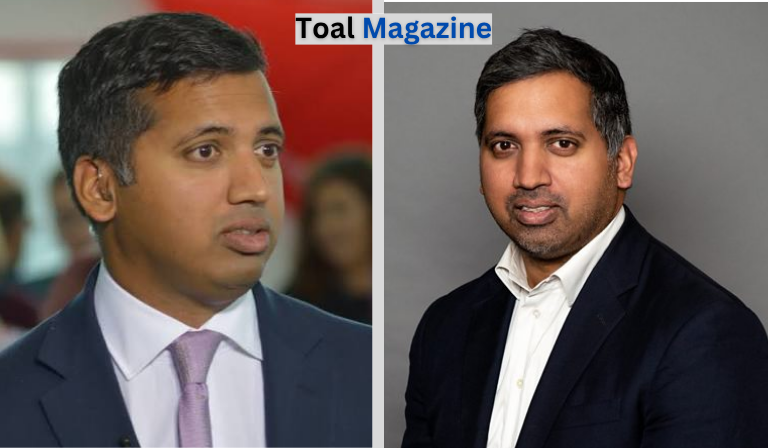
Faisal Islam is a familiar name to anyone who follows British politics, economics and major financial news. As the BBC’s Economics Editor, he has spent years explaining complicated economic developments in a way that makes sense to a general audience. His career has included senior roles at The Observer, Channel 4 News and Sky News, giving him experience across both economic and political journalism.
His professional journey began in newspaper journalism before moving into television reporting and eventually senior editorial positions. Along the way, he covered the global financial crisis, major political changes, Brexit and important government economic decisions. He has also written a book about the financial crisis, adding author to an already impressive journalism career.
Quick Facts About Faisal Islam
| Detail | Information |
|---|---|
| Full Name | Faisal Islam |
| Profession | Journalist, Broadcaster and Author |
| Current Role | BBC Economics Editor |
| Nationality | British |
| Birth Year | 1977 |
| Birthplace | Manchester, England |
| Education | University of Cambridge; City University London |
| Earlier Employers | The Observer, Channel 4 News, Sky News |
| Major Expertise | Economics, politics, business and public policy |
| Notable Book | The Default Line |
| Years Active | More than two decades |
Publicly available biographical information identifies him as a British political and economics journalist, while BBC records and recent reporting continue to identify him as Economics Editor.
Early Life and Background
Faisal Islam was born in Manchester in 1977 and grew up in the city. His Manchester background has been an important part of his public identity, and his early years helped shape his interest in British society, politics and the wider issues affecting communities across the country.
His educational journey combined a traditional university education with specialist journalism training. Biographical records identify the University of Cambridge as his undergraduate institution, followed by postgraduate study in newspaper journalism at City University London. This combination gave him both a broad academic foundation and practical preparation for a career in the media.
His route into journalism was not built around celebrity or entertainment reporting. From the beginning, his professional interests were concentrated on serious subjects such as economics, business and politics, areas that would later define his career.
Faisal Islam Age and Physical Features
Faisal Islam was born in 1977, which places him in his late 40s in 2026. His exact age naturally changes according to his birthday during the year.
Although photographs of the journalist appear in media coverage, physical descriptions are not an important or consistently documented part of his professional biography. His public reputation is based overwhelmingly on his journalism, interviews and economic analysis rather than his appearance.
For readers searching for personal details, it is useful to separate verified biographical information from details that circulate on low-quality biography websites. Reliable sources provide much stronger evidence about his education and career than about personal measurements or other physical characteristics.
Education and Journalism Training
His academic background has played an important role in his professional development. He studied at the University of Cambridge and later completed postgraduate journalism training at City University London.
Specialist journalism education was particularly useful for someone who wanted to work in economics reporting. Financial stories often involve statistics, markets, government policy and technical terminology, so journalists need the ability to research complex material and communicate it clearly.
That combination became a defining feature of his career. Rather than simply repeating economic announcements, he developed a reputation for putting financial developments into context and explaining why they matter.
Career and Major Achievements
The professional career of Faisal Islam began at The Observer. According to contemporary reporting, he joined the newspaper in 1998 as a researcher, moved into economics reporting in 2000 and became economics correspondent in 2001. He won the Wincott Young Financial Journalist of the Year award in 2001, providing an early indication of his potential in financial journalism.
He later moved to Channel 4 News in 2004, initially as a business reporter. His responsibilities expanded as he became economics correspondent and eventually Economics Editor in 2010. The promotion was significant because Channel 4 had not used the Economics Editor title for more than two decades.
During his Channel 4 years, he covered some of the biggest economic stories of the modern era. His reporting included the Icelandic banking crisis and the wider global financial crisis, giving him first-hand experience of reporting when financial institutions and governments were facing extraordinary pressure.
His journalism received further recognition. Information accompanying his book The Default Line notes that he won the WorkWorld Foundation’s Broadcast News Reporter of the Year award in 2010 and received several awards for his coverage of the Icelandic banking crisis.
The Default Line and His Work as an Author
One of the major achievements outside daily broadcasting was the publication of The Default Line: The Inside Story of People, Banks and Entire Nations on the Edge in 2013.
The book explored the financial crisis and the risks created when financial optimism becomes excessive. It drew on his reporting of the Icelandic banking collapse, the failure of Lehman Brothers, and economic developments in countries including India and China.
The book was significant because it allowed him to go beyond the short format of television reports. Instead of explaining one economic event at a time, he could examine the broader causes and consequences of the financial crisis.
Its subject also reflects the central theme of his career: making difficult economic issues understandable to ordinary readers.
Political Journalism at Sky News
After establishing himself as an economics specialist, he moved into political journalism at Sky News. He became the broadcaster’s Political Editor in 2014, a role he held until 2019.
The position allowed him to cover Westminster politics more directly and interview senior political figures during a period of major change in British public life. His economics background was particularly relevant because many of the biggest political debates were closely connected to taxation, government spending, Brexit, public finances and the wider economy.
His transition from economics editor to political editor and then back to economics at the BBC demonstrates the unusual range of his experience. He is comfortable explaining both the policy debate and the financial consequences behind it.
Faisal Islam and the BBC
In 2019, he joined the BBC as Economics Editor. BBC annual reporting identifies him in that senior editorial position, while subsequent reporting has continued to refer to him as the BBC’s Economics Editor.
The role places him at the centre of coverage involving inflation, interest rates, taxation, economic growth, government budgets, employment and public spending. These subjects can sound highly technical, but they have direct effects on everyday life.
His reports often focus on the practical meaning behind economic figures. Instead of treating inflation or interest rates as abstract statistics, his work typically considers what they mean for households, businesses, borrowers, savers and the wider economy.
Relationship With Politics and Public Affairs
Although he is primarily known as an economics journalist at the BBC, politics has remained an important part of his professional life.
His years as Sky News Political Editor gave him extensive experience in Westminster, while his economics background allows him to examine political announcements from a financial perspective. This combination is especially valuable during government budgets, elections and major policy changes.
His Brexit reporting is one example of this crossover. Brexit involved political negotiations but also major questions about trade, investment, business and economic policy. His specialist background made him well suited to explain those different dimensions.
Marriage and Family Life
Personal questions about Faisal Islam’s marriage and family life frequently appear in searches, but reliable mainstream sources provide relatively limited information about his private relationships.
There is a useful distinction between being a well-known journalist and being a public figure who regularly shares details about family life. Islam has generally been known for his professional work rather than for turning his private life into part of his media profile.
As a result, claims about a wife, children or detailed family circumstances should be treated carefully unless they are supported by a reliable source or by information he has publicly confirmed himself.
Social Media Presence
Faisal Islam has also used social media as part of his work as a journalist. His posts have often focused on economic figures, political developments, breaking news and observations related to his reporting.
His social media presence is best understood as an extension of his professional journalism rather than a lifestyle-focused personal account. This makes it especially useful for people who want to follow economic developments and understand how major announcements are being interpreted in real time.
He has also used social media to comment on fellow journalists and public figures, demonstrating the broader network that exists around British political and economic reporting.
Who Is Faisal Islam?
At the heart of the question is a relatively simple answer: he is a senior British journalist specialising in economics and politics.
What makes his career distinctive is the range of positions he has held. He has worked in newspapers, business broadcasting, political journalism and senior economics editing, building expertise across several major areas of British news.
His current BBC position is the latest stage of that development. It reflects more than two decades spent covering subjects where economic decisions, political choices and public consequences often overlap.
Personality and Interests
Publicly, Faisal Islam is primarily associated with journalism, analysis and serious news coverage. He is known for engaging with detailed economic subjects while presenting them in a form that television audiences can follow.
There are also indications of a strong personal connection with football. His interest in the sport has occasionally appeared alongside his professional work, including coverage of football ownership and the economics of clubs.
This combination of journalism, economics and football provides a useful insight into the range of subjects that can attract his interest. Even outside conventional financial reporting, economics remains an important lens through which major issues can be understood.
Does Faisal Islam Have Children?
There is no strong, consistently documented public record providing detailed information about children. Because family details are not a central part of his public profile, it would be misleading to present unverified claims as facts.
For readers researching Faisal Islam, the most dependable information concerns his education, journalism career, awards, television work and published writing. These areas are supported by much stronger documentary evidence.
Net Worth and Income
Faisal Islam’s exact net worth is not reliably established through authoritative public sources. Websites sometimes publish estimated figures for journalists, but those numbers are generally speculative unless based on verified financial disclosures.
BBC annual reports have previously provided salary bands for senior BBC figures, and an annual report for 2019–20 listed Islam as Economics Editor with a salary range of £155,000–£159,999 at that time. That historical figure should not be treated as his current salary or present-day net worth.
His income has likely developed over a long career spanning major broadcasters and journalism roles, but a responsible biography should distinguish documented compensation from online guesses about wealth.
Public Image and Legacy
Faisal Islam has developed a strong public reputation as a specialist journalist who can explain complex economic events without losing sight of their real-world consequences.
His career is particularly notable because he has worked through several periods of major change. He reported during the global financial crisis, covered British political turbulence, followed Brexit and later became one of the BBC’s leading voices on economic policy.
His legacy is therefore less about a single headline or award and more about consistency. Across newspapers, television and digital journalism, he has maintained a focus on economics while adapting to the changing demands of modern news coverage.
For aspiring journalists, his career also demonstrates the value of developing genuine subject expertise. Economic journalism requires more than the ability to write or present; it requires an understanding of data, institutions, policy and the consequences of decisions.
Why Is Faisal Islam Important in Economic Journalism?
Economic journalism can be difficult because many of its most important stories involve technical concepts. Inflation, national debt, interest rates, fiscal policy and trade figures may appear complicated to audiences who simply want to know what a change means for their daily lives.
This is where specialist editors become important. A journalist such as Islam can provide context, question claims and translate technical information into a clearer narrative.
His career also shows how economics has become increasingly central to political journalism. In modern Britain, debates over elections, public services, taxation and government policy are frequently inseparable from questions about the economy.
Faisal Islam’s Major Career Timeline
Faisal Islam’s career can be understood as a series of major transitions.
He began at The Observer and quickly established himself as a financial journalist, winning the Wincott Award in 2001. He then moved to Channel 4 News in 2004 and became its Economics Editor in 2010.
In 2014, he moved to Sky News as Political Editor, broadening his experience into Westminster politics. Five years later, he joined the BBC as Economics Editor, returning to the specialist field where his career began.
This progression explains why he is now regarded as a versatile voice in British news. His professional background combines economic expertise, political reporting and television presentation.
Conclusion
Faisal Islam has built a distinguished career by specialising in subjects that affect almost every part of modern life. From his early years at The Observer to senior positions at Channel 4 News and Sky News, he developed a reputation for reporting on economics and politics with depth and clarity.
His 2013 book, The Default Line, further demonstrated his ability to explore complex financial issues beyond the limits of daily news coverage. His later appointment as BBC Economics Editor brought that experience to one of Britain’s most prominent news organisations.
While many details of his private life remain outside the public record, his professional achievements are well documented. For readers interested in British journalism, economics and political reporting, his career offers a clear example of how specialist knowledge can become a lasting strength in the media industry.
FAQs About Faisal Islam
1. Who is Faisal Islam?
Faisal Islam is a British political and economics journalist who serves as the BBC’s Economics Editor. He has previously worked for The Observer, Channel 4 News and Sky News.
2. How old is Faisal Islam?
He was born in 1977, meaning he is in his late 40s in 2026.
3. Where did Faisal Islam study?
He studied at the University of Cambridge and later completed postgraduate journalism training at City University London.
4. When did Faisal Islam join the BBC?
He joined the BBC in 2019 as Economics Editor after serving as Political Editor at Sky News.
5. What award did Faisal Islam win?
He won the Wincott Young Financial Journalist of the Year award in 2001. He later received recognition for his broadcast journalism and coverage of the financial crisis.
6. Did Faisal Islam work for Channel 4?
Yes. He joined Channel 4 News in 2004 as a business reporter and later became its Economics Editor in 2010.
7. Has Faisal Islam written a book?
Yes. He wrote The Default Line, published in 2013, which examines the global financial crisis, banking problems and wider economic risks.
8. What is Faisal Islam known for?
He is best known for explaining major economic and political developments, including financial crises, government policy, inflation, public finances and wider economic issues affecting Britain.